
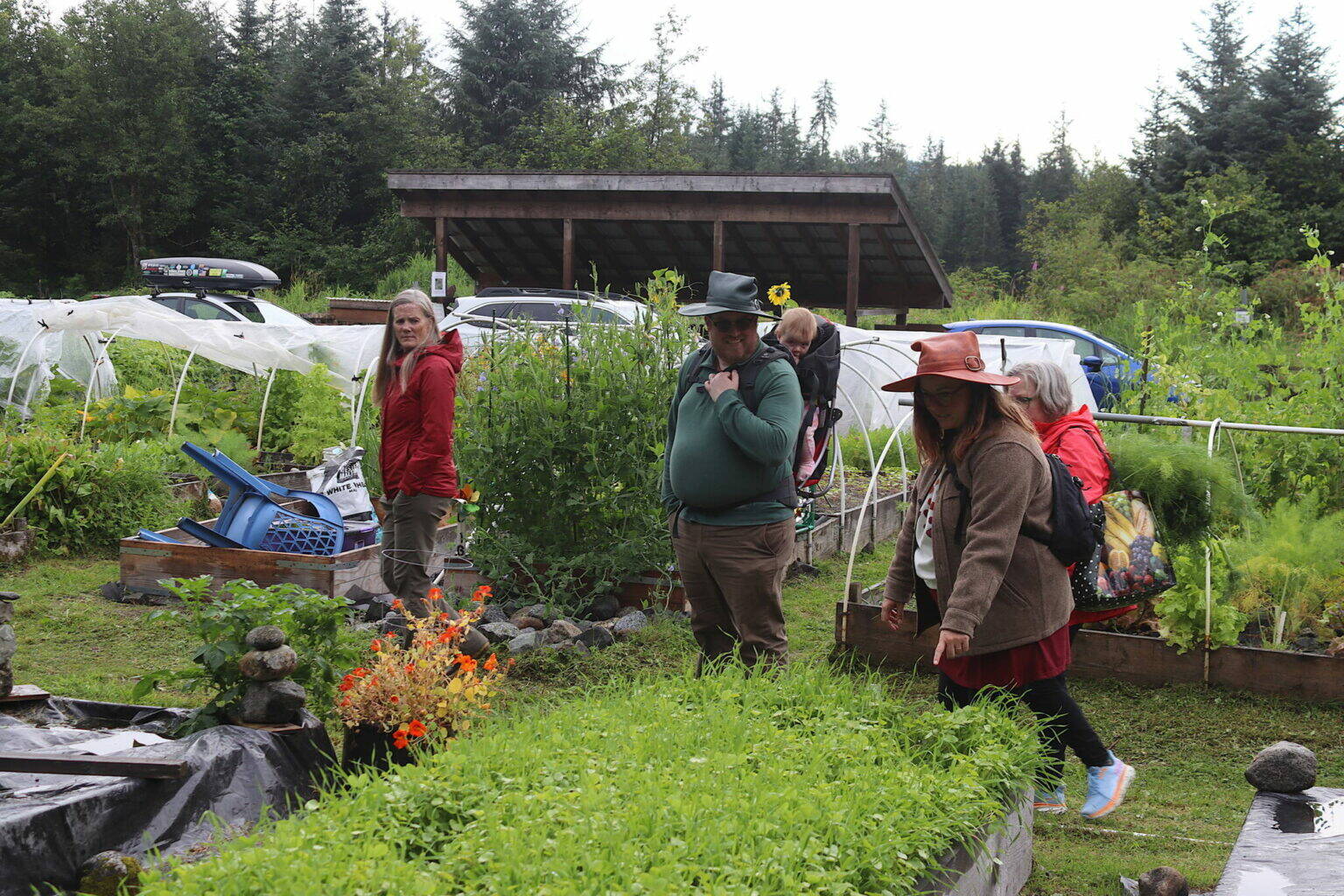
There is a path to increasing food security without an Alaska Department of Agriculture this legislative session.
Gov. Mike Dunleavy should hire an aide in the governor’s office who is knowledgeable in Alaska agriculture to work with the existing staff in the Department of Natural Resources. The goal should be to craft a plan to increase agriculture on a statewide basis to submit to the next legislative session.
Existing agricultural policies are Railbelt-centric and need to be designed to address food security statewide. The greatest need is in rural areas off the road system where food costs are very high. Particular attention needs to be paid to the small communities in the Yukon and Kuskokwim River deltas which are suffering from major losses of subsistence resources.
The successes of hydroponic gardening in the state need to be examined along with the experiences of gardens in roadless communities.
Some small rural communities that have achieved great success in food security and even are supplying others with fresh produce year-round.
Take Old Harbor, a small Native village on Kodiak Island. With three high hoop greenhouses, raised beds and multiple hydroponic systems, the Sitkalidak Sunrise Farm grows rainbow chard, cabbage, potatoes, celery, romaine, radishes, tomatoes, beans, peas, cucumbers, onions, green peppers, many varieties of squashes and more. The farm also has some fruit production including a few beautiful cherry, apple, pears, kiwi and plum trees producing in one of the hoop houses.
The community also has a herd of buffalo purchased from a rancher on Kodiak Island. Three young buffalo bulls recently were obtained from a Native American tribe in Montana to strengthen the genetic pool of a herd of 70 animals. Sitkalidak plans to add pigs and chickens.
Children play a key role in farming activities. Sales to other communities are planned.
Tyonek, a small Native community on the western shore of Cook Inlet, even produced the first Alaska-grown watermelon.
Tyonek Grown is designed to enhance food security and provide fresh organic vegetables to community members. The garden has grown into a 1.5-acre operation with two high tunnels (48 feet by 22 feet), solar-powered irrigation and ventilation systems, 15 raised beds, over 2,000 row feet of potatoes and mixed vegetable crops, perennial fruits, and plans for expansion in the coming years.
Like Old Harbor, Tyonek has incorporated children in farming operations to create long-term community interest in the project. Surplus production is sold in Anchorage.
The biggest rural farm is in Bethel. Meyers Farm grew from a small family farm into an operation that supplies Bethel, Nome, numerous western Alaska villages, and some more distant schools like Cordova on a year-round basis. Some produce also is sold in Anchorage and other communities.
Tim Meyers stripped off the tundra on a couple of acres to allow the ground to thaw and composted the tundra for his gardens. “I just tilled up the ground, and everything grew,” Meyers told the Anchorage Daily News (ADN).
Here’s how the ADN described Meyers operation: A vacuum system sucks seeds through tiny holes he drilled in baking sheets to land in their assigned cell in planting trays. A potato-planting contraption that he made features a spot for Lisa (his wife) to sit as she drops starts into holes being punched at the same time an irrigation drip line is laid down. Then everything is buried, all in one pass. An Amish-built machine lets them plant 1,000 vegetable starts in an hour.
The Meyers Farm includes numerous raised beds, high hoop greenhouses and a massive underground storage area, which stays at 31F. in the winter and is a little warmer in the summer.
Meyer Farms supplies produce year-round to Bethel, Nome and numerous villages in Western Alaska. The farm also sells in Anchorage and schools located in Cordova, King Cove, Sand Point and Naknek.
Recent hydroponics efforts on the Kenai Peninsula have shown promise and praise from residents. Edgy Veggies and fresh365 located in Soldotna are producing vegetables year-round, but both say summer sales are slow, as many locals produce vegetables in home gardens. Winter sales are strong. Power costs are high though.
There are several gardening initiatives led by Native organizations throughout Western Alaska. Budget cuts in the U.S. Department of Agriculture may impede these efforts.
• Rodger Painter is an enthusiastic gardener, and former journalist who was involved throughout his adult life in Alaska seafood politics. He now is retired and lives in Douglas.
