
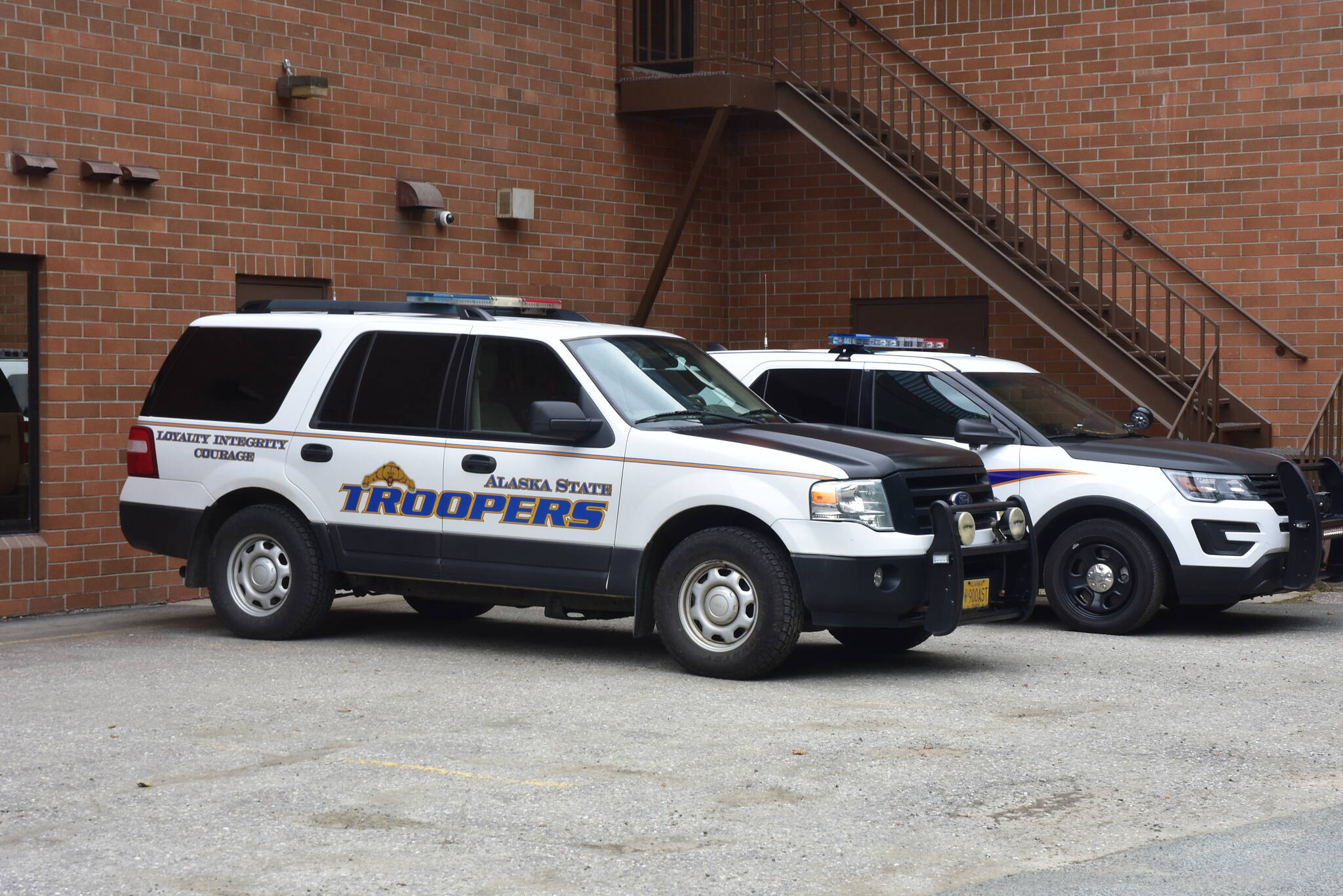
As part of a pilot program under the Alaska Department of Public Safety, about 30 state troopers will soon begin wearing body cameras. It’s a move in the right direction. But the proposed policy gives too much discretion for when officers can turn them off.
First, let review the case of 20-year-old Cody Eyre. Late On Christmas Eve in 2017, he was drunk, suicidal and carrying a gun. Four Alaska State Troopers and two Fairbanks police officers followed him as he walked toward a residential area. They directed him to drop the gun dozens of times. He responded with anger and hostility. The confrontation ended after an officer believed Eyre pointed his gun at them and five of the six officers fired their weapons, unloading more than 40 rounds.
Nine months later, the state of Alaska Office of Special Prosecution announced the officers “were legally justified in their use of deadly force.” They showed an 11-minute video of the encounter at a press briefing. The screen goes dark almost immediately after the shooting begins and the video ends about 30 seconds later. What the officers discussed afterward isn’t known.
That’s not unlike what happened after police officers in Sacramento, California, killed 22-year-old Stephon Clark the following March. They were wearing body cams. After one shouted “gun, gun gun,” they both fired their weapons. A backup officer arrived on the scene almost immediately afterwards and asked “What did he have on him?” The response was “something in his hands. It looked like a gun from our perspective.” Soon after that, another officer is heard saying “Hey, mute.” Video recording continues but there’s no audio.
Sacramento’s body cam policy at the time allowed officers to “deactivate their cameras under some circumstances, including talking about confidential or tactical matters, or for privacy concerns, as long as the reason is documented afterward.” A month later it was revised to require officers to verbalize their reason before turning it or the audio off.
That’s similar to Alaska’s DPS draft policy on camera deactivation.
But the recent death of 29-year-old Tyre Nichols in Memphis shows why it’s still a problem.
In that case, two officers never activated their body cams and the other three removed them during the altercation. The police report filed two hours afterward stated Nichols started the fight and had reached for an officer’s weapon.
However, recordings made by city-owned surveillance cameras mounted on light poles near the scene conclusively prove that report was false. The officers needlessly and brutally beat him, a fact omitted from their report. They were all indicted for second-degree murder and four other crimes.
Allowing body cams to be turned off or muted at an officer’s discretion makes sense only if every one of them can be trusted. As the Nichols’ case and others tell us, that’s not reality.
In the Eyre case, we don’t know if the cameras were turned off or the video released to the public was edited. Three months after he was killed, his family filed a wrongful death lawsuit alleging the state and the city of Fairbanks “failed to adequately investigate … and/or ratified the unconstitutional use of force.”
Even if those allegations are ultimately proven wrong, they were justified in part by the many deadly force incidents in which video evidence was improperly concealed.
And although doing that in routine cases isn’t as shocking, it’s still a serious problem.
In 2015, 69-year-old William Wingate was arrested in Seattle for allegedly swinging a golf club—which he used as a walking cane—at a police cruiser. He was charged with unlawful use of a weapon. Six months later, a free-lance journalist received a tip that the incident was recorded by the officer’s dash cam. The department not only kept Wingate from accessing evidence that exonerated him. The failure to promptly hold the officer accountable for filing a false report did nothing to discourage further misconduct.
The fact is most officers perform their duties ethically and honestly, even when faced with life threatening circumstances. But until law enforcement agencies and police unions work together to root out the bad actors among them, no one should be given the discretion to turn off or mute their body cams under any circumstances.
• Rich Moniak is a Juneau resident and retired civil engineer with more than 25 years of experience working in the public sector. Columns, My Turns and Letters to the Editor represent the view of the author, not the view of the Juneau Empire. Have something to say? Here’s how to submit a My Turn or letter.
