
NEW ORLEANS — It’s D-Days — that is, digital days — at the National World War II Museum, with historians seeking to storm the internet and move thousands of first-person accounts of the fighting online.
Executives at the National World War II Museum say creating a vast online collection of 9,000 existing oral and written histories will take longer than the war was fought: 10 years and $11 million. There’s more than 22,000 hours of audio and video to be handled, thousands of documents to be digitized and millions of words transcribed.
Ultimately, all these firsthand accounts of Pearl Harbor, the D-Day invasion, Germany’s surrender, Hiroshima, the homefront and more will be online.
Founded in 2000, the museum is a top New Orleans attraction. The digital collection is open to the world. But only about 250 of its oral histories are online so far. Uploading more will take time, partly because the museum’s six historians also are racing to interview the last veterans alive.
“It’s a fine balance. We have a sense of urgency to collect as many stories as we can … But we also know it’s extremely important moving forward to provide access” online, said Stephen Watson, the museum’s executive vice president and chief operating officer.
Since May, the World War II Museum has collected 500 oral histories. But the war generation is fading fast.
Even people with childhood memories of the war are now in their 70s, noted James Gilmore, archives specialist in oral history at the U.S. Holocaust Memorial Museum in Washington, D.C. He said the Holocaust Museum has about 10,000 oral histories available online. Those also are among more than 66,000 that can be viewed or listened to on site.
“Our oral histories have been invaluable resources in teaching about Holocaust history and fighting Holocaust denial. They’ll become even more precious once the eyewitness generation is no longer here,” Gilmore said.
Putting oral histories online is not just a matter of uploading and linking to huge audio and video files. The World War II Museum’s six historians also help laboriously describe their contents for online searching, in a process more extensive than the Holocaust Museum’s has been so far.
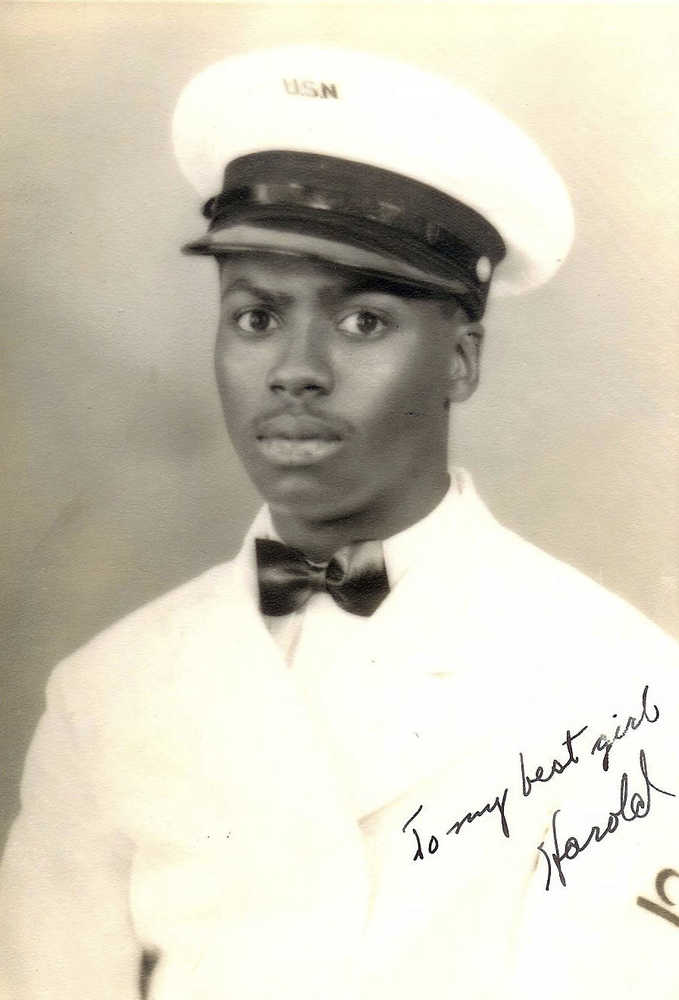
Take the four videos spanning two hours of interviews with Harold E. Ward, a Navy lookout on the cruiser San Francisco when Japanese warplanes struck Pearl Harbor on Dec. 7, 1941.
The videos are divided into 12 segments, each with detailed annotations describing what Ward talks about section by section — like the one with Ward recalling the attack .
The San Francisco was being overhauled when the planes came in low and slow, leaving the fleet in flames. “I just stood and watched,” Ward said. As a lookout, he was wearing headphones. An ensign somewhere else asked him to describe the scene.
“He says, ‘What’s going on there?’” Ward recounted. “So I told him we were being attacked by the Japanese Air Force.” The ensign’s response: “Don’t you get wise with me, Ward. I asked you a question.”
“So I began to describe what I was looking at,” Ward continued. “And there was a dead silence when I finished speaking.”
So far there are 4,000 staff-collected video oral histories, 3,000 video and audio recordings made by others, and nearly 2,000 “written histories” like journals and diaries that can be photographed, annotated and transcribed for online research, said Keith Huxen, the museum’s senior director of history and research.
He said the six historians travel widely, scheduling at least four interviews per trip. Afterward, the historians add catalog information, including a short description of contents and when and where interviews were made. They then begin annotating the video with keywords mostly likely to be searched, Huxen said.
“Ultimately, the public will be able to go online, access the histories, search them, watch the video with face and voice … with a verbatim transcription scrolling or at least accessible,” he added.
The museum has allocated about $4.4 million for the project so far — about two-thirds from donations and grants, and the rest from the museum’s operating budget, Watson said. One records management company, Iron Mountain, gave $100,000 to digitize 100 interviews this year and expects to donate a similar amount next.
“The commitment to this will never end,” because there will be a constant need to update computers and software and to move the collection “to new forms of data storage that we don’t even know about now,” Watson noted.
The idea of putting the collection online was borne of bleak days after Hurricane Katrina flooded much of New Orleans in 2005. The museum didn’t flood, but was closed for months to repair damage from roof leaks and from looting in non-exhibit areas. Few visitors showed up when it did reopen, prompting executives to consider how they could still reach people even when a city was emptied out.
“We had to think about how to fulfill our mission without people being here,” said Nick Mueller, museum president and CEO.
___
Online: www.nationalww2museum.org
__
• Associated Press writer Bill Cormier contributed to this report from Atlanta.
