University of Alaska set to receive 360,000 acres of federal land
Published 10:30 pm Tuesday, January 3, 2023
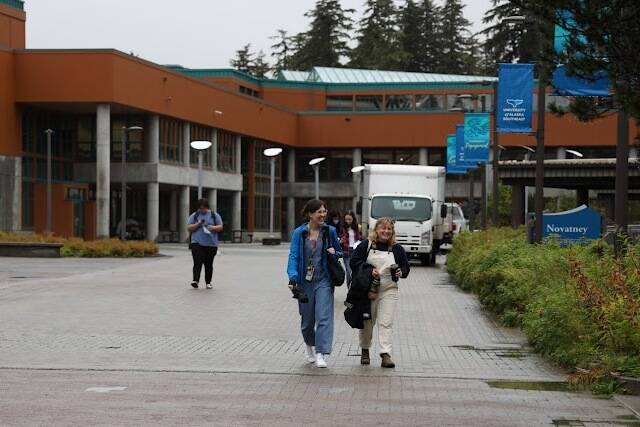
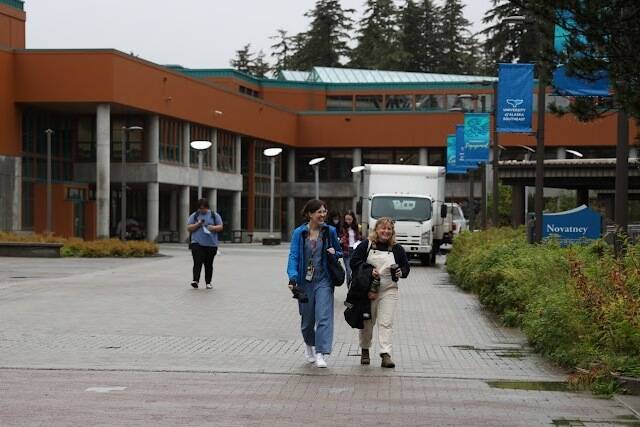


The University of Alaska is set to receive lands totaling about one-third of the size of Admiralty Island within the next four years.
Set in motion by a clause included in the recently passed $1.7 trillion federal spending bill, the university in conjunction with the state of Alaska are tasked with identifying and selecting 360,000 acres of federal land — Admiralty Island has a total of 1,664 square miles, according to the National Park Service — to be transferred via the U.S. Bureau of Land Management, which is jointly tasked with creating a program to conduct the transfer process during those four years.
Once fulfilled, the conveyance, which UA is congressionally entitled to because of its status as a land-grant university, will successfully lift the university out of its current land deficit.
The university has been attempting to remedy its deficit since Alaska’s statehood in 1959, but the issue didn’t pass then or in the multiple attempts by the Alaska Legislature since.
The clause which put the transfer process in motion was included in the omnibus bill via the “University of Alaska Fiscal Foundation Act”, which was drafted by Alaska Sen. Lisa Murkowski, a Republican, and supported by Sen. Dan Sullivan, a Republican, and Rep. Mary Peltola, a Democrat. Murkowski and Peltola also voted for the bill, but Sullivan ultimately voted against the omnibus bill citing insufficient time for lawmakers to analyze it.
“It’s great news,” said University of Alaska Southeast Chancellor Karen Carey. “It will bring money to the university, and I think it will provide additional resources for us which are greatly needed.”
Currently, the university system already owns around 150,000 acres of land — equivalent to 30% of what it is entitled to — which in the previous fiscal year earned the university around $8 million of revenue, according to the university’s annual land management report. The additional 360,000 acres are expected to add to that revenue significantly.
Lorraine Henry, director of communications and Public Information Officer for the Alaska Department of Natural Resources, said the department is encouraged to see the university “finally” receive the federal lands it is due and to begin working with UA to receive that land.
Adrienne Stolpe, director for UA Land Management, said that before the omnibus bill’s passing last week, the university had already identified 200,000 acres of federal land it is interested in selecting for transfer and the information was sent to the DNR for review last year. Of that land, Stolpe said it is a mix of short- and long-term income-generating land and is scattered in the Interior, and none of it is located in the Southeast.
“We’re looking for lands we can monetize in different ways and in relative time scales,” she said.
Stolpe said finding available federal land for transfer is notably more difficult in the Southeast region compared to the Interior, though she noted the selection process is still in its preliminary stages and said the university is interested in land available in the Southeast region.
Carey said she also hopes to see land in Southeast Alaska selected by the university, but emphasized that UAS will still benefit from the university system’s communal revenues from the lands.
The revenue generated from the university lands goes toward the campuses, the University Foundation, student recruitment and retention and system-based scholarship, according to a land management report.
• Contact reporter Clarise Larson at clarise.larson@juneauempire.com or (651)-528-1807. Follow her on Twitter at @clariselarson.