UAS celebrates ‘Molly of Denali’ Emmy win with watch party and Easter egg hunt
Published 9:30 pm Friday, April 18, 2025
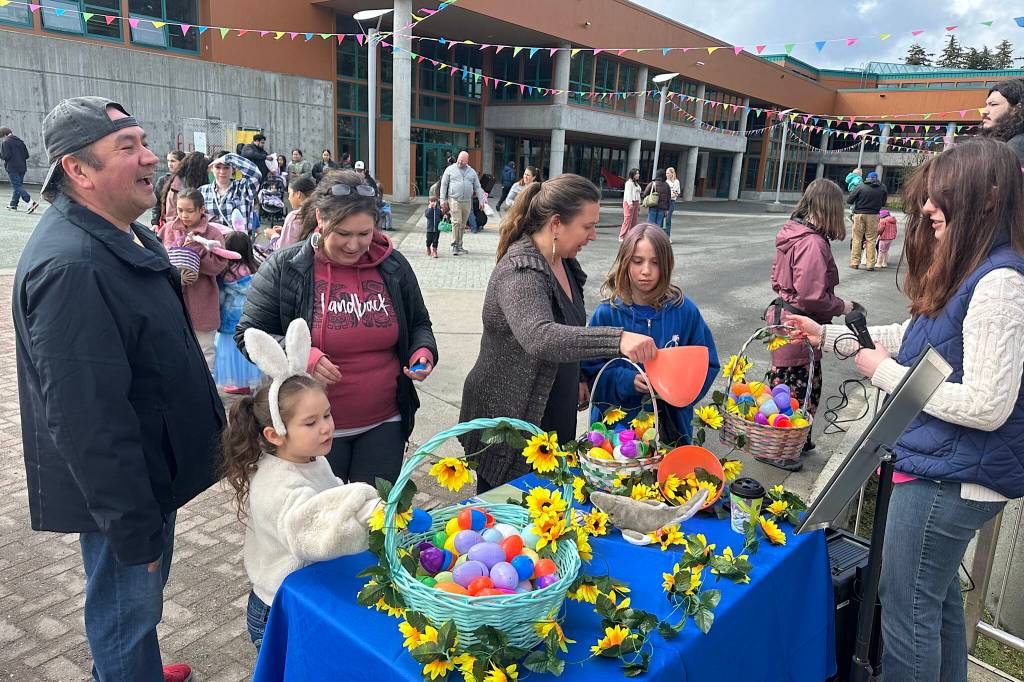
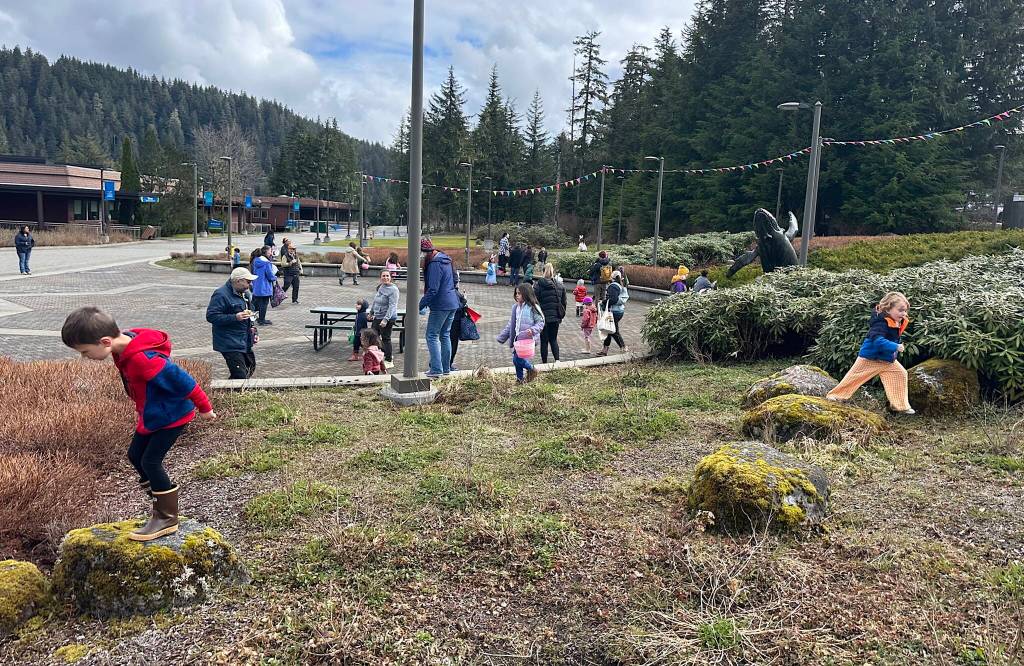
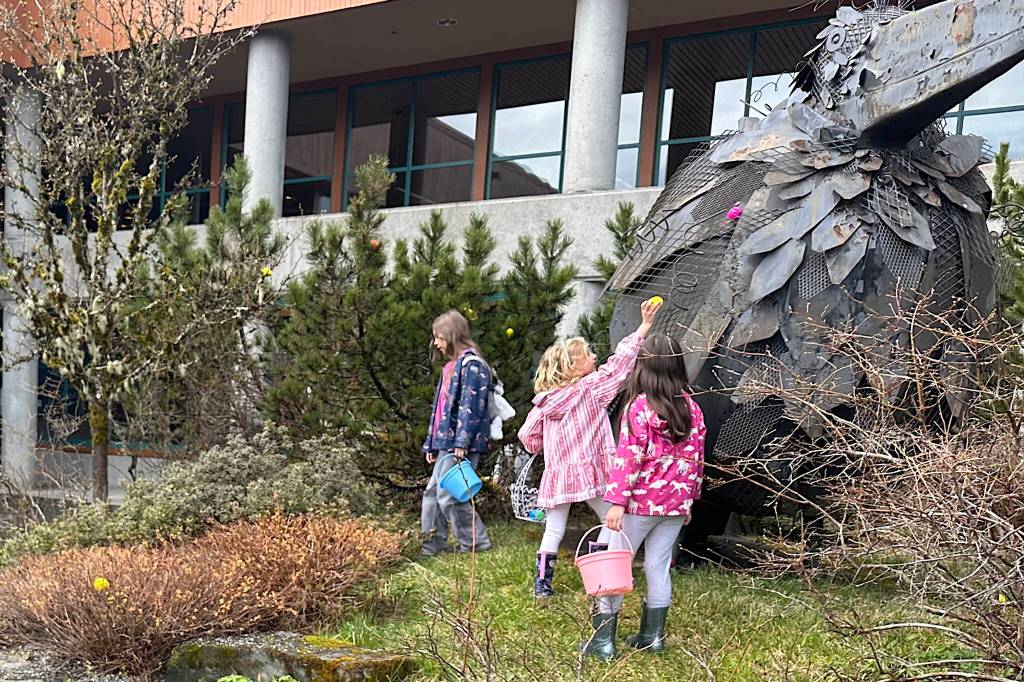
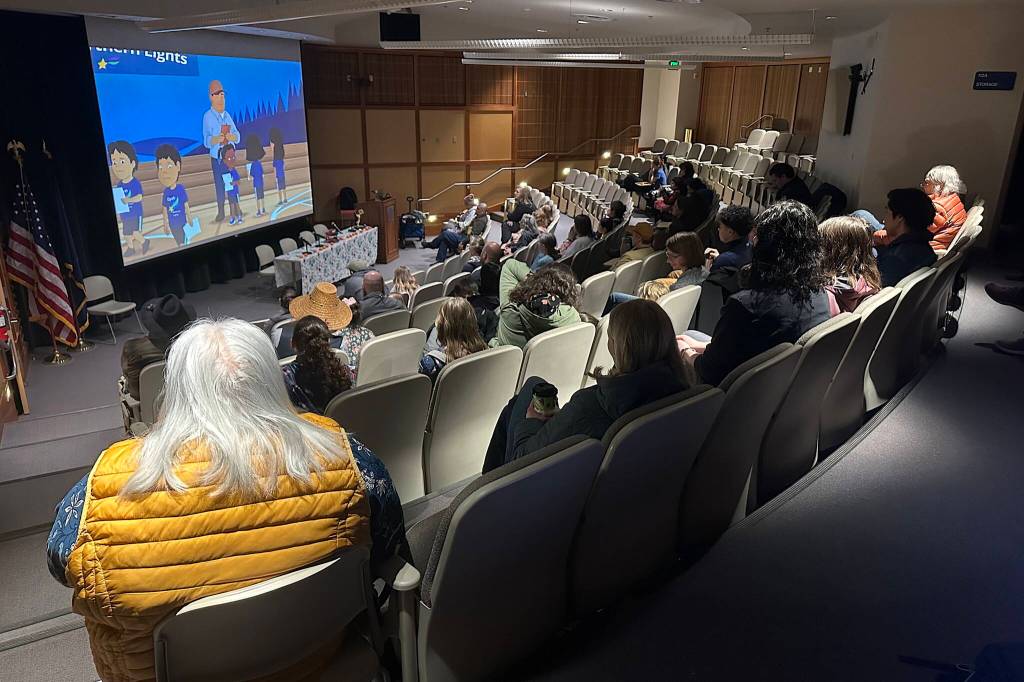


The closest thing to an Easter episode of “Molly of Denali” — based on titles, at least — is probably either “Eagle Egg Hunt” or “Butterflies and Bunny Babies.” But the holiday was occasion for local writers and young fans of the animated PBS show to celebrate its recent Emmy Award win with a watch party and Easter egg hunt Saturday at the University of Alaska Southeast.
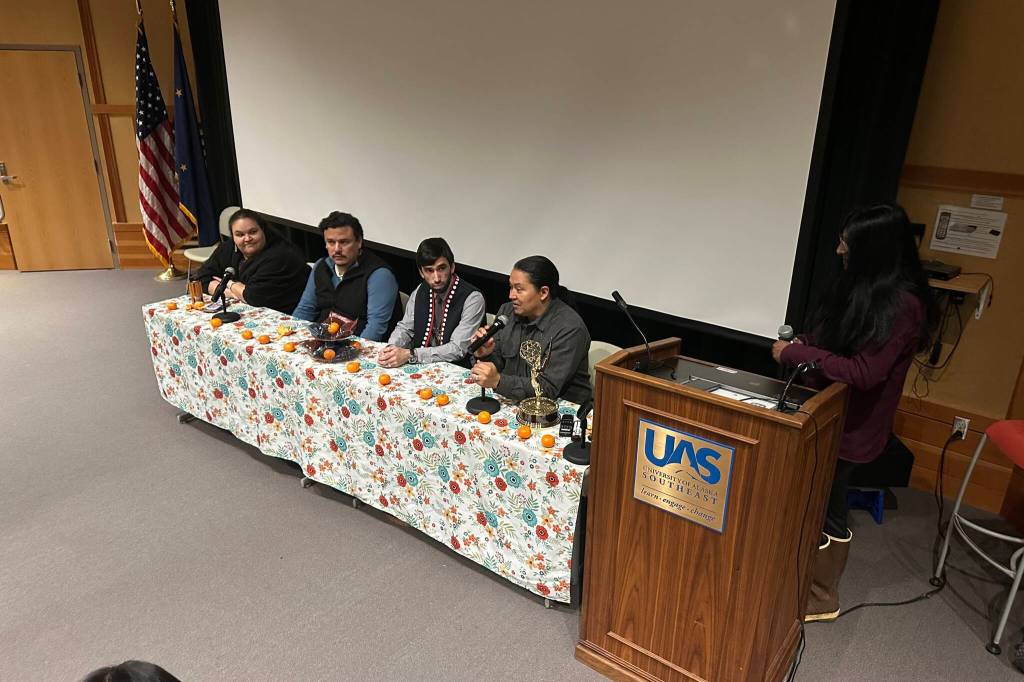
A screening of three 25-minute shows with two episodes each (including the award winner), an hourlong forum with the series’ four local Indigenous writers, and a scamper by dozens of kids for candy-filled plastic eggs that lasted mere minutes raised spirits at the Molly of Denali EGG-Stravaganza. The series, which has aired 76 episodes over four seasons since 2019, is the first U.S. children’s show featuring an Alaska Native as the lead character.
Organizers said since the writer of the award-winning episode, X̱’unei Lance Twitchell, is a Native languages instructor at UAS, a celebration of his achievement also offered an opportunity to resurrect the annual campus Easter egg hunt that hasn’t taken place since before the COVID-19 epidemic.
“We were trying to say ‘How can we host an event for kids?’ and we’re right at the end of the semester and we’re all on fumes, and so we just decided why don’t we pull the ‘Molly of Denali’ event together and finish it with Easter eggs?” said Kolene James, UAS’ multicultural services manager.
An all-ages audience in the Egan Classroom Building watched three episodes, beginning quite obviously with season four’s “Meteorite Out of Sight”/”Not a Mascot” — with the latter story winning the award for Writing for a Preschool Animated Series at the 2025 Children’s and Family Emmy Awards on March 15. The story features Molly and her school basketball teammates confronting the issue of a rival school whose mascot is a tomahawk-waving stereotype of an Indigenous person.
During the forum afterward the writers — Twitchell, Vera Starbard, ‘Wáats’asdiyei Joe Yates and Frank Katasse — discussed how the series addresses such issues and other aspects of Native culture that may be known to a wider audience, but not fully understood. Part of that effort has also involved a development of trust between the show’s writers and other members of the creative team who are responsible for transferring scripts into an 11-minute animation suitable for kids ages 3-8.
Starbard said the idea of a mascot storyline came up during the first writers’ meeting for the series that debuted in 2019, but at the time she questioned if the show’s creators could handle the theme properly. By the time it came up with the “Not A Mascot” episode, trust was no longer a concern based on how ideas had been transferred to screen during the first seasons.
“That was a really interesting progression,” she said.
Twitchell said that progression involves going through a series of different people and processes between writing and airing, all while needing to “think about what’s going to fit through a PBS lens as well because it’s kind of it has to be able to reach everybody.” He said he took an interest in the show — and children’s storytelling in general — because of his three kids and how he was tired of the books generally available to read to them.
“They were mostly about cows and pigs and chickens,” he said. “I didn’t want to tell stories about those things. And so to think about having a chance to tell both a mixture of our own stories or stories from long ago, and things that we go through as Indigenous peoples, it was such a blessing to have an opportunity to do that.”
Explaining what are traditional familiarities in Alaska Native communities to children in the outside world can be tricky, Starbard said.
“One of my first episodes was about the northern lights and trying to explain a pretty complex scientific thing that adults barely have the grasp of to young children,” she said. She sent a description of the script to Katasse and asked “Can you please read this to your kids and see if it makes sense? And his response was it mostly did.”
Creative differences between writers and the people who put the results on screen are common in Hollywood. That was evident when a younger audience member asked the four writers to name their favorite episode of the series.
“I think that’s two different questions that we’re trying to address: which is our favorite to write and which one is maybe our favorite episode that came out,” Katasse said. “I think those are two different answers because the process changes so much from the impetus of the story. It was like the holiday sweater was supposed to be a Chilkat robe and then it ended up a holiday sweater.”
A favorite he wrote was a film noir-style detective tale — meant to be shown in black-and-white — that ultimately “ended up being like a spy comic novel” in full color, Katasse said. His favorite on-air episode was the second half of season four’s “Tusk, Tusk, and More Tusk/The Jökulhlaup Is on Us” — shown during Saturday’s event — since the story about Molly and friends helping her grandmother save her cabin from being flooded went through the fewest changes from script to screen.
Starbard cited the first half of season two’s “Molly & Elizabeth/Uqiquq (Throw Party)” — also shown Saturday — as the one she enjoys sharing most since it narrates the history of Tlingit civil rights activist Elizabeth Peratrovich as part of a storyline where visitors from outside tell Molly she’s “not Native enough” to fit their stereotypes. She said the one she’s proudest of is the second part of season one’s “Rocky Rescue/Canoe Journey” because of how it features Molly and others traveling to Juneau’s biennial Celebration where thousands of Alaska Natives come together.
“They looked at this episode and they were like ‘Oh no’ — new backgrounds, new places, on the water, new people,” she said, noting animation is “ridiculously expensive.” It took some “tooth-and-nail” negotiations with the show’s developers, but ultimately both her journey and Molly’s turned out successful.
“This was, like, the most extravagant episode,” Starbard said.
But Starbard, responding to a different question, said it was seeing the incidental moments, rather than the story, during the series’ pilot episode that affected her the most.
“It was literally seeing the mother beading and seeing Mr. Patak with the sealskin vest,” she said. “And I was so emotional just seeing that and realizing for as much as I ingested books and ingested TV while growing up I’ve never seen myself ever. I get so emotional every time I think about it. It was just such a huge realization.”
• Contact Mark Sabbatini at mark.sabbatini@juneauempire.com or (907) 957-2306.