
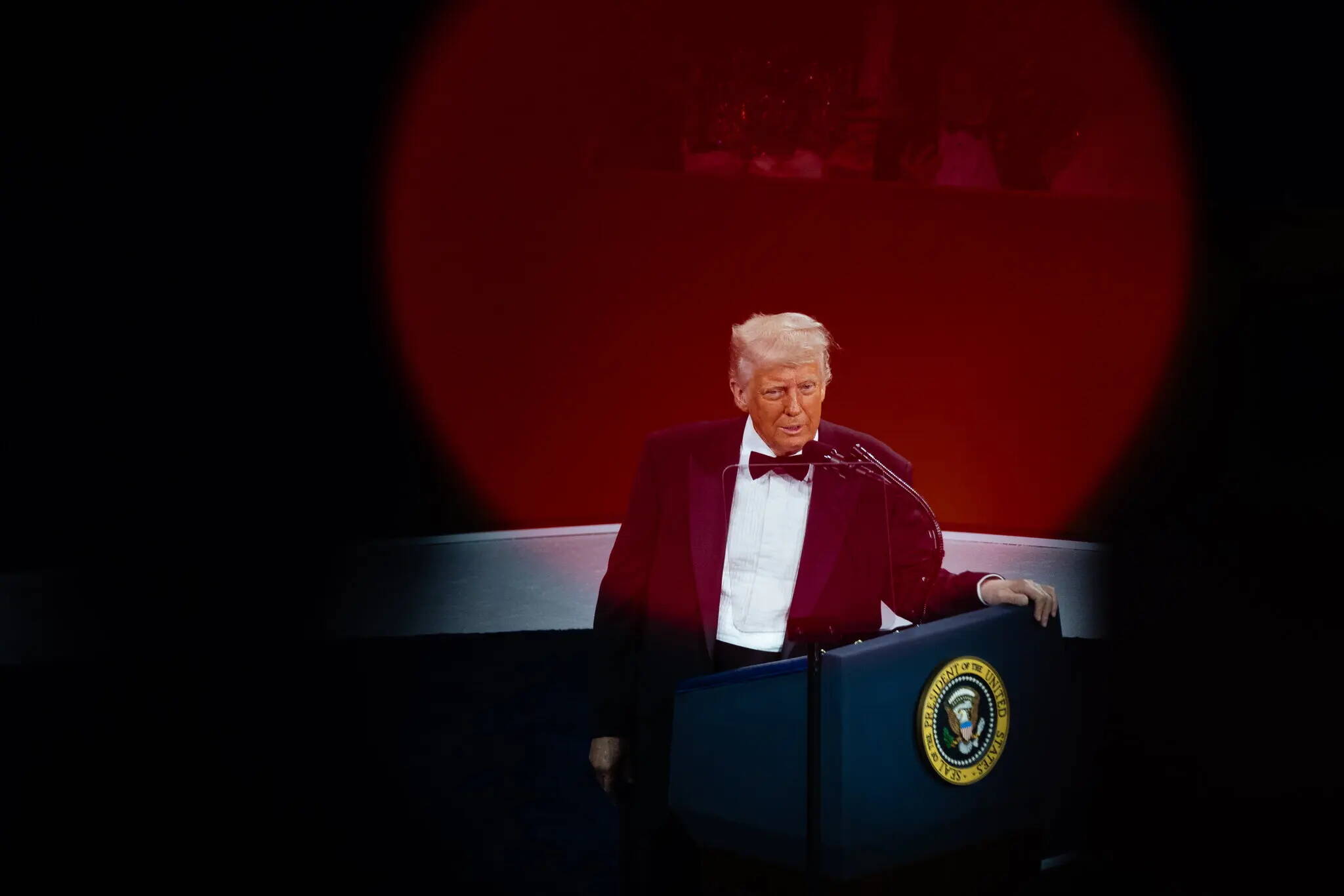
President Donald Trump on Wednesday said he would pause his reciprocal tariffs for most countries for the next 90 days, backing down on his policy that had sent markets into a tailspin and threatened to upend global trade. But Mr. Trump said his break did not include China, announcing he would instead raise tariffs on its exports to 125 percent after Beijing announced a new round of retaliation.
Karoline Leavitt, the White House press secretary, said the tariff level would be brought down to a universal 10 percent — a significant reduction for many countries.
In announcing the pause, the White House repeatedly tried to suggest it was all part of a premeditated strategy. Ms. Leavitt accused reporters of having “failed to see what President Trump is doing here,” and Scott Bessent, secretary of the Treasury, said it was Mr. Trump’s “strategy all along.”
But the abrupt change in course came amid a sell-off in U.S. bonds, which are generally safer investments, and after days of deep losses in financial markets around the globe. Economists had expressed serious concerns that the United States might be careening toward a recession of its own making.
The reversal, which prompted the S&P 500 to climb over 7 percent in a matter of minutes, followed another whirlwind day. Mr. Trump’s latest tariffs had hit nearly all U.S. trading partners with new levies and raised import taxes on Chinese goods to 104 percent. Beijing then announced additional tariffs on imports from the United States, for a total levy of 84 percent, which went into effect at 12:01 p.m. Eastern.
Shortly before that, European Union member states voted to approve counter-tariffs against the United States that would take effect next Tuesday, its first response to Mr. Trump’s levies. Documents showed that duties of 25 percent would be applied to a wide range of goods imported from the United States, including products as varied as corn and plate glass. The bloc said its countermeasures “can be suspended at any time, should the U.S. agree to a fair and balanced negotiated outcome.”
In related developments:
• In Washington, Mr. Trump’s trade representative, Jamieson Greer, told a congressional committee that the president was right to label the country’s trade deficit a national emergency, calling it “a manifestation of the loss of the nation’s ability to make, to grow and to build.” Many economists have criticized Mr. Trump’s focus on trade deficits, arguing that they are a poor metric for judging the quality of a trade relationship.
• A sharp sell-off in U.S. government bond markets showed concerns about the fallout of a trade war. Yields rise when investors sell bonds — pulling down the price of bonds — which can reflect worries about inflation, shifts away from U.S. dollar assets or a need for investors to raise cash to cover losses on other trades. Rising yields push up the cost of borrowing for mortgages, credit cards, business loans and many other rates. The 10-year U.S. Treasury yield jumped to around 4.4 percent, up from below 4 percent at the start of the week.
• U.S. oil prices fell to about $56 a barrel on Wednesday morning, the lowest level in more than four years. The slide in crude prices signals deteriorating confidence in the strength of the economy and has spooked U.S. oil executives, many of whom had backed Mr. Trump.
• In commercial and industrial hubs across Asia, businesses grappled with the effects of the levies. For some companies, U.S. tariffs have had the unexpected effect of making China a more appealing place to produce in and buy from, as heavy tariffs on other Asian countries have eliminated some motivation to set up shops there.
• Stocks of drug companies fell across global markets on Wednesday, a day after Mr. Trump reiterated plans to impose tariffs specifically on pharmaceuticals. He particularly spooked India’s drug industry, the country’s most successful exporter, which had been exempted in the first round of levies.
• This article was originally published by The New York Times.
