
CANNON BALL, N.D. — Construction crews have resumed work on the final segment of the Dakota Access pipeline, and the developer of the long-delayed project said Thursday that the full system could be operational within three months.
Meanwhile, an American Indian tribe filed a legal challenge to block the work and protect its water supply.
The Army granted Energy Transfer Partners formal permission Wednesday to lay pipe under a North Dakota reservoir, clearing the way for completion of the 1,200-mile pipeline. Company spokeswoman Vicki Granado confirmed early Thursday that construction began “immediately after receiving the easement.”
Workers had already drilled entry and exit holes for the segment, and oil had been put in the pipeline leading up to Lake Oahe in anticipation of finishing the project.
“The estimate is 60 days to complete the drill and another 23 days to fill the line to Patoka,” Granado said, referring to the shipping point in Illinois that is the pipeline’s destination.
Work was stalled for months due to opposition by the Standing Rock Sioux and Cheyenne River Sioux tribes. Both tribes argue that the pipeline threatens their water supply and cultural sites.
In a statement, Cheyenne River Sioux Chairman Harold Frazier said the water “is our life. It must be protected at all costs.”
The Cheyenne River reservation in South Dakota borders the Standing Rock reservation, which straddles the North Dakota-South Dakota border. The last piece of the pipeline is to pass under the lake on the Missouri River, which marks the eastern border of both reservations.
A separate court battle unfolded between the developer and the Army Corps of Engineers, which oversees the federal land where the last segment is now being laid. President Donald Trump last month instructed the Corps to advance pipeline construction.
The Cheyenne River Sioux on Thursday asked a federal judge to stop the work while a lawsuit filed earlier by the tribes proceeds. Attorney Nicole Ducheneaux said in court documents that the pipeline “will desecrate the waters” that the Cheyenne River Sioux rely on.
Energy Transfer Partners, which maintains the pipeline is safe, did not immediately respond in court to the filing. U.S. District Judge James Boasberg said he would hear arguments from attorneys on Monday.
The tribes’ lawsuit, filed last summer, has been on hold while the dispute over the final pipeline segment played out. The Cheyenne River Sioux on Thursday told the judge that they also want to make a claim on freedom-of-religion grounds.
“The sanctity of these waters is a central tenet of their religion, and the placement of the pipeline itself, apart from any rupture and oil spill, is a desecration of these waters,” Ducheneaux wrote.
Standing Rock Sioux attorney Jan Hasselman has said that tribe will also try to block the construction in court, with likely arguments that further study is necessary to preserve tribal treaty rights.
An assessment conducted last year determined that building the final segment of the pipeline would not have a significant effect on the environment. However, the Army decided in December that further study was warranted to address tribal concerns.
The Corps launched an environmental study on Jan. 18, but Trump signed an executive action six days later telling the Corps to allow the company to proceed with construction. Legal experts have disagreed on whether the Army can change its mind simply because of the change in White House administrations.
Standing Rock Sioux Chairman Dave Archambault said in a statement late Wednesday that the tribe is prepared to keep up the battle in the courts, “to fight against an administration that seeks to dismiss not only our treaty rights and status as sovereign nations, but the safe drinking water of millions of Americans.”
An encampment near the construction drew thousands of protesters last year in support of the tribes, leading to occasional clashes with law enforcement and hundreds of arrests.
Law enforcement officers who have maintained a presence in the area for months were on heightened alert Thursday for protests, though none was immediately reported.
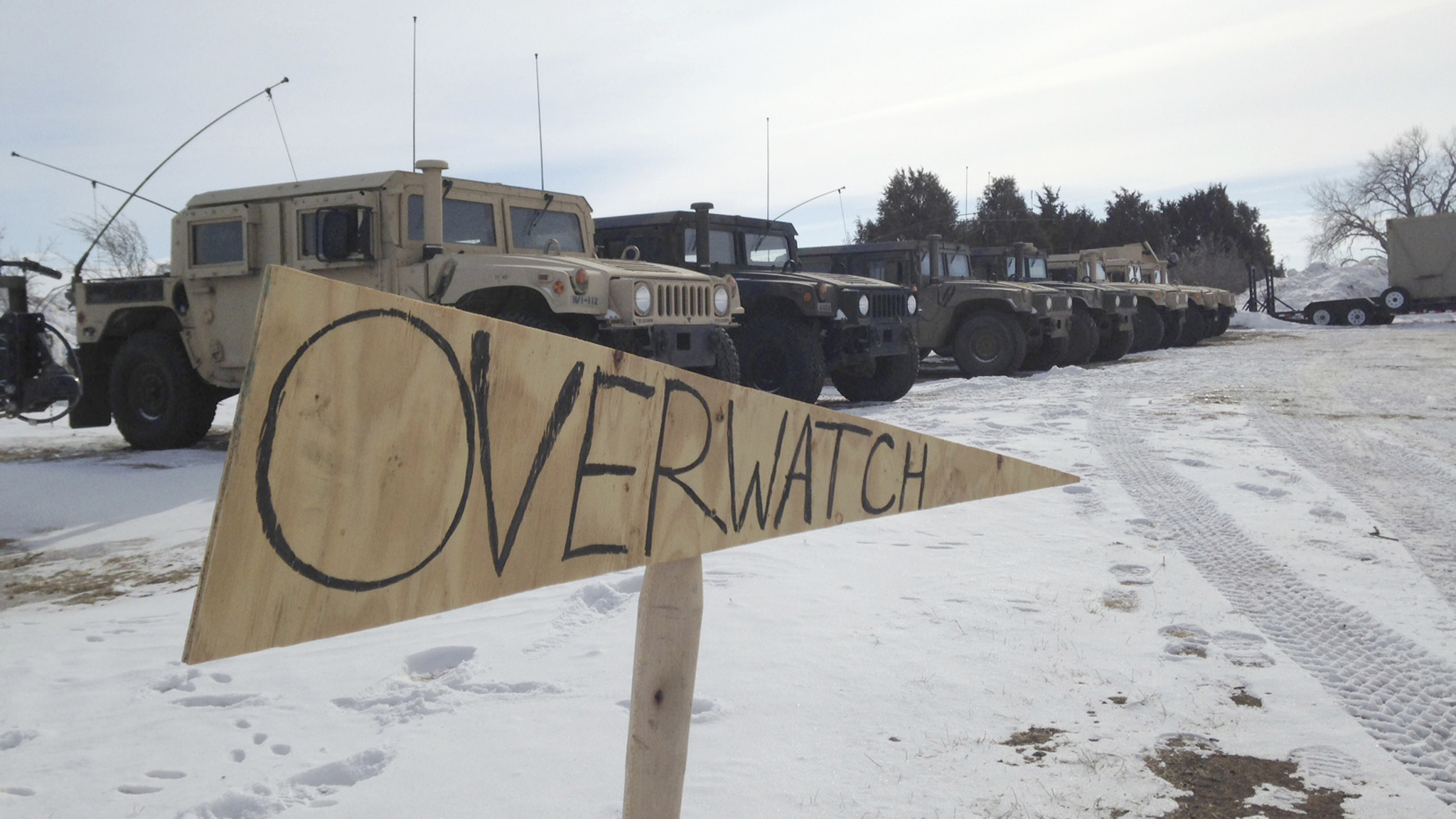
Officers and National Guard soldiers were stationed on the hills near the camp and at a blockaded bridge on a nearby highway. Energy Transfer Partners has its own security at the drilling area.
In a statement Wednesday, North Dakota Gov. Doug Burgum urged “cooperation and restraint” from all parties and requested federal law enforcement assistance to keep the peace during construction.
Protesters rallied in several U.S. cities Wednesday. Joye Braun and Payu Harris, two pipeline opponents who have been at the North Dakota protest encampment, said in an interview at a nearby casino that there’s frustration but also resolve in the wake of the Army’s decision.
“The goal is still prayerful, nonviolent direct action,” Braun said.
