
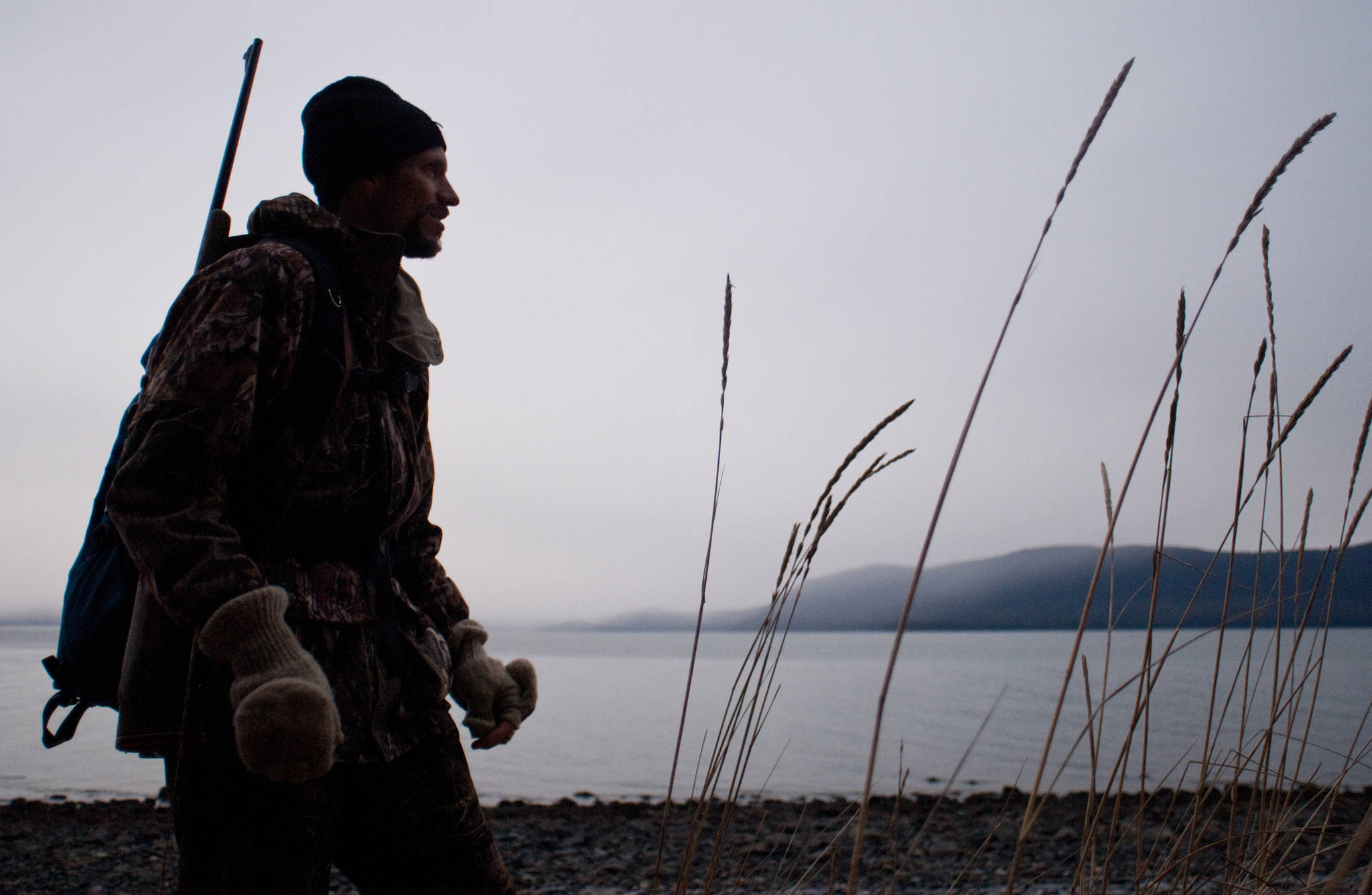
More and more people are coming to Alaska to experience its amazing glaciers, forests and wildlife. But what happens when a tour group who want to hike and kayak run into a group on a bear hunt?
Those are the kinds of interactions tour operators, hunting guides and the U.S. Forest Service are hoping to avoid. In pursuit of that goal, the Forest Service has been holding a series of meeting to develop a Best Management Practices Agreement (BMP) between recreation and tourism services operating in the northern Tongass National Forest.
“Whether you’re a small ship operator or a bear hunting operator, you have different requirements for your business,” said Zach Decker, part-owner and operator of Glacier Guides. “If I’m a hunting guide I don’t know the impacts that small ships are having, and small ships don’t know the impacts they’re having on hunting operations.”
One of the main issues discussed during a BMP meeting at the Juneau Ranger Station Friday morning was proper communication between various groups operating in the same area. There were about two dozen attendees at the meeting both in person and via telephone. At the Ranger Station, most of the people in the room were Forest Service employees, not just from Juneau but Petersburg and Sitka as well.
Representatives from UnCruise Adventures, a tour company based in Seattle, recalled an incident where they had landed their clients on a beach and ran into a hunting party being hosted by Glacier Guides of Gustavas.
“I don’t think we interrupted his hunt,” said Sue Rooney, from UnCruise Adventures, who joined the meeting via phone. She was referring Decker who was sitting in the room.
“He was polite but firm,” Rooney said. “The interaction went well but that’s something we definitely wanted to avoid.”
Decker had been leading a hunting group that was tracking a wounded bear in the area and he politely told the tour group that the area probably wasn’t the safest place for them to be, he told the group.
One of the ways to remedy this was through use of an Automatic Identification System (AIS), a transmission system which lets vessels know where each other are.
Using an AIS, groups can see where others are and radio one another to discuss operations. Members of the BMP agreement submit their voyage plans to an “intentions list,” which is basically an email group, Rooney told the Empire. The problem is that with weather or other things that can happen on a journey, plans change.
“Once the ship is underway,” Rooney said in an interview, “anything can happen.” If a group wants to change their destination, they can use an AIS to identify where other groups are and work to avoid interaction.
“This is our crystal ball,” Rooney said. “We go onto the AIS and it serves as an immediate resource on our geography.”
All of the groups involved have been very pleased with the outcomes the BMP has produced. The agreement is the result of small cruise ship operator asking the Forest Service to facilitate a conversation between tour and hunting groups operating in the Tongass, according to the Forest Service website.
“Operators have determined that we’re better off working together than against each other,” Decker told the Empire. “It’s a positive step for conservation and tourism management and economic development in the region.”
But there’s still work to be done. The agreement has generated a color-coded map that shows which areas are off-limits to tour groups during the hunting season. The colors red, yellow and green designated levels of restriction to tour operations when hunters are in the area.
Rooney would like to see a little more flexibility with this system. Taking certain areas that are designated red and moving them to yellow, which would allow for tours to visit to locations if no hunters are in the area. Hunting groups are given priority during the hunting season and must agree to allow a particular hunting group in the area.
Decker and other hunting group operators suggested using funds from user fees all the tours pay to have the Forest Service build improvements at certain locations. That would draw recreational tourists away from hunting grounds and to those areas with trails or other amenities.
The discussion Friday morning was very amicable, and Rooney told the Empire the meeting had been the shortest BMP meeting by far. The meeting was scheduled to take four hours but only took two.
“Last winter we probably one to two meetings a month, it’s been a long exhausting process,” Decker said.
The BMP is not a contractual arrangement, only an agreement of mutual understanding between the various groups working in the area.
“It’s so we can all play nice in the sandbox together,” Decker said.
• Contact reporter Peter Segall at 523-2228 or psegall@juneauempire.com.
