
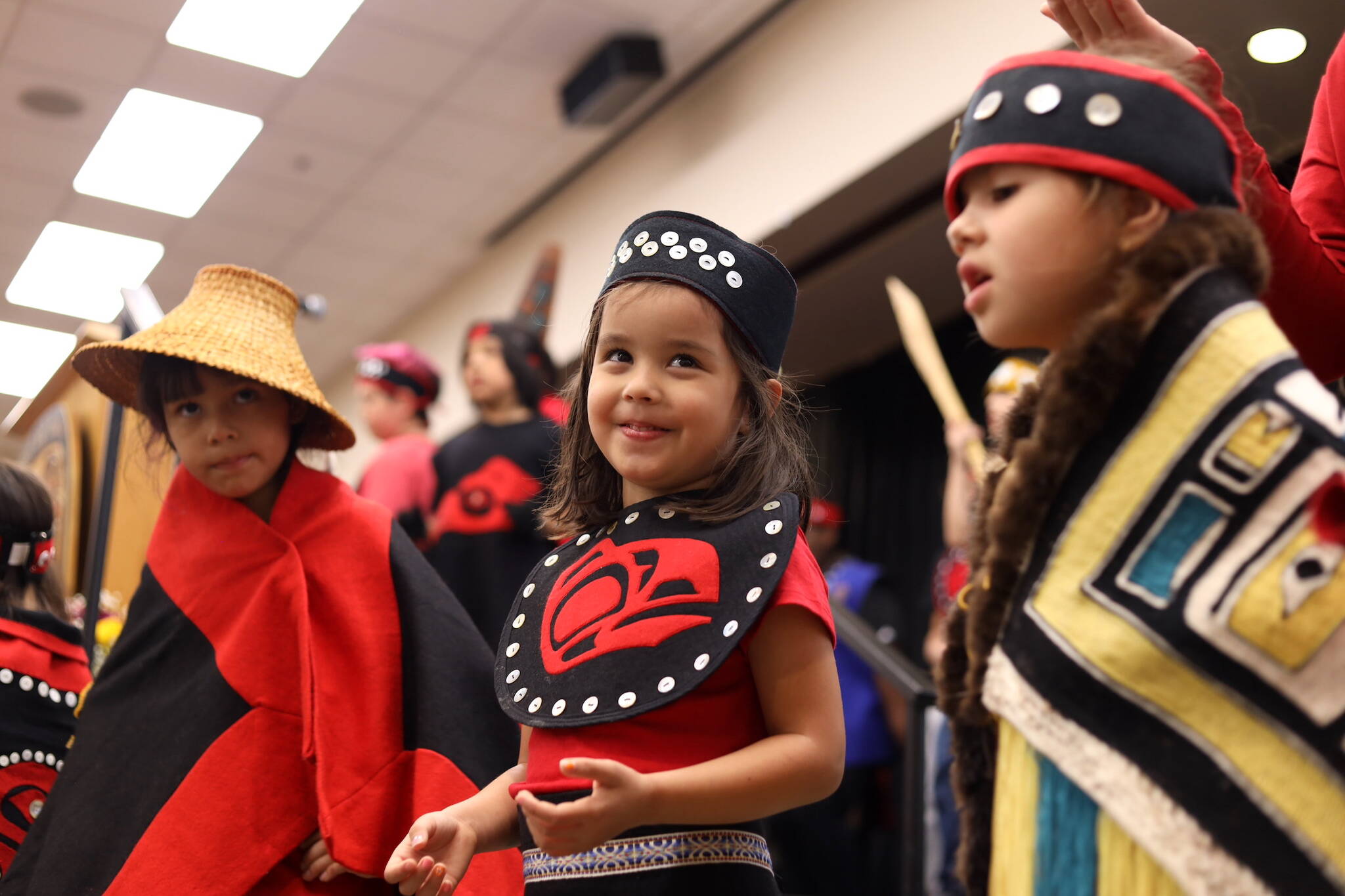
Six decades after Presbyterian minister and Tlingit trailblazer Walter Soboleff was forced to watch his church change from a thriving space in Juneau’s Alaska Native community into a pile of rubble, the wrongs that led to that are finally being reckoned with.
Throughout the past weekend and leading up to a healing event on Indigenous Peoples’ Day on Monday, current leaders of Kuneix Hidí Northern Light United Church, Northwest Coast Presbytery and Presbyterian Church (U.S.A.) offered a formal acknowledgment, apology and reparations for the injustices and racially charged motives that led to the closure of Soboleff’s church in 1962.
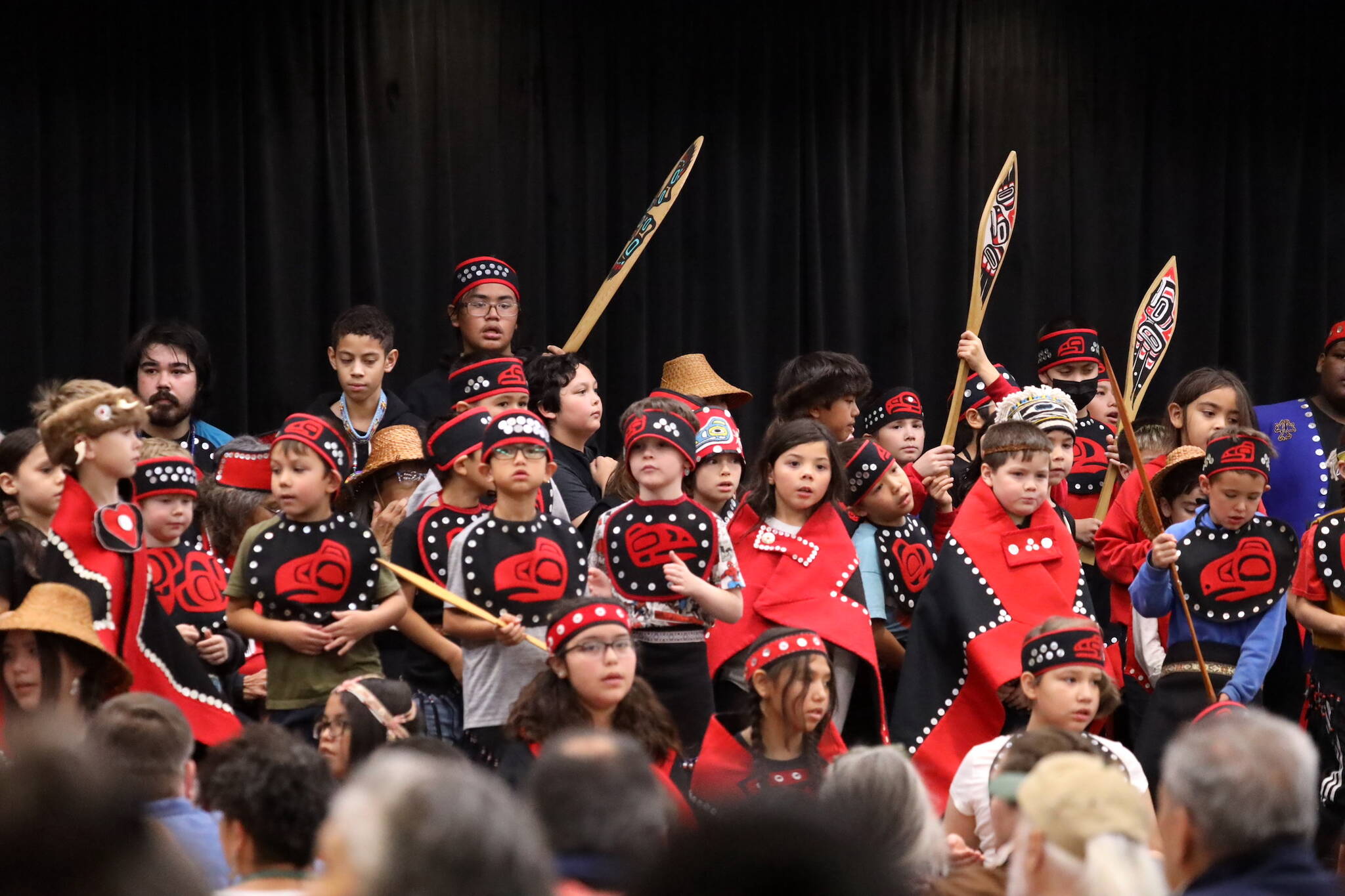
Students from the Tlingit Culture Language and Literacy program sing and dance on stage during a healing event on Indigenous Peoples’ Day on Monday to acknowledge and accept an apology of the closure of Juneau’s Memorial Presbyterian Church in 1962. (Clarise Larson / Juneau Empire)
In 1940, Soboleff became the Presbyterian Church’s first Alaska Native ordained minister and took on the role as pastor of Juneau’s Memorial Presbyterian Church, where he turned the once empty place of worship into a vibrant community pillar among Juneau’s Alaska Native population.
Preaching in both English and Lingít, he invited all people of the community to worship and, in turn, the church’s impact was wide-reaching both in Juneau and Alaska Native villages across Southeast Alaska where also shared his message.
However, in 1962 the Alaska Presbytery and National Board of Missions inexplicably demanded the closure of the church he had led for more than two decades. They gave Soboleff and the congregation no answer behind the closure, leaving him and many members in great anguish. Despite the deep sorrow that followed Soboleff continued to share his message even without a church for decades before he died in 2011 at 102. He never received a formal apology from the Presbyterian church for the closure.
On Saturday a sign was unveiled at the site of the former Memorial Presbyterian Church to commemorate its significance and on Sunday, during a multi-hour church service, church leaders acknowledged and apologized for the harm that the closure caused.
The ceremony on Monday included a summary of the reparations and ongoing commitments following the apology by church leaders. The ceremony included a dance performance by students from the Tlingit Culture Language and Literacy program, and videos describing the closure.
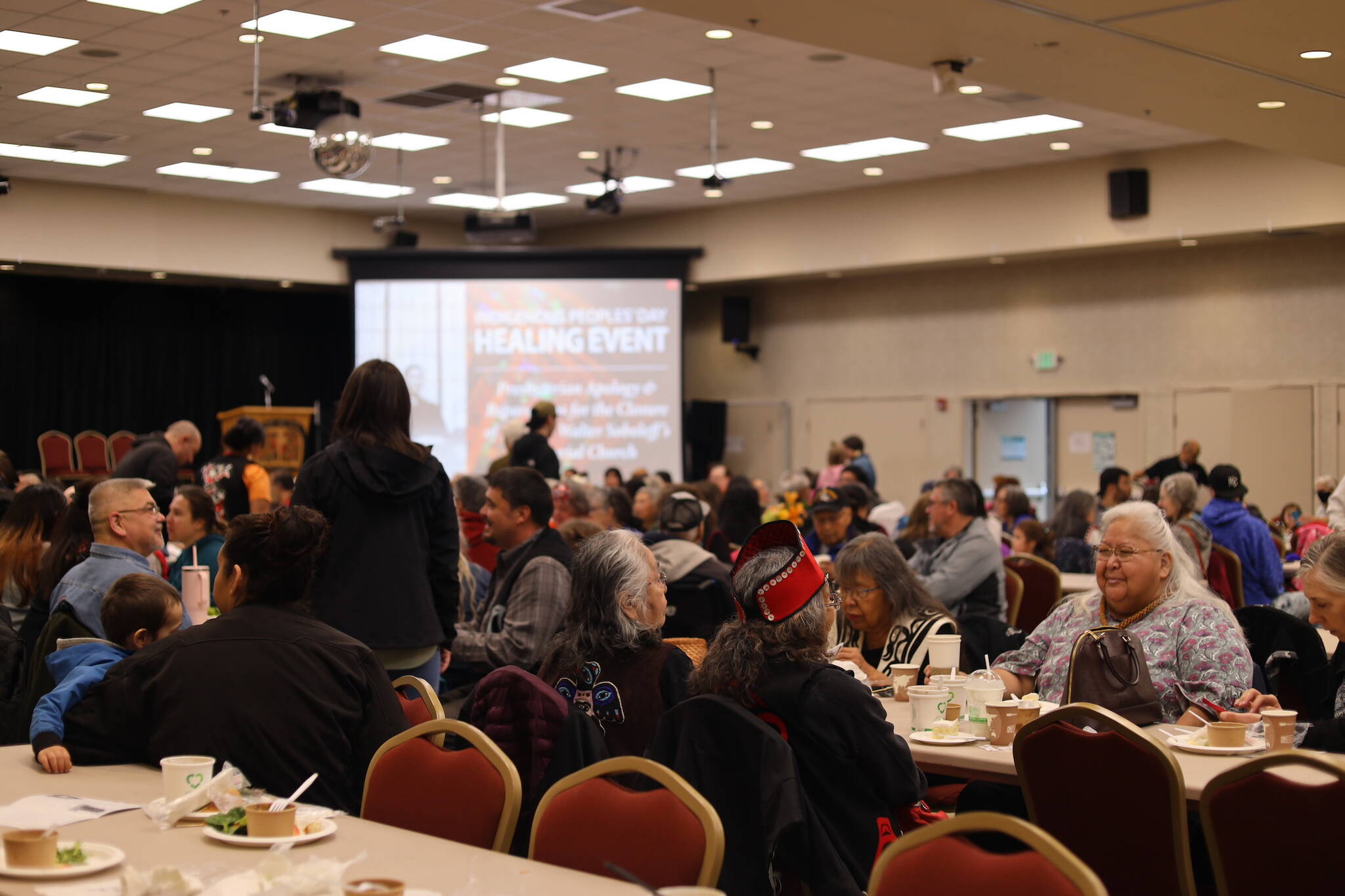
Hundreds gathered at Elizabeth Peratrovich Hall on Monday for a healing event on Indigenous Peoples’ Day to acknowledge and accept an apology of the closure of Juneau’s Memorial Presbyterian Church in 1962. (Clarise Larson / Juneau Empire)
In total the three church entities agreed to a combined $980,000 in monetary commitments to make amends for the closure. The funds are committed to put toward efforts like providing scholarships and funds to Indigenous churches around the country.
“We cry out and recognize and lament the racist closure of Memorial Presbyterian church,” said the Rev. Diane L. Givens Moffett, president and executive director of the Presbyterian Mission Agency, on Sunday. “We cry out with those who came before us and are still impacted by this closure.”
The Rev. Bronwen Boswell, acting stated clerk of the General Assembly of the Presbyterian Church (U.S.A.), apologized for the “culpability and our silence regarding the racist closure of the memorial Presbyterian Church in 1962” and its resulting harm.
Jim Altar, elected monitor for Kuneix Hidí Northern Light United Church, called the closure “racist and unchristian.”
“Directly and indirectly, we participated in and benefited from an implicit and explicit preference for the white congregation,” he said. “We acknowledged this. We hold ourselves accountable for this. We’re deeply sorry for our actions, our decisions and our behaviors.”
Richard Chalyee Éesh Peterson, president of the Central Council of the Tlingit and Haida Indian Tribes of Alaska, on Monday said the apologies are the first step toward healing multiple generations of trauma that still permeate from the closure today. He, alongside Sealaska Heritage President Rosita Worl, accepted the apology during the multi-hour ceremony.
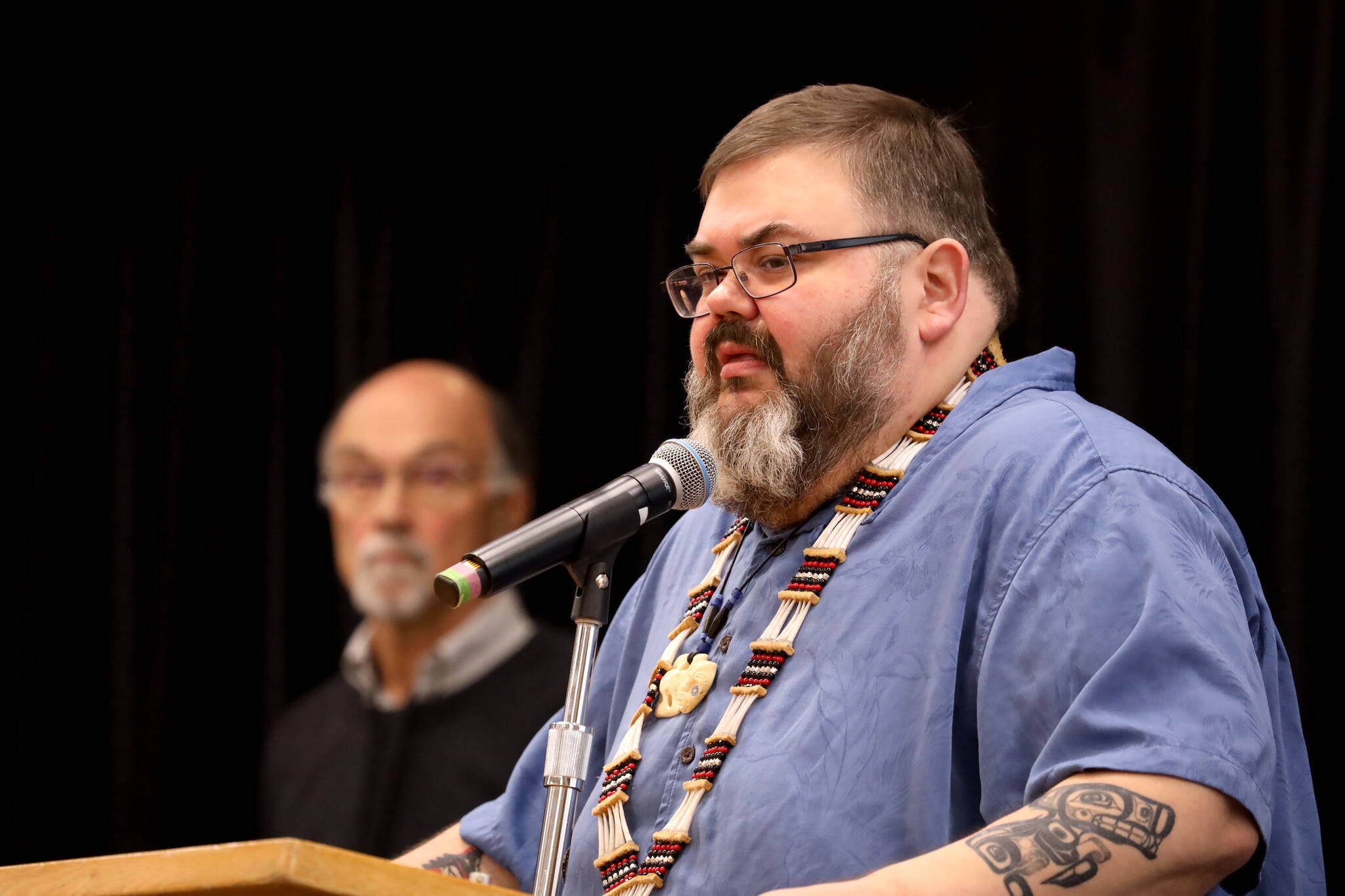
Richard Chalyee Éesh Peterson, president of the Central Council of the Tlingit and Haida Indian Tribes of Alaska, speaks to the crowd on stage during a healing event on Indigenous Peoples’ Day on Monday to acknowledge and accept an apology of the closure of Juneau’s Memorial Presbyterian Church in 1962. (Clarise Larson / Juneau Empire)
“It’s been heavy — healing work is hard work and coming face to face with the things that caused the harm can be triggering, but it’s worth it,” Peterson said after the ceremony. “My heart feels a little fuller today. Recognition is important, and I think it’s important to really begin that healing and recognize that that healing is needed — it’s good, it feels good.”
Worl called the past three days “a wonderful thing” and said she is eager to see the healing that follows.
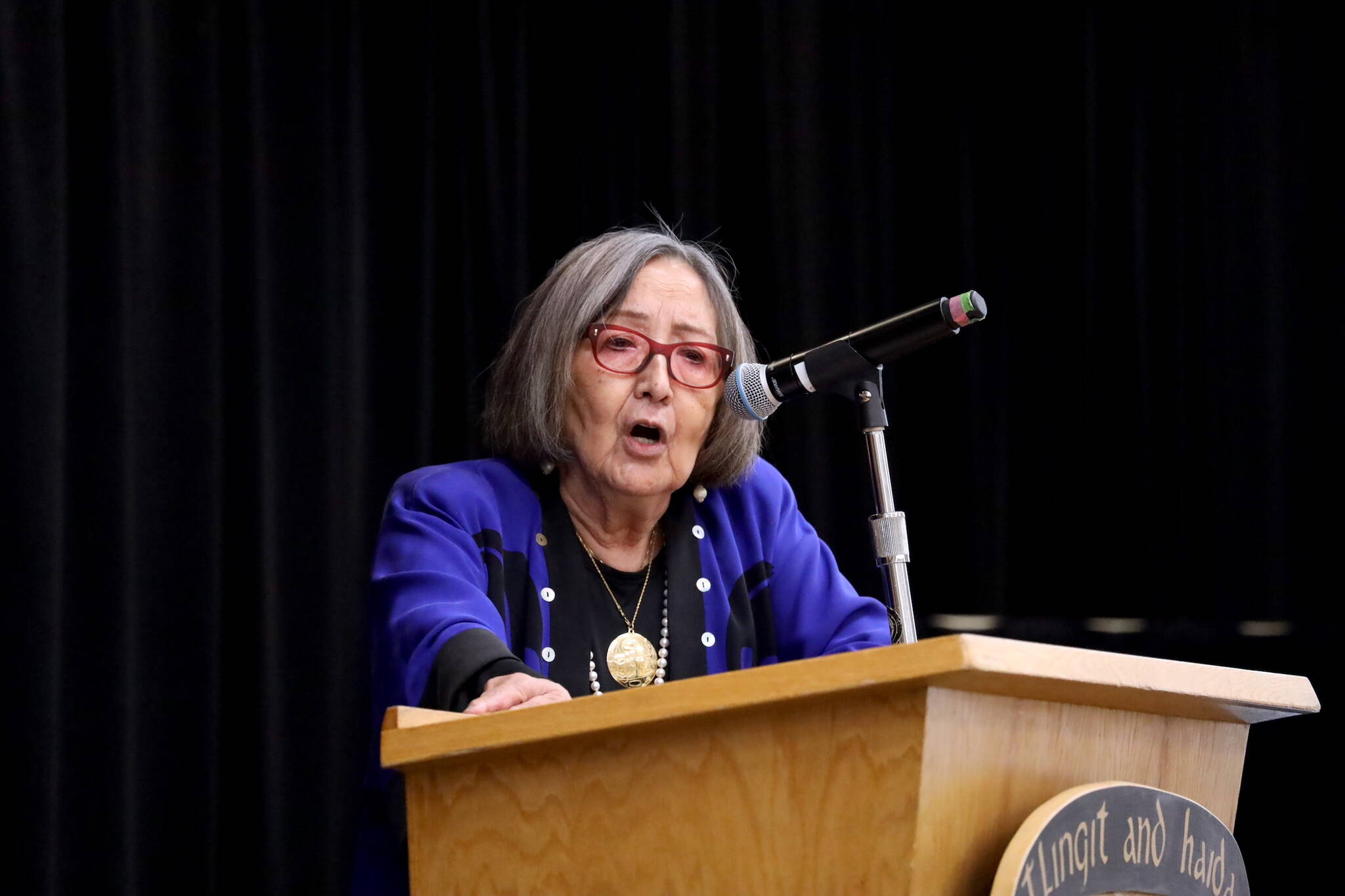
Sealaska Heritage President Rosita Worl speaks to the crowd on stage during a healing event on Indigenous Peoples’ Day on Monday to acknowledge and accept an apology of the closure of Juneau’s Memorial Presbyterian Church in 1962. (Clarise Larson / Juneau Empire)
“I think Dr. Soboleff would have been so happy to hear those children’s singing,” she said.
“Hopefully this is just the beginning.”
• Contact reporter Clarise Larson at clarise.larson@juneauempire.com or (651) 528-1807.
