
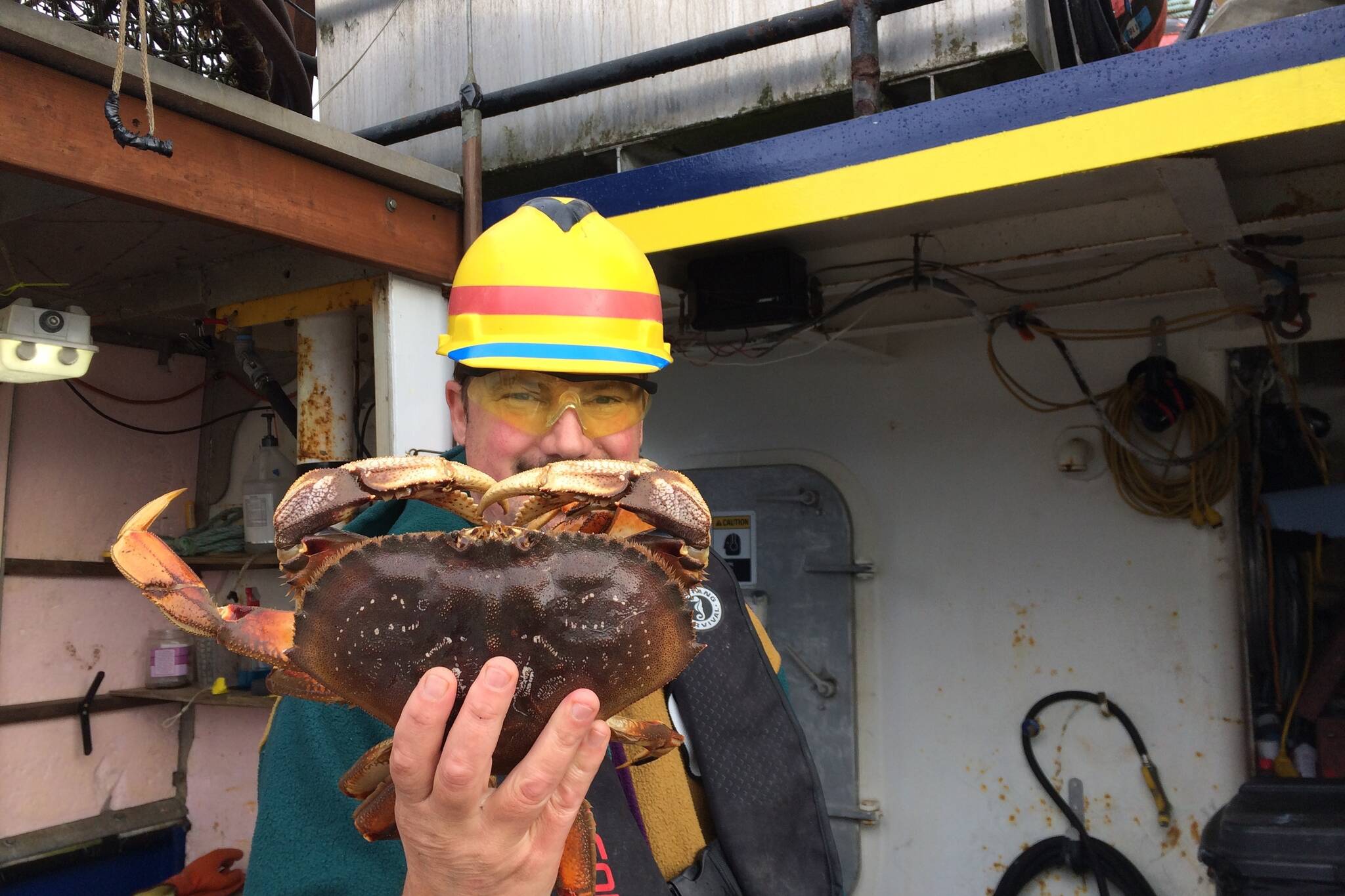
The end of the summer Dungeness crab season is only a few days away and reports of low catch rates might have some fishermen in a crabby mood.
“On a regionwide level, there are no bright spots, and generally regionwide catch rates have been down,” said Joseph Stratman, the lead crab biologist of Region I for the Alaska Department of Fish and Game.
July 30 marks the end of a shorter-than-typical summer Dungeness crab season in Southeast Alaska for the 201 permitted crabbers. It was slashed around two weeks short by the the fish and game department in a released advisory announcement in late June. The decision was made after data collected from the first week of the season, which started June 15, pointed to an estimated full season harvest of about 2 million pounds, which is lower than the 2.25 million-pound threshold in regulation and resulted in the department ruling for a truncated summer season — only the third time in the last 20 years.
But, Stratman said Southeast Alaska can expect a fall season to last at least a month, and possibly longer pending port sampling data analysis that will be conducted in between the seasons. The port sampling data will give insight as to what the fisherman saw during the summer months and help determine the potential harvest numbers that could be expected for the fall. He said people can likely expect the decision on the length of the fall season to be announced in mid-August. The fall season will start Oct. 1.
Last year, the summer season lasted around two months – mid-June to mid-August — and the overall Dungeness crab harvest numbers for summer and fall clocked in at around 4.23 million pounds, which is well above the 10-year harvest average in the region, but not nearly as high as 2020’s nearly record-breaking harvest at 5.87 million.
[Sockeye harvest numbers soaring, other species see decline]
“Nobody did good at all, it’s one of the worst seasons that I’ve heard of in I don’t know how long,” said Mitch Mork, a former crabber in Wrangell who has heard about how the season is going through friends and family.
Stratman said he can’t identify any specific causes as to why regionwide catch rates are down, but said it’s not atypical to see this species’s numbers fluctuate from year to year, and it’s hard to predict how a may differ each given the format the department collects the estimated season prediction.
“All info from the fishing, we don’t know how things look until people do some fishing,” he said. “But from what I’ve heard, people weren’t catching a lot of crabs.”
But, studies by the Office of National Marine Sanctuaries National Oceanic and Atmospheric Administration suggest that Dungeness crab populations will likely face challenges as climate change continues to grow as more of a threat to ocean sustainability.
Ocean acidification has been linked to a projected decline over the next 50 years in Dungeness crab biomass, larval development rates and survival and an overall loss in economic revenue according to a case study published by the NOAA fisheries in collaboration with The National Marine Sanctuary Foundation and NOAA Ocean Acidification Program.
And recently, another threat to Dungeness crab emerged in Southeast Alaska as the discovery of an invasive species, the European green crab, were found on Annette Island, near the southern tip of Southeast Alaska. which biologists have said is a competitor to juvenile Dungeness crab for food and resources. The only detection of the invasive species was three shells and no live species, and just recently announced on July 19 by Metlakatla Indian Community officials.
But, the species has the potential to have a lasting impact in the state in Washington, Gov. Jay Inslee declared an emergency over the state’s green crab infestation in January and the state appropriated over $8.5 million in efforts to eradicate the spread early this year.
Stratman said he hasn’t heard any news on the potential impacts of the European green crab being discovered this month in Southeast Alaska, and said he did not know how ocean acidification may affect the species as the department currently does not test the pH of the water that the species are harvested from, though they do collect the water’s temperature.
• Contact reporter Clarise Larson at clarise.larson@juneauempire.com or (651)-528-1807. Follow her on Twitter at @clariselarson.
