
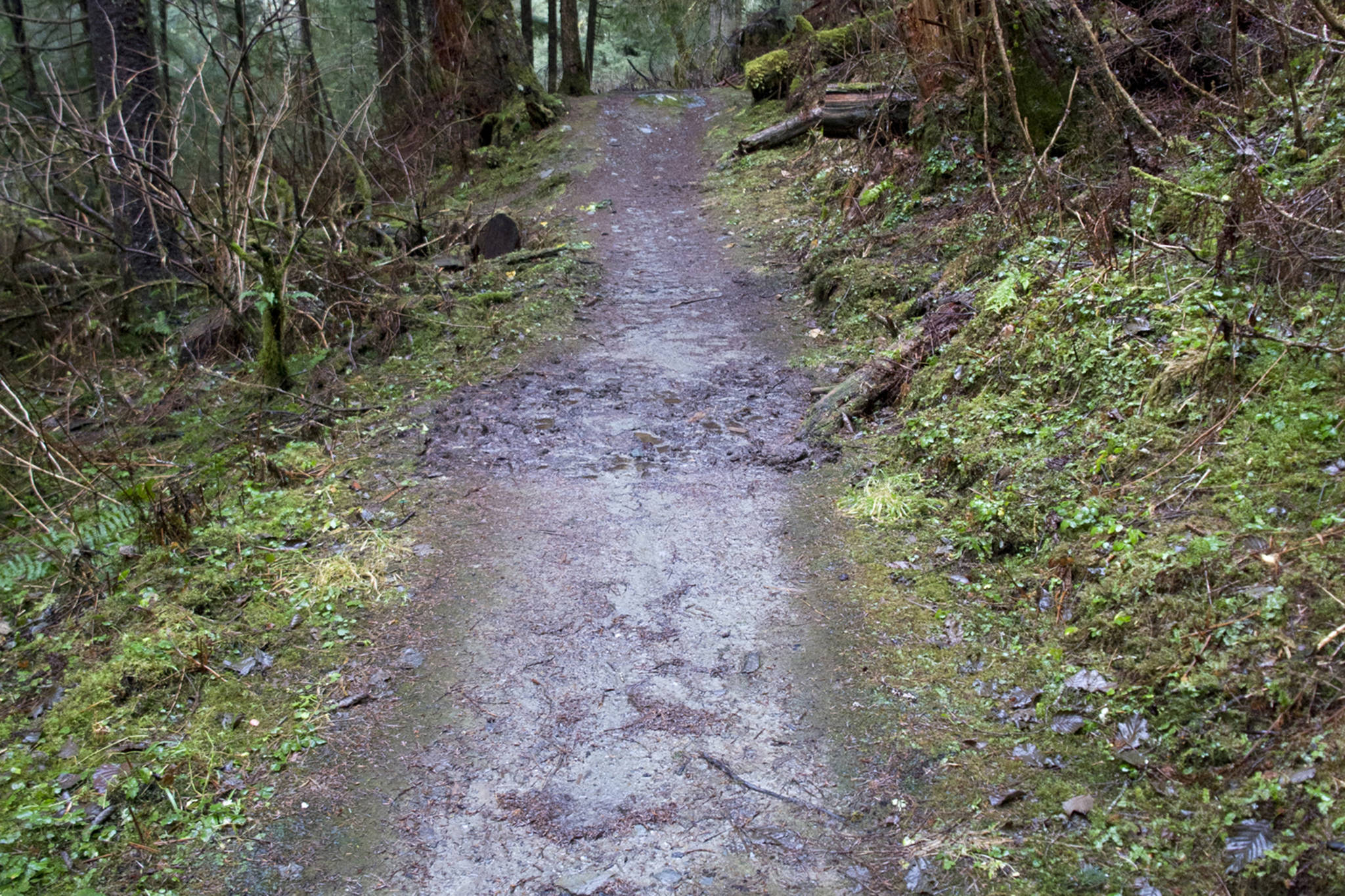
Already this month, I’m looking ahead past breakup, to that brief window between the snow and the bugs, before the brush leafs out and rivers run their highest.
It’s one of the best times of year for backcountry travel. Consequently, I’ve been reading a lot of “trip reports” lately, doing my homework on potential destinations. As with any genre of writing, read enough of these and certain tropes emerge. When it comes to fly-in trips, one is particularly salient: The group unloads their gear, the plane roars up and away and the writer is struck, profoundly, by the silence.
The landscapes they’ve entered aren’t silent at all, of course, nor are they empty. But the salience of this trope still speaks to how deeply we value more-or-less ‘natural’ soundscapes — places where we can hear more than just ourselves. For many people, the soundscape itself is a destination, a real terrain they explore every bit as avidly as the topography beneath their feet.
Picture scattered bands of caribou, horizon dim in morning drizzle, and here and there on the greening tundra, the porcelain white of antler shed beside a rock. Now listen: Quiet grunts and tendons clicking, background birdsong and the steady wind. It’s as much a symphony as it is a wildland spectacle.
[How do we stop cruise ship tourism from going overboard?]
In places like Denali National Park, sophisticated acoustic monitoring efforts are helping scientists and land managers to document the ways these symphonies are changing. These efforts are mandated by multiple agencies’ recognition of soundscape as a natural resource, valuable like clean water, healthy forests, or sustainable fisheries. In practical terms, they produce some obvious conclusions. For example, reduce our background noise by just five decibels— half as loud as normal breathing —and our listening area, the space in which we can pick up other sounds, more than doubles. It’s for good reason that so many of those trip reports I mentioned describe a moment of perceptive immersion into a suddenly much wider world.
How lonely would it be to live in a world entirely in our own image, trapped forever talking to ourselves? Accepting his Nobel Prize for literature, William Faulkner framed such a future in apocalyptic terms, “when the last ding-dong of doom has clanged and faded from the last worthless rock hanging tideless in the last red and dying evening … even then there will still be one more sound: that of [humankind’s] puny inexhaustible voice, still talking.”
In 1950, the doom Faulkner referred to was nuclear war, but a half-century later his words remain relevant amid the slower violence of climate change, undoing northern landscapes and lifeways millennia in the making. Natural soundscapes, like the breeze-rustle of a quiet forest or the white noise of a windy ridge, offer an alternative to the spiritual wasteland Faulkner describes; they are spaces to step back and reckon one’s place at both the grandest and most intimate scales.
Factoring soundscape into the management of public lands helps protect our freedom to pursue such experiences. Unfortunately, as acoustic monitoring shows, although many places in Alaska still look the same as they have for centuries, very few sound as they did only only a decade or two ago. Reversing this trend isn’t impossible, but it is difficult when the resource we’re talking about— soundscape —isn’t something to possess or obtain, so much as to inhabit.
I think here of John Cage’s landmark composition “4’33””(1952), a piece of music in which the performers play nothing for the four minute and thirty-three second duration. After the premiere, Cage complained his audience “missed the point. There’s no such thing as silence … they didn’t know how to listen.” Cage was referring to the ambient sounds that filled the performance space, like wind, rain and even the sounds of the audience themselves as they finally shuffled out— in other words, an ecology.
Listening closely to this planet’s ambient, ecological symphonies — and its cacophonies, as well — can tell us a lot about where we are, and where we’re going. The more we listen, the better our sense of something just as important: Where else we could be, and how to get there.
•Will Elliott is a term assistant professor at the University of Alaska Southeast and lives in Juneau. Elliott is a member of the University of Alaska Southeast Sustainability Committee. The views expressed here do not necessarily represent the views of the University of Alaska Southeast.
