
December was so warm that beavers stayed active, collecting branches for their winter caches and dam repairs, leaving trails in a thin snow cover. The snow recorded the passage of an otter, sliding over a sandbar in Eagle River. That thin layer of snow also collected a tremendous number of male spruce cones, raising the question of why the trees retained those cones so long after the pollen was shed.
January was more wintery, with a good snowfall and nice cold temperatures. Ptarmigan had come down to the Treadwell Ditch, wandering widely and seldom stopping, apparently not finding much to eat.
On the lower ski loop at Eaglecrest, wildlife had been very active. Porcupines, large and small, had wandered far and wide, leaving their broad furrows and baby-size footprints. As we perched on a log for lunch, a flock of chickadees and golden-crowned kinglets conversed and foraged in a nearby hemlock.
There were lots of deer tracks, of different sizes. The deer trails often followed the edge of the woods, and the lower branches there held only fragments of the dangling lichen Alectoria, suggesting that the deer had been eating one of their good winter foods. Bunchberry plants had been grazed from the bases of trees, leaving stem stubs where deer noses had cleared the snow.
Shrews had left their tiny furrows on top of the snow, leading from one dime-sized hole to another, where a shrew had come to the surface and gone back down under the white blanket. Why do they come out in the open, sometimes traveling many yards before diving back down? That’s a long way to go for the occasional spider crawling slowly on the surface.
Driving out the road, we noticed many small groups of varied thrushes picking small items from the roadside. What are they getting? Grit? Blown seeds? Salt? A subsequent stroll on the Boy Scout beach discovered numerous tiny pinkish shrimp washed up (why?) by a moderately high tide. Ravens attracted by our lunch group lined up on a log came in to scrounge our offerings and then nibbled some of the shrimp.
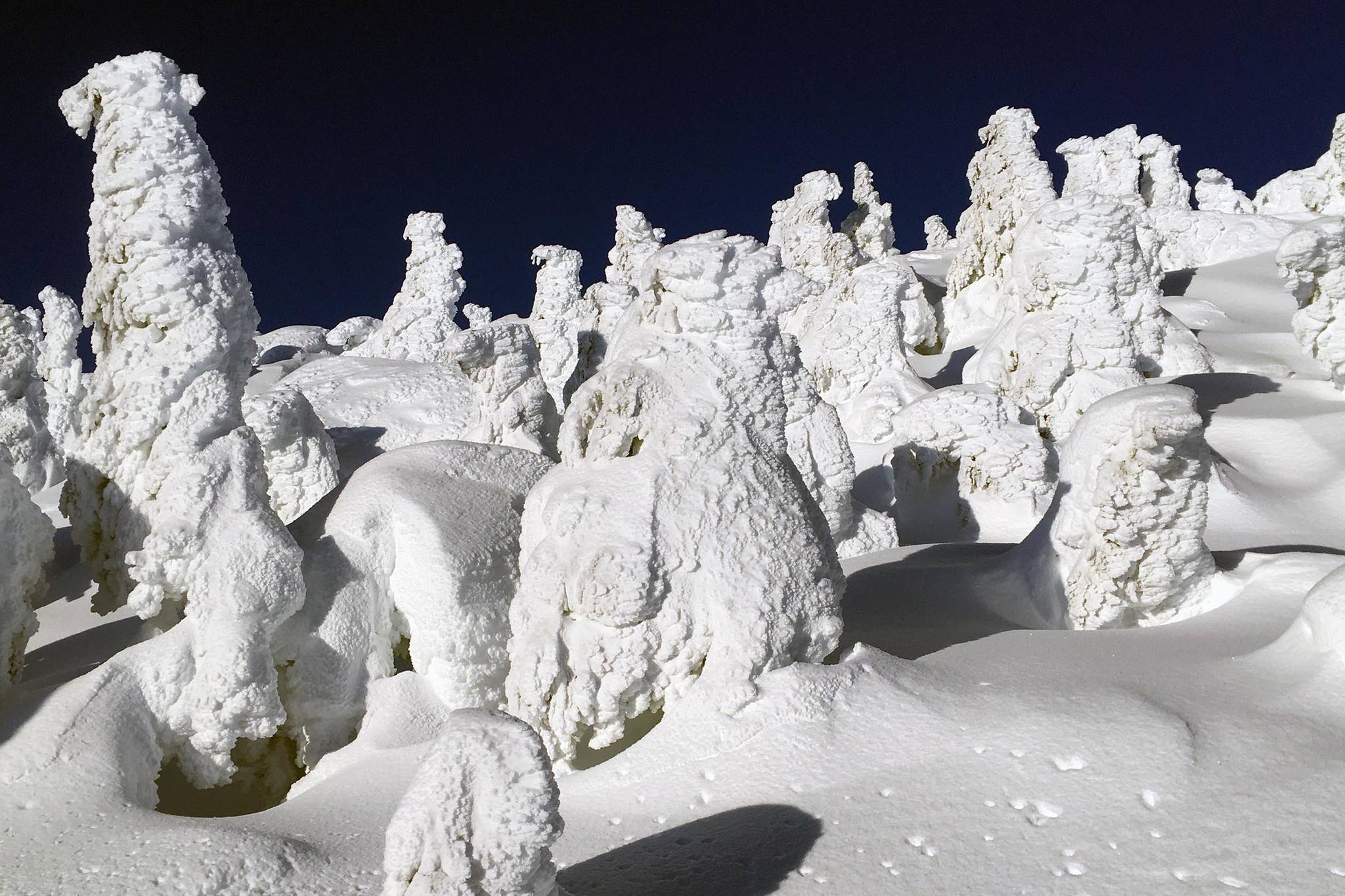
The long, deep cold in January kept the snow beautifully, brightening the landscape. At my house the temperatures didn’t rise above freezing for many days, dropping to single digits at night. Mrs. Nuthatch came to the peanut butter feeder long before there was decent daylight. Mink had been active in several places. One explored the shores of Norton Lake in the Mendenhall Glacier Rec Area, not stopping and clearly going someplace. Another mink, at Eagle Beach, had made tunnels in deep snow, periodically popping up to the surface but diving right back down. Searching?
The prolonged deep freeze let me hope that the ice on the ponds in the Mendenhall Glacier Recreation Area would be sound enough to walk on (with snowshoes, to distribute the weight). However, the ice on Glacier Lake was chancey: there were a few spots of open water and some mushy places. So we crept around the edges to see what we could see. An otter had better traveling over the ice, leaving its trail of prints and a slide between spots where it had dug down through the slushy snow. Was it thinking about getting through the ice to look for fish?
Then warmer weather came back, with rains that ruined the lovely snow. At my house, a raven has come to expect occasional tidbits on my deck railing. One morning I put out some pieces of pie crust. In it came, as if it had been waiting, and grabbed the larger chunks. Then, with the bill crammed, it tried to collect the smaller bits. No luck. So it figured out that it had to drop the big ones, eat the small ones, and then pick up the big ones to carry away.
Down on the surface of my pond, I noticed a female mallard, grubbing for spilled seed in the slush under the suspended feeder. She dug and dug, sometimes burying her whole head, for more than 10 minutes. Then she walked to open water downstream, leaving her wide trail in the slush. Late in the afternoon, she came back and did it all over again. I bet this duck is one that hung out here in the summer and remembered this food source.
• Mary F. Willson is a retired professor of ecology. “On The Trails” is a weekly column that appears every Wednesday.
