
There is code all around us: tiny instructions that tell machines how to do what they do. Boats, planes, cars, appliances and buildings all contain little computer devices that run code. Some code, like in stoplights, is basic and simple-minded. Other code, like in computers and phones, is expansive and includes millions of lines.
Electronic machines are dumb. They can only understand two things: On or Off where a “1” is on and a “0” is off. Code allows us to compile our human desires into a binary language that machines can understand. A simple example, for a stoplight, is the literal translation of the word “go” in binary: “01100111 01101111”.
Once upon a time, code had a different name: math. “Computer” was the job title given to the people who did the math. In the 1940s and ‘50s machines evolved enough to take those math jobs, and the human computers became programmers. Today many of us carry around computers in our pockets that 70 years ago would have taken up the same amount of space as Fred Meyer plus Costco plus the Nugget Mall.
Tomorrow, computers will continue to shrink and code will surround us: in shoes, light bulbs, tires, desks, chairs, pens, thermostats, eye glasses, drinking glasses, doorknobs and pacemakers (to name a few). The building of useful gadgets will happen less in hardware and more in code. The question is, who will be writing that code and when will they learn how to do it?
Each year, schools are expected to do more with less, and while budgets get cut, there is one thing that isn’t cut and is rarely changed: “core.”
With technology growing at a breakneck pace, our schools struggle to maintain relevance. There is no mention of computer science in the Alaska State Education Standards and the same is true if you thumb through either of Juneau’s high school course catalogs. Nationally, the story is only slightly improved, with only 40 percent of schools having computer science as part of their core curriculum (source: “https://code.org/promote/stats”).
Many students are mastering the use of technology to interact and create documents and media, but few are learning how to create technology. Modern students who learn programming outside of college do so largely of their own volition, either as an elective or on their own time.
And so, until our schools catch up, what can we as parents do to prepare our kids for a future they haven’t yet invented? Plenty. Here’s a start:
First: encourage JSD to make computer science part of core and to adopt curriculum in science, math and creative arts that employs the use of coding.
Second: encourage your teachers and school to integrate coding into lessons, even if only in the form of spreadsheet formulas or offline activities.
Lastly: practice at home. Following are some resources.
For younger kids, there’s a wealth of paper-and-pencil games and activities you can download from the internet to build coding skills. Go to “pinterest.com” and search for “coding unplugged.”
For slightly older beginners with an online computer, the website “code.org/learn” hosts a number of game-like activities which will have kids coding in not time.
Older learners can get free access to “lynda.com” through the Juneau public library. Also “khanacademy.org” and “freecodecamp.org” are excellent sources. For those with a little coin to spend, “tinyurl.com/jstem-code-pay” and “tinyurl.com/jstem-code-pay2” list online courses for discount or pay-as-you-can.
STEM Activity: Follow the Sequence
Coding is writing instructions, then running them to see how they do, then adjusting them and rerunning. This is a potentially hilarious activity where the kid is the programmer and the adult the computer.
1) Programmer: Write the precise steps for making a peanut butter & jelly sandwich.
2) Computer: Follow the steps literally and only the steps, with no deviation or interpretation. If you don’t understand or can’t do a step, say “ERROR!”
3) Programmer: Re-write and re-run the instructions through your computer until you get a tasty sandwich.
If you want to see how this activity went over for another family, here’s a video: “tinyurl.com/jstemfollow-video.”
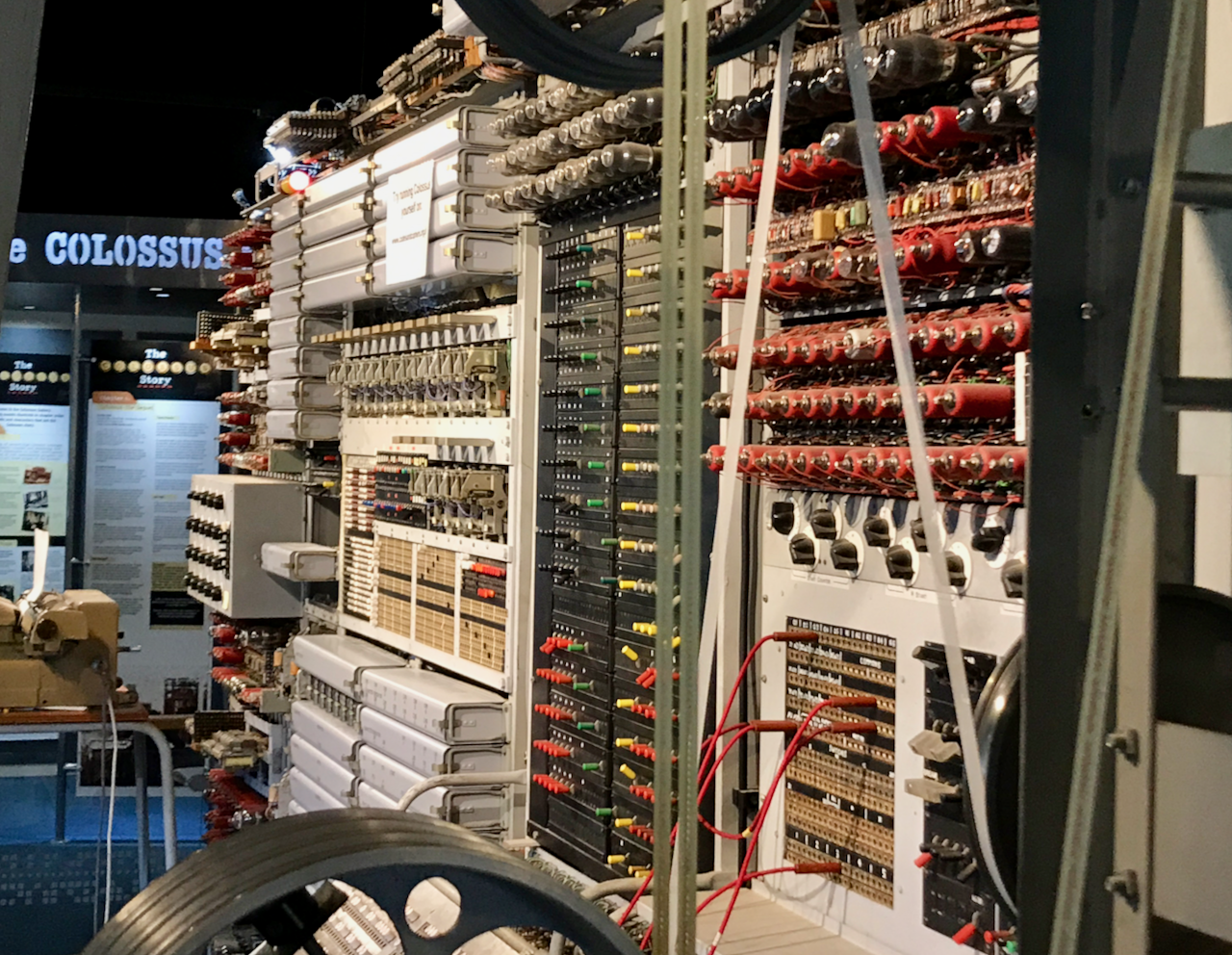
The Colossus was the first functional digital computer, used to decode German messages during World War II. It was credited with ending the war and possesses a fraction of the computing power most of us carry around today in our pockets.
• Ryan Stanley is the Technology Director at SERRC. Thanks to Dan Strong for contributing some links to this article. STEM Corner is a monthly column about Science Technology Engineering and Math, written by a rotating group of Juneau STEM Coalition members.
