
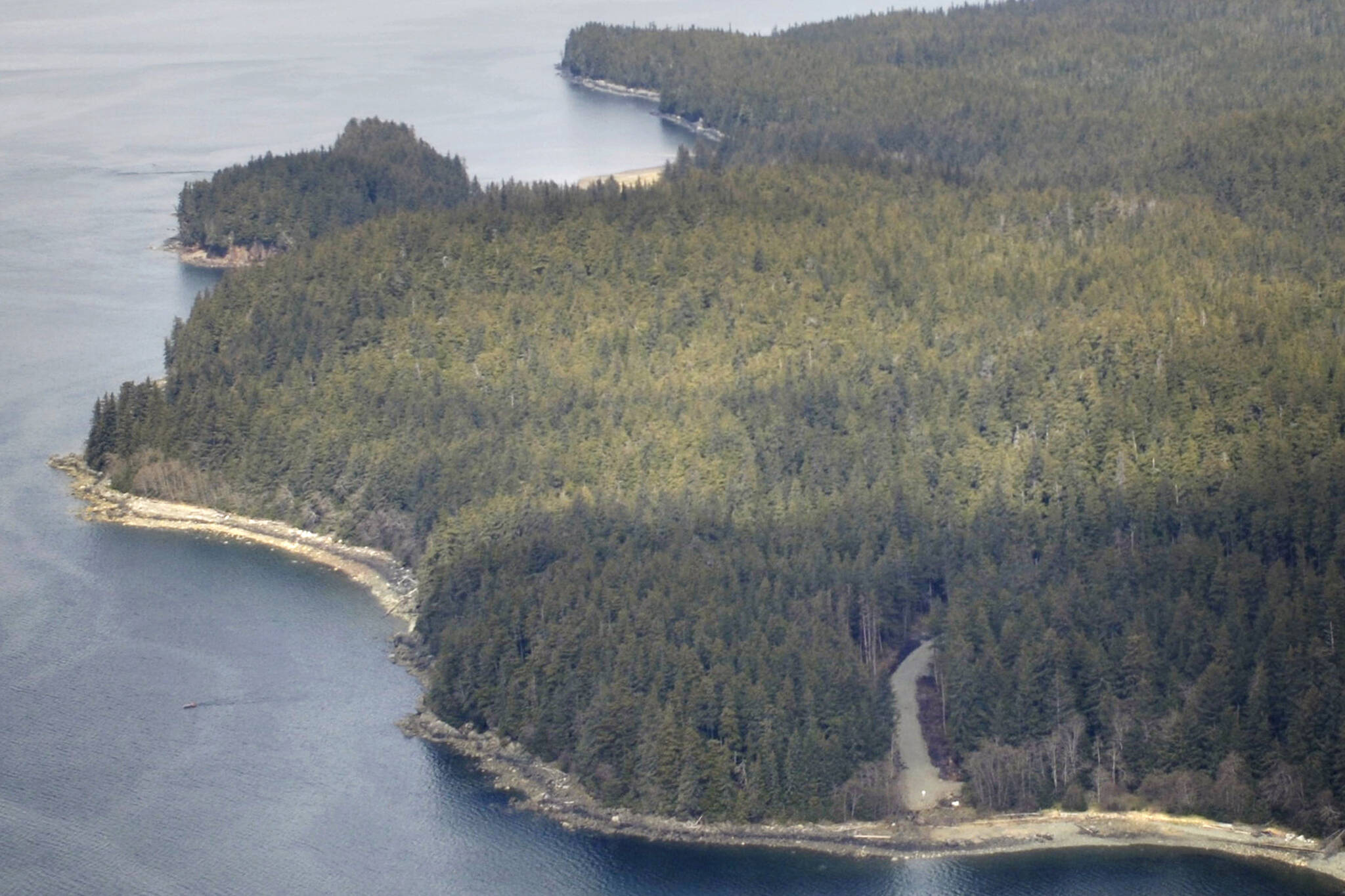
The Alaska Department of Transportation and Public Facilities has signed a $1.3 million contract to begin planning electrical service for the proposed Cascade Point ferry terminal. The Regulatory Commission of Alaska approved the contract on Monday, three days after DOT extended the project’s first public comment period.
DOT said the contract is meant to inform decision-making and is not a commitment to construct the terminal. The preliminary engineering work will help the department understand the project’s costs and constraints, DOT said.
“This work provides the information needed before any final decisions are made about the terminal,” DOT’s Southcoast public information officer Sonny Mauricio wrote in an email. “It does not influence the outcome of the public process. It simply gives the department accurate data to plan responsibly.”
The contract is with Juneau Hydropower, Inc., a company that plans to build a 111-foot-high hydroelectric dam at Sweetheart Lake, 33 miles south of downtown. That facility would increase Juneau’s electrical capacity by 19.8 megawatts — around 20% of its current capacity — but JHI still needs to find financing for the over $200 million project before starting construction.
DOT says bringing electricity to Cascade Point is a key part of its proposed terminal because it would reduce diesel use at the terminal and support the use of hybrid diesel-electric ferries in the future.
Providing that power would be JHI’s responsibility.
“I have an obligation to serve,” said Duff Mitchell, the managing director at JHI. “As a regulated utility, I can’t pick and choose customers. If you come to me as a customer, or the state comes to me as a customer, I must serve. That’s the law.”
Under the contract, JHI will acquire a transformer for its planned Echo Bay Bible Ranch substation near Berner’s Bay and perform preliminary engineering for an underwater cable connecting that substation to the Cascade Point site.
DOT says the contract enables the creation of a Y-connection — a branching point in the power line — that would make it possible to provide power to Cascade Point if the terminal is approved. Adding the Y-connection now would be cheaper and easier than adding it once the transmission line is in place, DOT said.
“Taking advantage of this timing is standard engineering practice and reduces future risks and costs,” Mauricio wrote.
The DOT contract funds one small piece of JHI’s broader plan to bring power to rural areas outside the service territory of Alaska Electric Light & Power, Juneau’s primary electric utility. JHI partnered with Coeur Alaska Inc. with the goal of providing hydropower to Kensington Gold Mine, which currently burns about 4.5 million gallons of diesel each year for its electricity.
The Sweetheart Hydroelectric Project made major headway this year after more than 15 years in development. JHI received a permit from the City and Borough of Juneau in late October, following the Regulatory Commission of Alaska’s approval of its public utility certificate last summer.
Alaska Electric Light & Power is pushing back against the RCA’s decision, which would require AEL&P to provide JHI with interconnection to AEL&P’s transmission system. AEL&P has appealed RCA’s exemption allowing JHI to operate with fewer than the standard minimum of 10 customers.
To retain its utility certificate, JHI must begin construction on the Sweetheart Lake facility by September 2026 and complete it by September 2029, unless granted an extension.
For DOT, those dates inform a rough timeline for when power could realistically be available if the Cascade Point terminal moves ahead. Future plans for the ferry terminal depend in part on the results of the engineering work now underway, along with more environmental review and public feedback.
Correction: This article has been corrected from its original version to state that the regulatory Commission of Alaska approved the contract on Monday. The previous version incorrectly stated that the Alaska Department of Transportation and Public Facilities signed the contract on Monday.
