
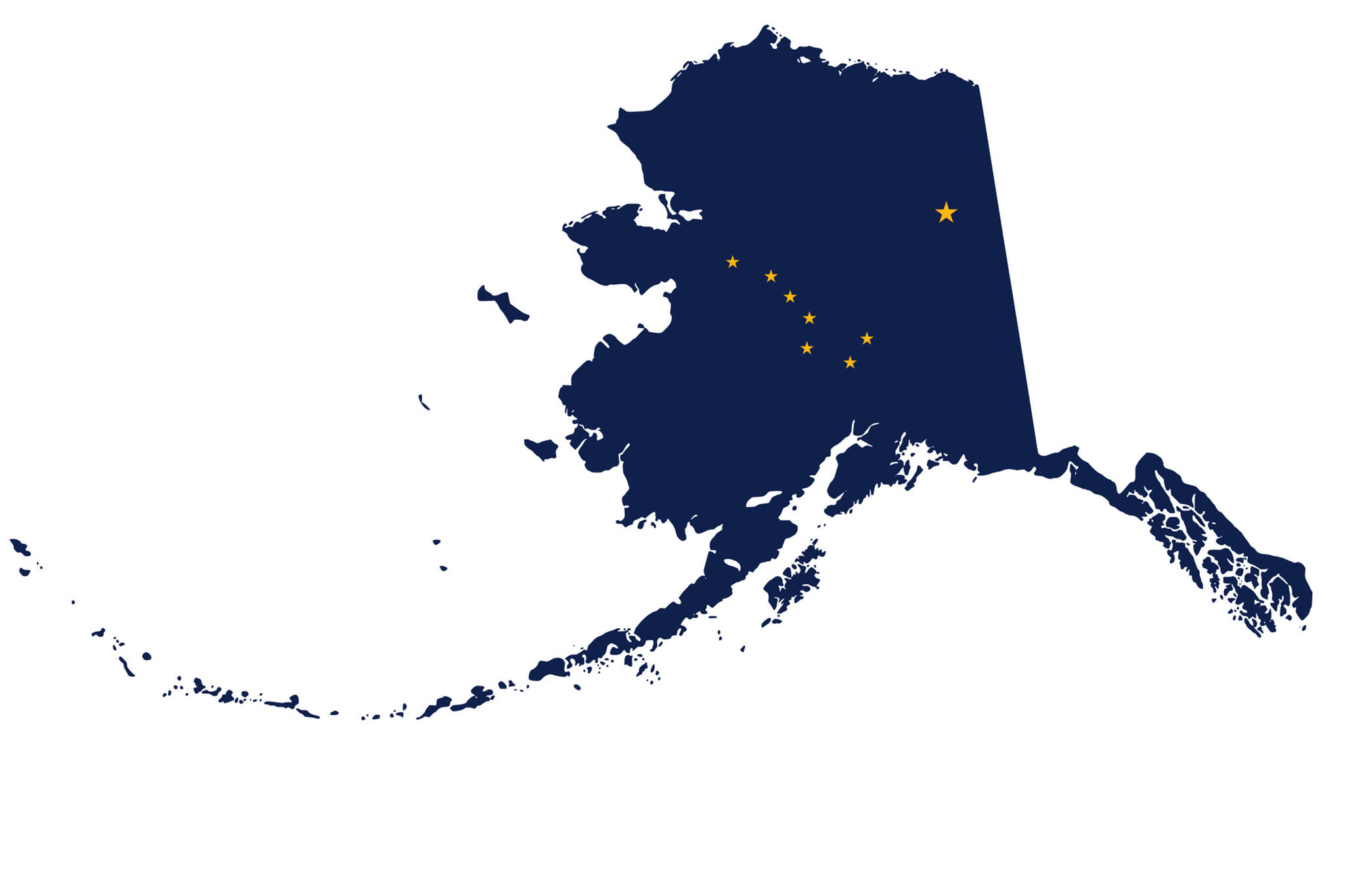
For the first time since 2016 Alaska’s population has grown, according to population estimates released Thursday by the state labor department.
The state’s population increased by 932 people from April 2020 to July 2021, according to the Alaska Department of Labor and Workforce Development. That .1% change increased the state’s estimated population from 733,391 to 734,323.
The modest growth is the result of multiple factors and some pandemic influence, said David Howell, state demographer.
“Our migration shifted a little this last year,” Howell said. “Four thousand less people left the state than the previous year. We think that’s related to COVID, with people not moving as much.”
So while nearly, 4,400 more people moved away from Alaska than moved to Alaska from April 2020 to July 2021, about 5,300 more Alaskans were born than died during that stretch and small population growth was observed. An influx of military personnel helped, too, Howell said.
While natural growth —the number of births minus the number of deaths —was a net positive, the pandemic was felt in an increase in the number of deaths.
“There was about a 760-person increase in deaths this last year,” Howell said. “It’s definitely somewhat related to COVID.”
He added. “Overall with natural increase, we were down almost 1,000 when compared to the previous year.”
While the pandemic caused hundreds of deaths, according to state data, smaller year-over-year increases in deaths at the state level have been a trend for years.
“Since 2010, not counting this year, we average an increase of 98 deaths per year,” Howell said. “The Baby Boomers are hitting age ranges where mortality rates are higher.”
Howell said while births were down, that’s also an ongoing trend, and it did not seem that the pandemic significantly affected the number of births in that time frame.
[Census data show who gained, lost population]
Closer to home
Southeast Alaska saw a modest .23% increase in population — 72,286 to 72494 — over that time frame, according to state data. The Haines Borough was the primary driver of that with a population increase of over 18%, 534 people. Yakutat also saw growth, adding 35 people, according to state data.
However, those numbers likely don’t reflect actual growth.
The increase in the population of Haines is the result of an adjustment the state did, Howell said. He said the 2020 census seemed to undercount Haines’ population, and data available to the state, including employment, school enrollment and Permanent Fund Dividend application figures, suggest the state’s estimate — 2,614 people — is closer to the borough’s actual population.
“We don’t know exactly what happened, but we think this count is not reflective of what’s going on there,” Howell said. “Really, this is just kind of a correction that we think is more of a reflection of the actual population of Haines,” Howell said.
Haines Borough Manager Annette Kreitzer said that the state data is likely to be used by the borough to challenge the census count in the future.
Other communities in Southeast, including the City and Borough of Juneau, saw small decreases in population. Juneau lost 100 people from April 2020 to July 2021, according to state data. Out-migration accounts for that with 191 more people leaving the capital city than coming in. Births outpaced deaths during that time to provide some natural population growth and offset some migration loss.
Despite several consecutive years of population decline, Juneau’s estimated population of 32,155 as of July 2021 is slightly above 31,275 in 2010, according to state data.
The Hoonah-Angoon Census Area had the highest median age in the state at 49, according to the state labor department. That’s in step with a regional distinction.
“Southeast is definitely the oldest region in the state,” Howell said.
Biggest gainers
While 21 of the state’s 30 boroughs lost population, a handful saw growth.
Fairbanks, which gained 1,860 people, saw the most growth, according to state data. It was followed relatively closely by the Matanuska-Susitna Borough, which added 1,724 people.
Anchorage saw the biggest lost at 1,550 people, according to state data.
In Southeast, Juneau lost the most people, according to state data, but every Southeast population area that wasn’t Haines or Yakutat saw larger negative growth rates.
On a rate basis, Skagway at -2.42%, a loss of 37 people, was the steepest negative in the region. Juneau’s growth rate was -.25%.
By the numbers
932 —The state’s population increase from April 2020 to July 2021.
18.2% —The amount the Haines Borough population grew from April 2020 to July 2021 following a population estimate by the state that differed significantly from the 2020 census.
100 —The amount the City and Borough of Juneau’s population decreased from April 2020 to July 2021.
91 — The amount by which births outpaced deaths in Juneau from April 2020 to July 2021.
.23% —The amount Southeast Alaska as a region grew from April 2020 to July 2021.
49 —The median age of residents in the Hoonah-Angoon Census Area, the highest in the state.
— Data taken from the Alaska Department of Labor and Workforce Development.
• Contact Ben Hohenstatt at (907)308-4895 or bhohenstatt@juneauempire.com. Follow him on Twitter at @BenHohenstatt.
