
Alaska’s state government will continue to shrink.
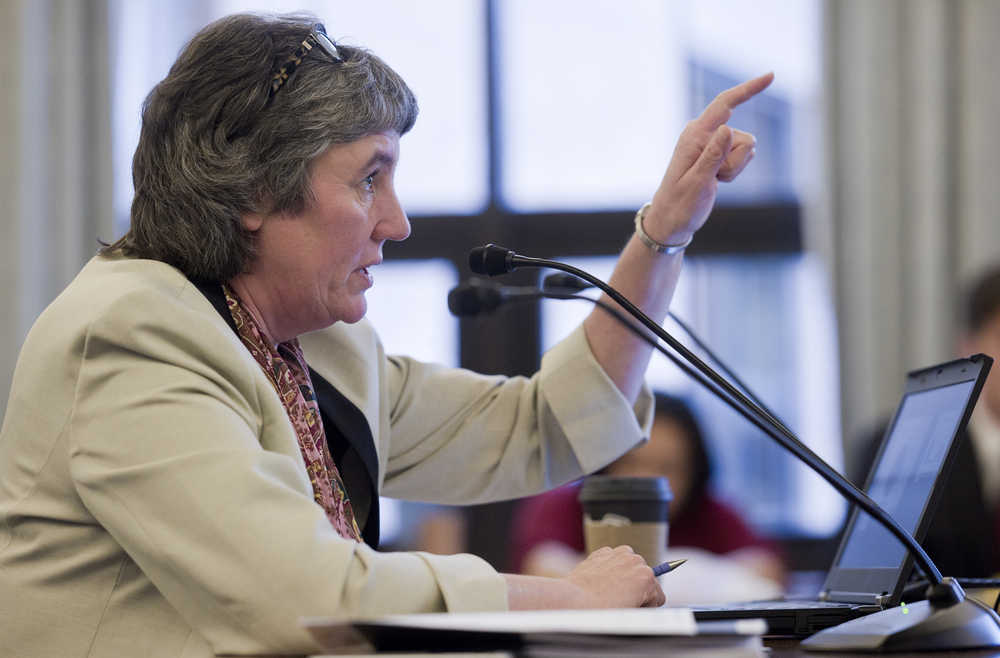
Speaking to the Senate Finance Committee on Wednesday morning, state budget director Pat Pitney said Gov. Bill Walker proposes to cut 185 jobs in the next fiscal year, which begins July 1. Those cuts would leave the state with just over 24,000 workers across all agencies, the smallest figure since 2007.
Pitney released those figures Wednesday as she unveiled the details of a proposed $9.5 billion budget. About half that figure — $4.8 billion — would be undesignated state spending funded by oil and gas taxes, income taxes (if approved), other tax increases and the governor’s fiscal plan. That figure is the smallest since 2008. The remaining amount would be paid for with federal money and program receipts that directly pay for operating expenses — things like ferry tickets, which stay within the ferry system.
Members of the Senate committee — and later, the House Finance Committee — expressed skepticism about the governor’s proposal, which includes a net reduction of about $100 million in state spending from the current budget.
Sen. Anna MacKinnon, R-Anchorage and co-chairwoman of Senate Finance, said the governor’s proposal “hasn’t really reduced spending overall in the state’s budget” because programs including Medicaid Expansion are benefiting from federal payments that reduce the need for state funds.
“I’m not sure we’re really reducing state government,” she said. “We’re just moving the shell.”
Other senators appeared upset that the governor’s proposal takes for granted the passage of an oil and gas tax credit reform bill and the Permanent Fund Protection Act, which would use the earnings of the Permanent Fund to pay for government services and link Permanent Fund Dividend payments directly to oil and gas prices.
“Much of what you have put in this budget to have a budget are huge policy calls,” said Sen. Pete Kelly, R-Fairbanks and Senate Finance co-chairman.
As proposed, the Walker budget accounts for $73 million in oil and gas tax credits, Pitney said. Without reform, the state will be obligated to pay an amount roughly equivalent to the combined budgets of the University of Alaska and the Department of Transportation.
Speaking before the House Finance Committee in the afternoon, David Teal, director of the Legislature’s finance division, said oil would have to reach $113 per barrel to balance a “status quo” budget for next year. With the governor’s proposed budget — which includes taxes and Permanent Fund changes — the deficit would be $500 million and fall into balance by 2019.
“You simply cannot cut your way out of the deficit,” Teal told House Finance.
If the Legislature does need to raise taxes, a Rasmuson Foundation-funded poll released Wednesday seems to indicate that Alaskans may not mind too much.
Conducted statewide by cell phone and landline telephone, it found that 65 percent of respondents favored cuts and new revenue to address the state’s deficit. The poll had a 4 percent margin of error.
A majority of respondents (55 percent) favored cutting the state operating budget by 10 percent ($500 million), introducing a statewide sales tax (51 percent), reducing oil and gas tax credits (51 percent) and using a portion of Permanent Fund earnings to pay for government (51 percent). A majority were opposed to reducing the amount of Permanent Fund Dividends (50 percent) or introducing a state income tax (55 percent).
The poll also broke out its results by region, albeit with a larger margin of error. In Southeast Alaska, where the margin of error was 10.7 percent, 58 percent of respondents favored cutting the budget by 10 percent. Support for cuts was stronger in Southeast than in any other region of the state, save the Mat-Su, according to the poll.
Southeast residents favored (59 percent) a 1.5 percent income tax and the governor’s fiscal plan (63 percent), but they opposed (55 percent) the way the plan would change the Permanent Fund Dividend.
Full results of the poll are available at plan4alaska.com.
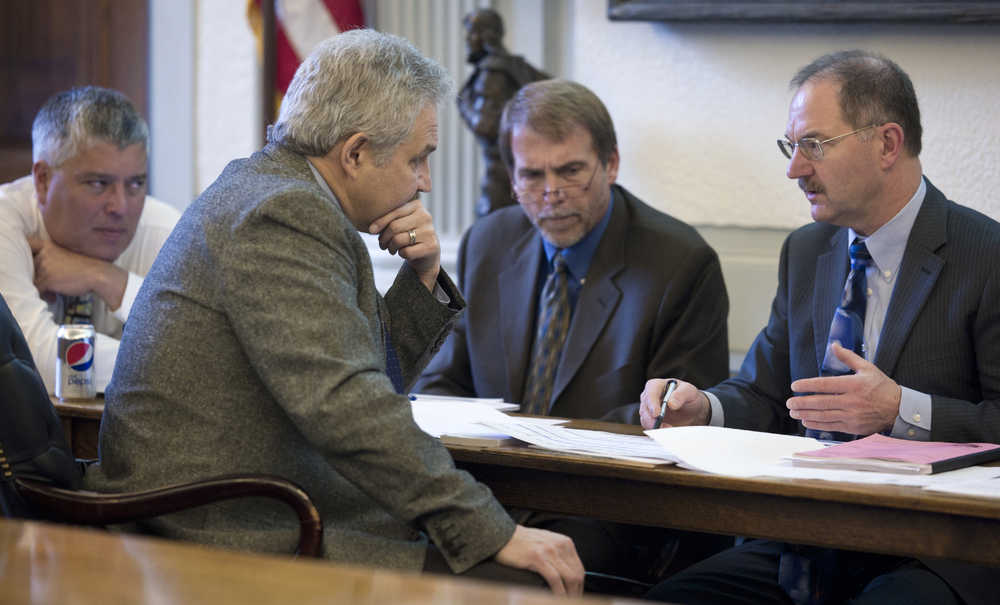
Sen. Pete Kelly, R-Fairbanks, co-chair of the Senate Finance Committee, second from left, speaks with Legislative Finance Division Director David Teal, right, as James Armstrong, left, and Brett Huber, both staff to Sen. Kelly, listen during a during a break in the committee meeting on Tuesday. Pat Pitney, director of the Office of Management and Budget, was presenting Gov. Bill Walker’s budget proposal.
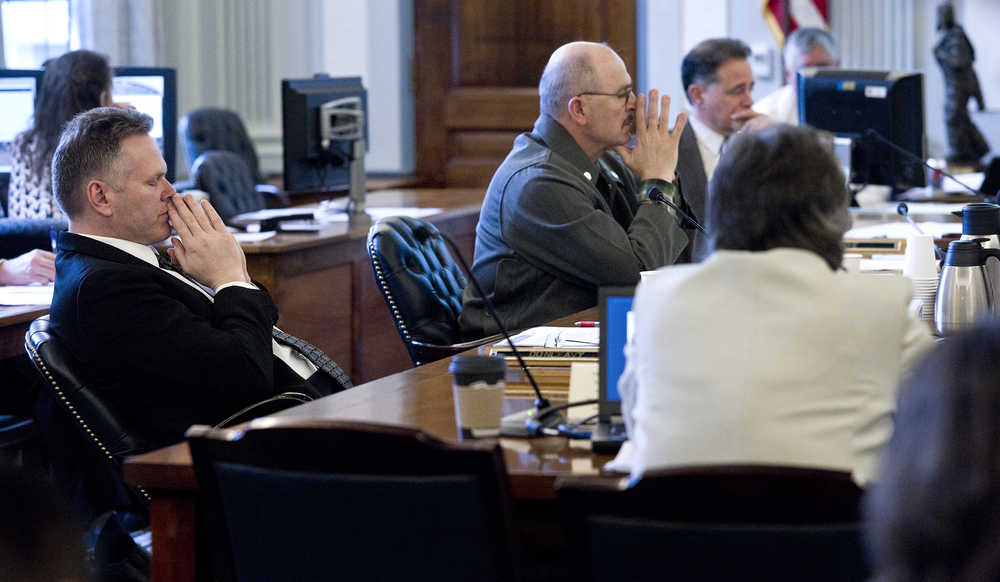
Senate Finance Committee members Sen. Mike Dunleavy, R-Wasilla, left, Sen. Click Bishop, R-Fairbanks, center, and Sen. Peter Micciche, R-Soldotna, strike contemplative poses while listening to Pat Pitney, director of the Office of Management and Budget, give an overview of Gov. Bill Walker’s budget proposal at the Capitol on Wednesday.
