
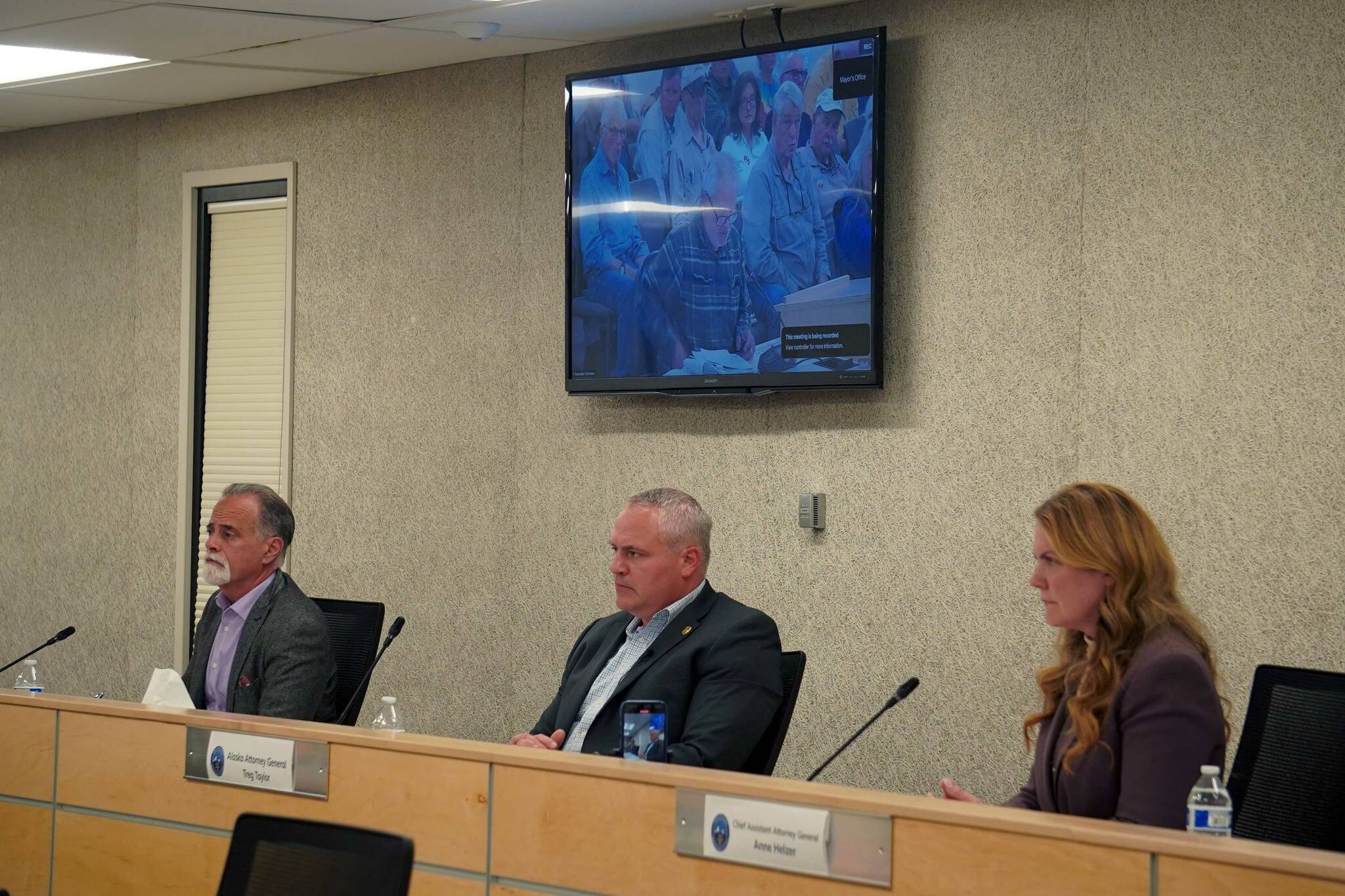
State Attorney General Treg Taylor on Monday heard fiery testimony from a packed crowd during a town hall in Soldotna centering on investigative grand juries.
The State Department of Law in July rolled out a new, formalized process for Alaska residents to request an investigation by a grand jury. On Monday, Taylor and other department staff gave a step-by-step explanation of the new system, which Taylor said was created after the Alaska Supreme Court issued an order that requires his department to review requests to determine if they meet requirements to be brought before a grand jury.
A grand jury, per information from the Alaska Court System, is a group of between 12 and 18 citizens who consider evidence to charge a person with a felony crime. Several grand juries are operating in the state at any one time.
Taylor said that the department’s new system is an improvement that helps people get issues brought before these groups — “everybody knows, it’s public, what the process is.” Before it launched this year, he said, there was no formalized avenue for people to request an investigation.
An investigative grand jury, Taylor said, is meant to look into public welfare and safety. They’re for issues important to many. They don’t resolve “a dispute between neighbors over a fence line.” A submission form, available online at law.alaska.gov under “Law Resources” and then “Investigative Grand Jury,” asks a petitioner to verify that the issue they’re calling for investigation of meets that bar.
The form asks people to specify what they are alleging, about whom, what evidence they have and who else might be able to corroborate information. The form cannot be submitted without at least one piece of evidence attached.
“We are asking you, as citizens, as Alaskans, to complete this to the very best of your ability and precisely so that your investigation can proceed,” he said.
After submitting the form, a petitioner would then need to print and sign an attestation form and have their signature notarized. Then their allegation will be considered by a rotating panel within the department who will determine whether the allegation is credible and whether to bring it to a grand jury.
This new process, Taylor said, also allows for public records to be created. A grand jury is held under strict guidelines for confidentiality, such that if a request is brought before them and they decide not to investigate — or investigate and decide not to issue a charge or report — there would not be any disclosure. Taylor said that his department would make public a report of what requests are brought, whether they were forwarded to a grand jury, and what, if anything, comes of their investigation.
It’s important for reports to be public, Taylor said, so that the government can defend itself. When allegations go to a grand jury and they don’t choose to create a public report, no one outside of the grand jury learns that any investigation occurred. Taylor said he can’t say when allegations are brought forward that were already investigated by a grand jury and found not to be credible because of the confidentiality of those bodies — but that changes under the new system.
Taylor said that a database would be available and would be searchable “to a certain extent” with some details like the accuser’s name redacted, but an overview of each complaint visible to the public. As of Tuesday evening, no such database could be found on the department’s website.
There were nearly 60 people in the assembly chambers, and a further roughly 40 attending virtually. Among them was David Haeg, who for several years has been helming a group called the Alaska Grand Jurors Association to organize protests at the Kenai Courthouse and in other venues while alleging corruption in the Department of Law and calling for increased access to grand juries.
Haeg, given a special five-minute opportunity to speak on Monday when all other speakers were given a three-minute timer, spoke for 11 minutes, kicking off a raucous public comment period that stretched over an hour beyond the scheduled ending of the meeting. Taylor and his staff rescheduled their flights out of Kenai to accommodate all the speakers.
The new process, Haeg said, is unsatisfactory.
“The new DOL process positively states that citizens cannot appeal directly to the grand jury,” he said. “We are not going to be kept away from the grand jury. No one is going to be the gatekeeper … Not on my watch.”
Multiple people in the crowd called out and echoed Haeg’s words as he spoke — chorusing his catchphrases like “Not on my watch,” which was repeated several times. Some leapt from their seats and advanced toward the podium as Taylor attempted to respond.
“If you think this is going away, think again,” Haeg closed.
Taylor said that he doesn’t want to serve as any kind of “gatekeeper.” He blamed the state’s supreme court for issuing its ruling in 2022 that says that the state attorney general has to review allegations before they can be brought to a grand jury — and called for a legislative change to correct it. He said that the system, as designed, calls for bringing on an independent prosecutor in any case that involves his department — though he acknowledged that there is a small pool of available attorneys in the state and many might have ties to the department.
“This gatekeeper is going to be like the blindfolded goalie,” Taylor said. “A lot of things are going to get through, because, first of all, public trust is at an all-time low and we’ve got to do something about that.”
Taylor told Haeg to use the new portal to submit his allegations against the Department of Law.
“I don’t think I have any business being the gatekeeper, but as the gatekeeper I will push that to an independent prosecutor for investigation by grand jury,” he said. “You have my word on that, David, and it’ll be public that I did or did not do it because I’ll put it right on the website that it went to an investigative grand jury.”
The issues being raised and the “hard questions” brought to the assembly chambers on Monday, Taylor said, were expected and come from people who are “passionate about the issues.” The goal, Taylor said, is to restore public confidence in the judicial system by creating a transparent process that ensures people have reasonable access to an investigative grand jury.
Taylor on Thursday announced that he was resigning from his position as attorney general effective Aug. 29.
• Reach reporter Jake Dye at jacob.dye@peninsulaclarion.com.
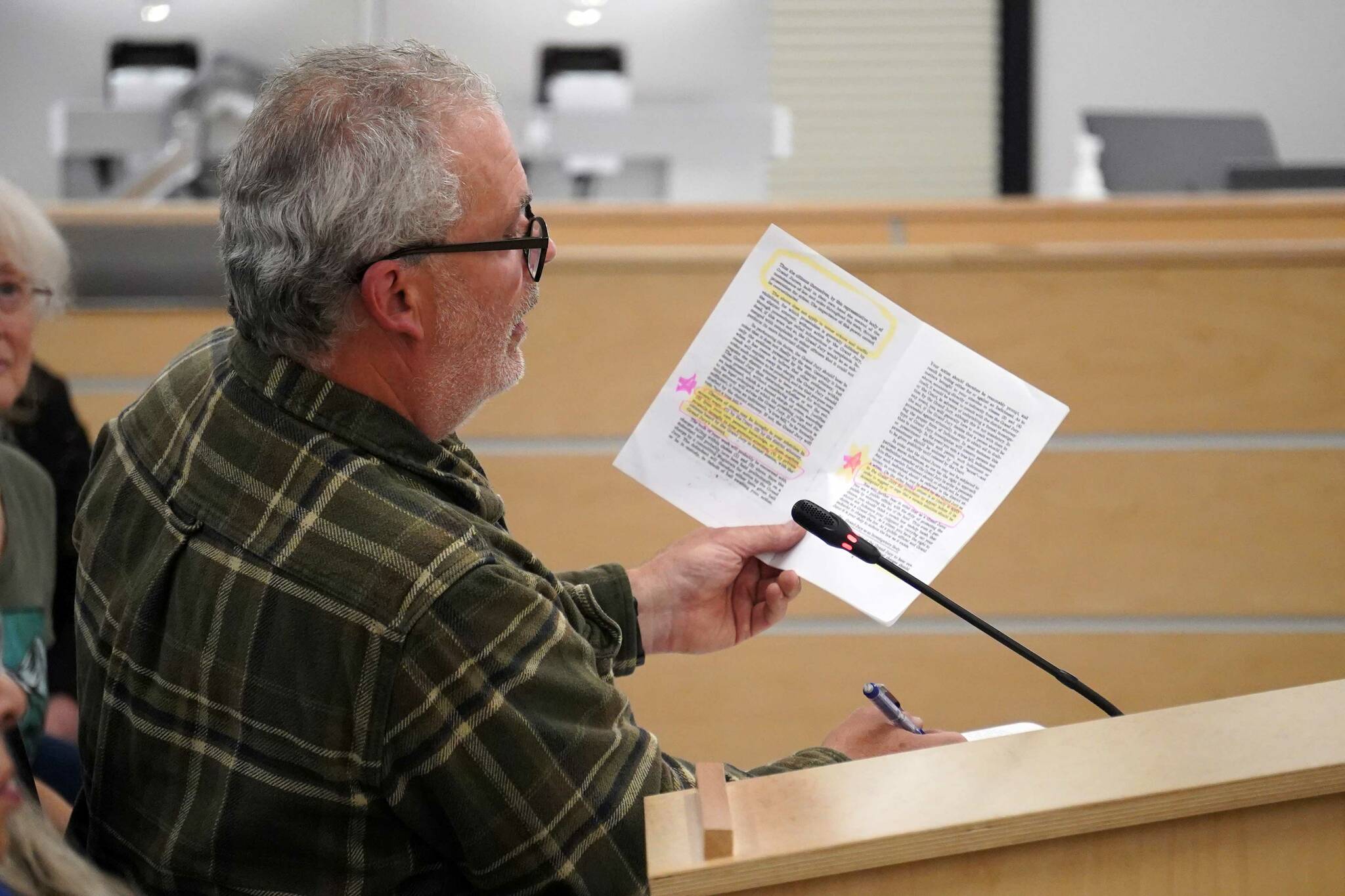
David Haeg reads from an annotated copy of a grand jurist’s handbook during a town hall on the Alaska grand jury process in the Betty J. Glick Assembly Chambers in Soldotna, Alaska, on Monday, Aug. 18, 2025. (Jake Dye/Peninsula Clarion)
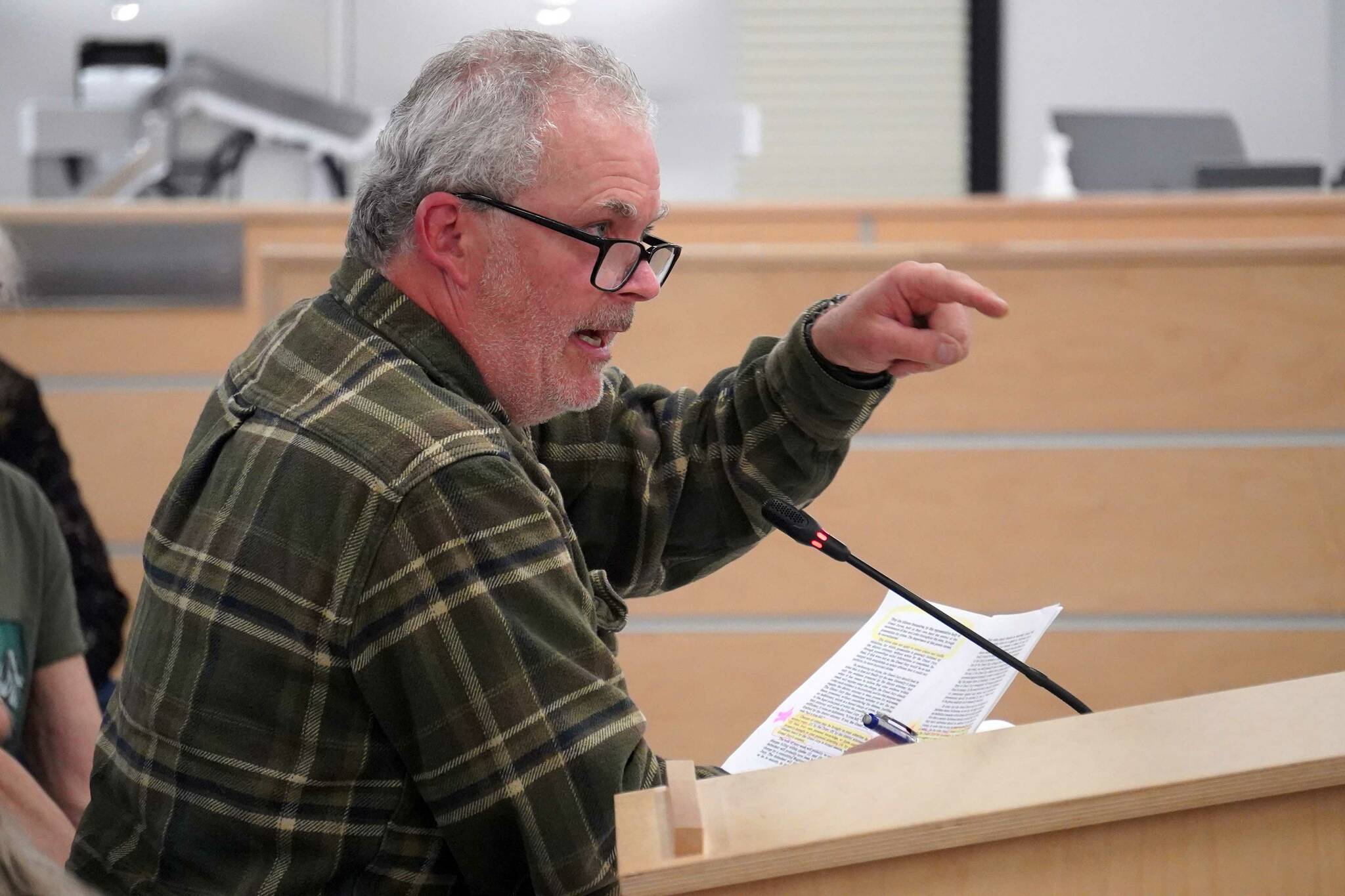
David Haeg speaks during a town hall on the Alaska grand jury process in the Betty J. Glick Assembly Chambers in Soldotna, Alaska, on Monday, Aug. 18, 2025. (Jake Dye/Peninsula Clarion)
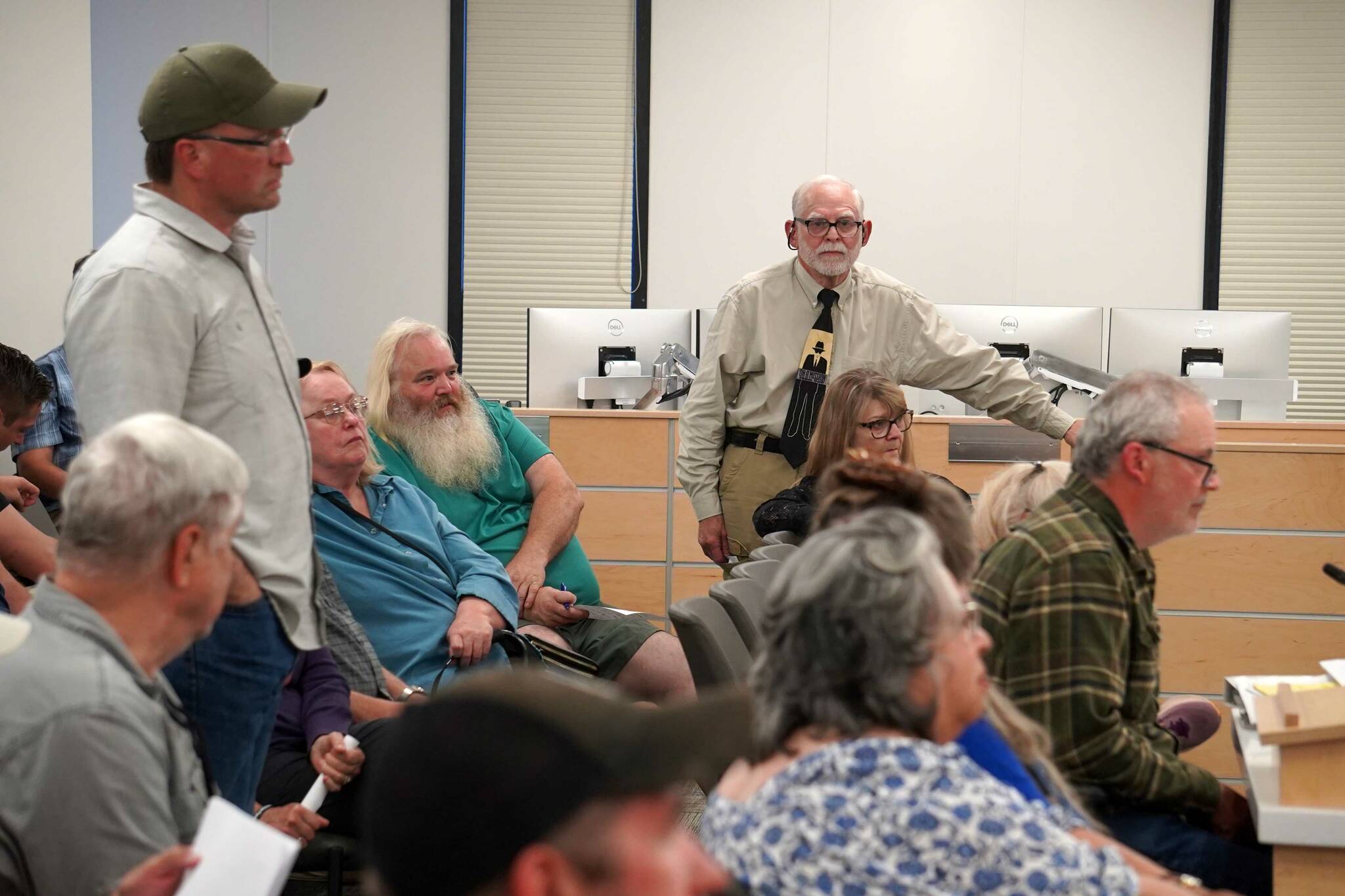
Former Alaska House Rep. Ben Carpenter and Ray Southwell rise in support of speaker David Haeg during a town hall on the Alaska grand jury process in the Betty J. Glick Assembly Chambers in Soldotna, Alaska, on Monday, Aug. 18, 2025. (Jake Dye/Peninsula Clarion)
