
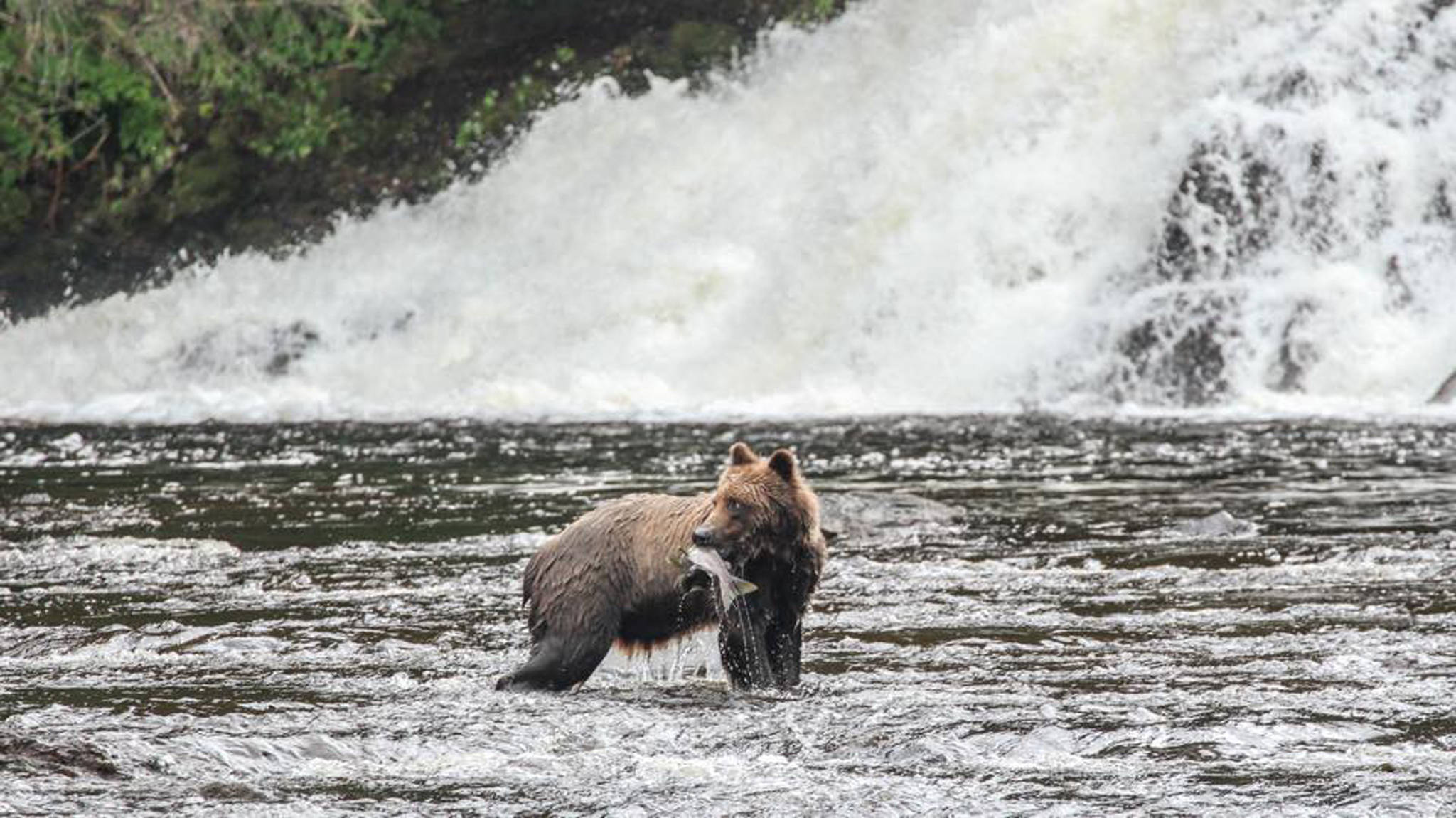
As the days grow longer and summer plans start to materialize, 18 million is a number on the mind of many across Southeast Alaska, especially those in numerous industries that rely on salmon fishing.
Eighteen million is the number of pink salmon the Southeast forecast shows could be harvested in the 2019 commercial fishing season. The Southeast pink salmon harvest follows an every-other-year pattern, with the odd years usually being more productive. However, models by Alaska Department of Fish and Game and the National Oceanic and Atmospheric Administration put this year’s harvest at about half of the recent 10-year average.
“Salmon is the biggest portion of my income for sure,” said Stan Savland, commercial fisherman out of Hoonah and 20-year seiner. “The forecast is very alarming. I’m worried about this season because our recent odd year cycles are really what’s been carrying the seine fleet to make it.”
For seiners, low pink forecasts mean the fleet depends most heavily on hatchery returns of chum, often resulting in many fishermen huddled in a small area, waiting their turn.
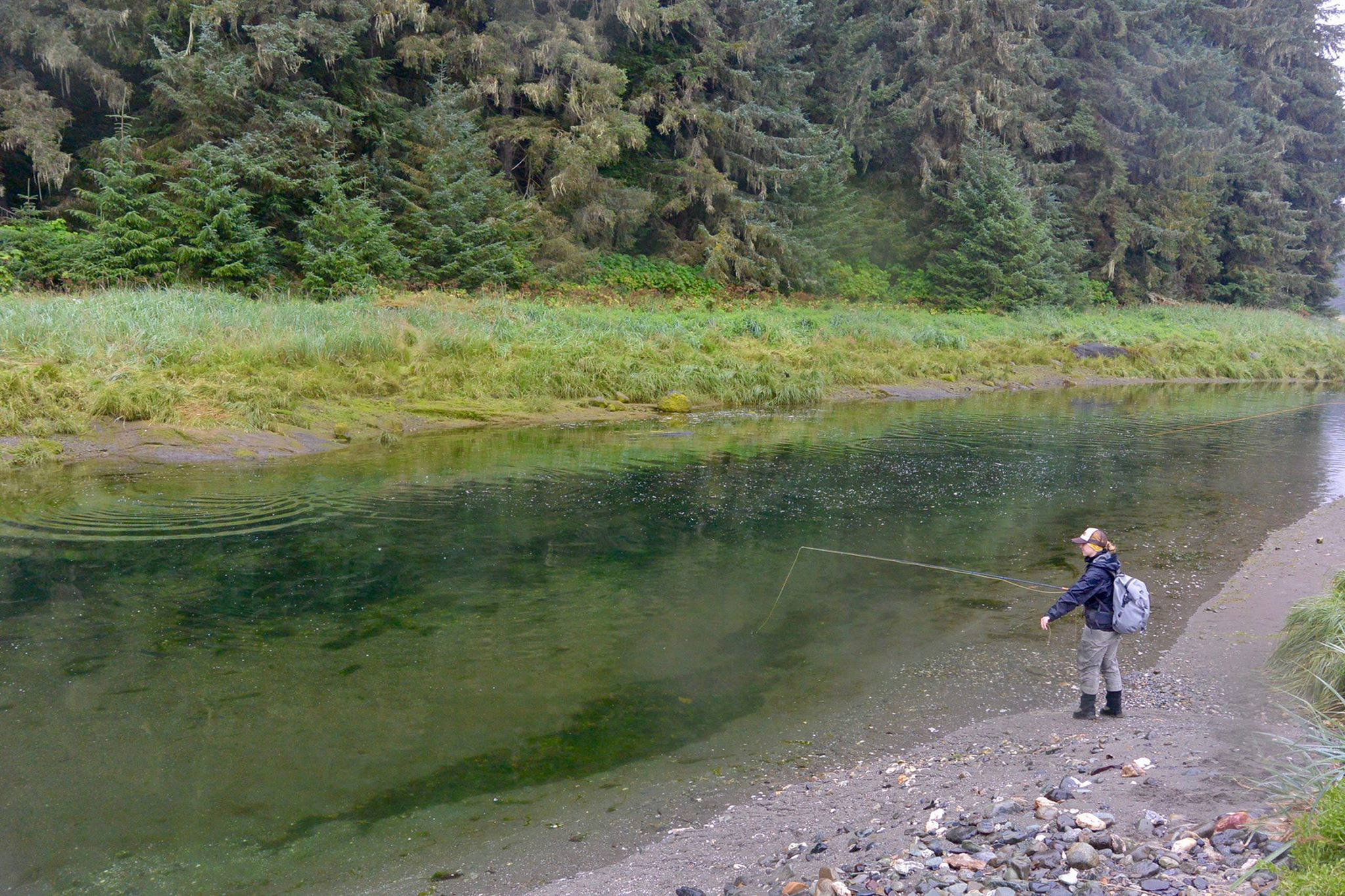
An angler stands at a pool of pink salmon. (Courtesy Photo | Jenny Weis)
“You can equate it to waitin’ in line for lunch. You’ve got to wait for 50 people in front of you,” Savland said. “Or, would you rather just go out to a place where there’s 25 people selling lunch and you can take your choice? Being able to go to standard corridors allows the fleet to spread out and allows for enjoyable, productive fishing.”
For tourism operators like Matt Boline, manager of Bear Creek Outfitters, a catch-and-release fly fishing and wildlife viewing operation out of Juneau, low pink years can mean less enjoyable and less productive experiences for their fishing and bear-viewing clients, in addition to delayed or canceled trips and more stress on other species.
“We’re used to seeing bears come out at a certain date, but last season we had to push everything back because there were no fish to be eaten,” said Boline in anticipation of a back-to-back low pink year. “It also takes a toll on Dolly Varden since we’re targeting them more.”
[Pondering the power of the ocean]
The low return of other salmon species is a concern across the board.
“I know for some of the lodges that focus more on kings, they’re experiencing a lot of cancellations. Last year at this time, most were completely booked up for summer. But after last summer’s poor fishing and people seeing the news about a worse one this year, people are not coming back,” said Boline.
Savland echoed the snowball effect.
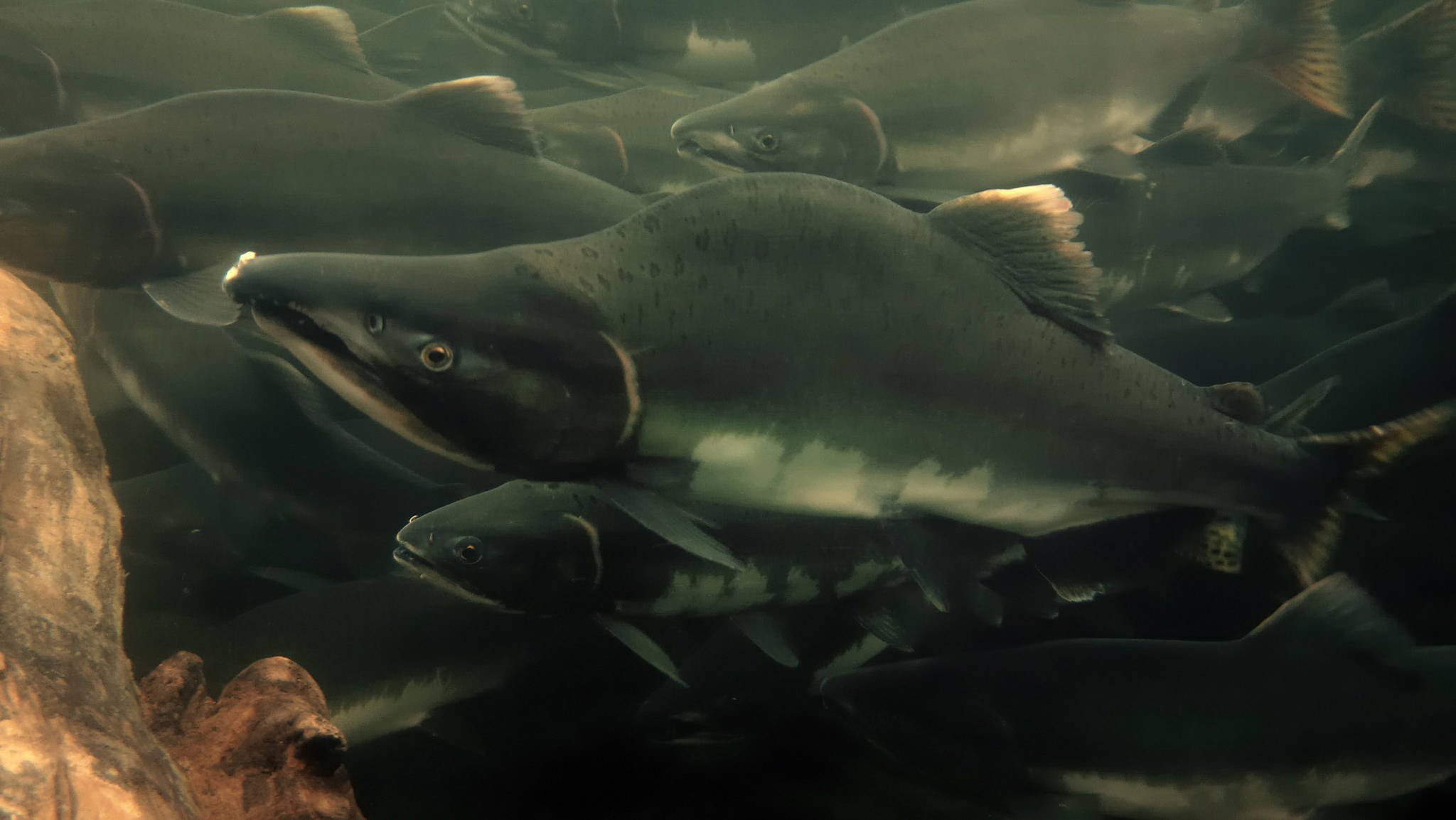
Pink salmon in Sitka, Alaska. (Courtesy Photo | Joe Serio)
“People don’t spend money on their fishing boats, at the stores, or at the shipwrights,” he said. “We might be putting off major projects that need to be done for safety and maintenance. Now we’re coming into another poor year so we have to put off maintenance again.”
For Boline and his guides, seeing the change is obvious, but the practical implications are less dramatic, at least for now.
“Our guests don’t notice a big difference in numbers for the most part because we’re all catch and release, and to them it still seems like there’s more fish than they can ever imagine,” he said. “On a good year, we have to try to not catch fish because there’s so many of them.”
[Salmon researchers: Small Juneau hatchery helps with big ideas]
Regardless, both Boline and Savland, and many others in their respective industries, remain hopeful that the trend changes sometime soon, and according to Lowell Fair, Southeast regional supervisor of ADF&G, the department will manage conservatively to keep that hope alive.
“Our number one concern is to make sure we get fish in the streams,” he said.
Both Savland and Boline cited the warm “blob” in the Gulf of Alaska, increased predation, as well as recent drought as possible reasons for low returns.
“From what I understand, there are many factors beyond our control impacting our pink and king runs in Southeast,” said Boline. “But of the many variables that impact wild fish production, about the only one that humans can affect is not messing up spawning streams and adjacent habitat, which the Tongass is known for. Fighting to keep that intact keeps me optimistic,” he said.
• Jenny Weis is the Alaska communications director of Trout Unlimited, a nonprofit that works to conserve, protect, reconnect and restore North America’s coldwater salmon and trout fisheries and their watersheds.
