
A trip to Cowee Meadows is always worth dealing with some broken or missing boards and a few flooded (sometimes ankle deep) sections of trail—a common occurrence after rains. Around the time of the summer solstice, the wild iris take over, with shades from pale lavender to deep, rich purple covering much of the meadow but leaving some room for buttercups, lupines, and the last shootingstars.
On the slightly higher ground, some stands of the wild rose were just starting to flower while others were almost finished. The big white inflorescences of cow parsnip made a good framework on the meadow edges. They were often occupied by dozens of tiny, slender flies, presumably sipping up nectar from the little flowers that comprised each inflorescence. Fireweed had yet to come, but the buds were promising.
Shy Maidens turn Bold from Bob Armstrong on Vimeo.
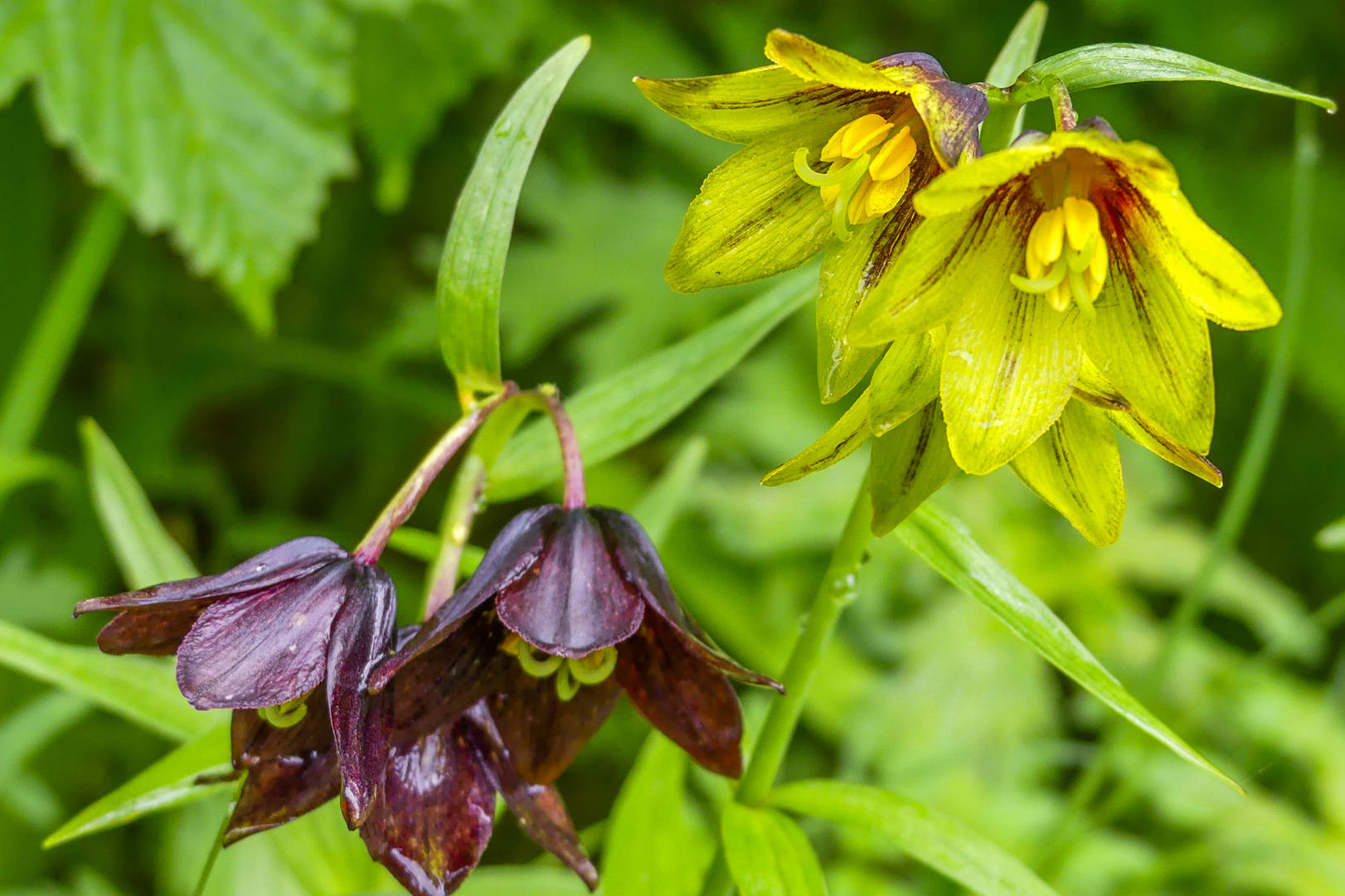
A common flower, dotted in among all the others, is the chocolate lily or rice-root. The typical brownish flower smells fetid (unlike most flowers) and is pollinated by flies. The shades of brown vary: some are very dark, even reddish, some are mottled with green or yellow, and a very few are mostly yellow. Do the pollinators care?
The sprawling shore plant called oysterleaf is widespread in northern latitudes. Its flowers are normally blue, but rarely white, according to two field guides, but we found white-flowered individuals to be quite common. The flower is insect-pollinated in some regions but is said to self-pollinate in others.
Few bees were flying on this day, but they are probably the principal pollinators of iris, as well as visiting many other flowers. A small insect might enter the flower but would not be big enough to contact the sexual parts. A bee crawls into the iris flower over a drooping petal-like sepal (the true petals are smaller and upright), passing under a narrow arm that bears the stigmatic surface where pollen is received, and then under a rod-shaped, pollen-producing stamen on its way to the nectar deep inside the flower. Cross-pollination would happen if the bee visited more than one flower, but the flowers are reported to be self-compatible, so if a bee happens to pick up some pollen on its way out of the flower and deposit some on the stigmatic surface, a seed might be produced that way.
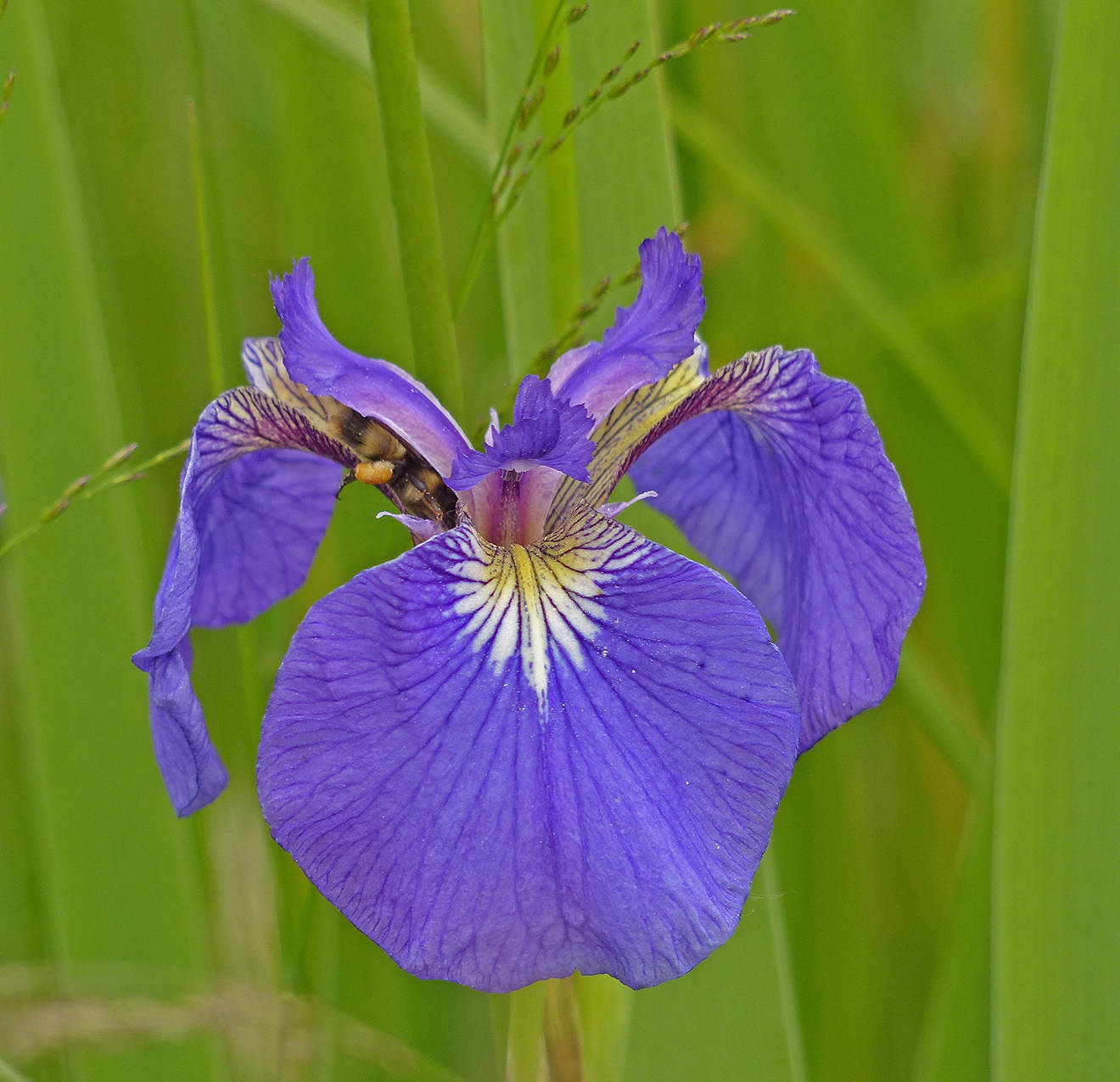
Courtesy Photo | Bob Armstrong A bumblebee enters a wild iris.
An aquatic plant long known as Potentilla palustris (marsh cinquefoil) was always a bit of a puzzle to me, because most potentillas have yellow flowers and five petals but this one seemed so different, with its red- or purplish-flowers with six or seven petals. I’ve just learned that botanists have now recognized these and other differences by assigning this species to a different genus; it’s now Comarum palustre. The flowers are reported to have valuable pollen with lots of essential amino acids and lots of concentrated nectar, and they are visited by many kinds of insects.
In the muskeg at the start of the trail, we inspected the bog laurel flowers. When an insect (not too small) visits the flower and walks around on the petals of the open flower, the stamens usually spring up from their niches on the surface of the petals, potentially placing pollen on the insect. So we could tell which flowers had been visited. A visiting insect might also bring in some pollen from another flower, effecting pollination. Our inspection revealed that some aging flowers had no sprung stamens and presumably would not set fruit, but some fresher flowers had clearly been visited and might set fruit.
On the way through the woods down to the big meadow, the dainty little wintergreen called single delight or shy maiden presents its one little white flower to insect visitors, typically a bumblebee. A visiting bee rapidly shakes the anthers, which releases pollen for the bee to eat and collect. The flower is demurely held face-down as it awaits a bee, but if pollination occurs, the flower raises its head—no longer shy— as the fruit matures. We joke that it is now a brazen hussy.
All told, we found over 60 kinds of flowers, but we didn’t beat our record from a previous year of over 75 species. Still, not bad!
• Mary F. Willson is a retired professor of ecology. “On The Trails” is a weekly column that appears every Wednesday.
