
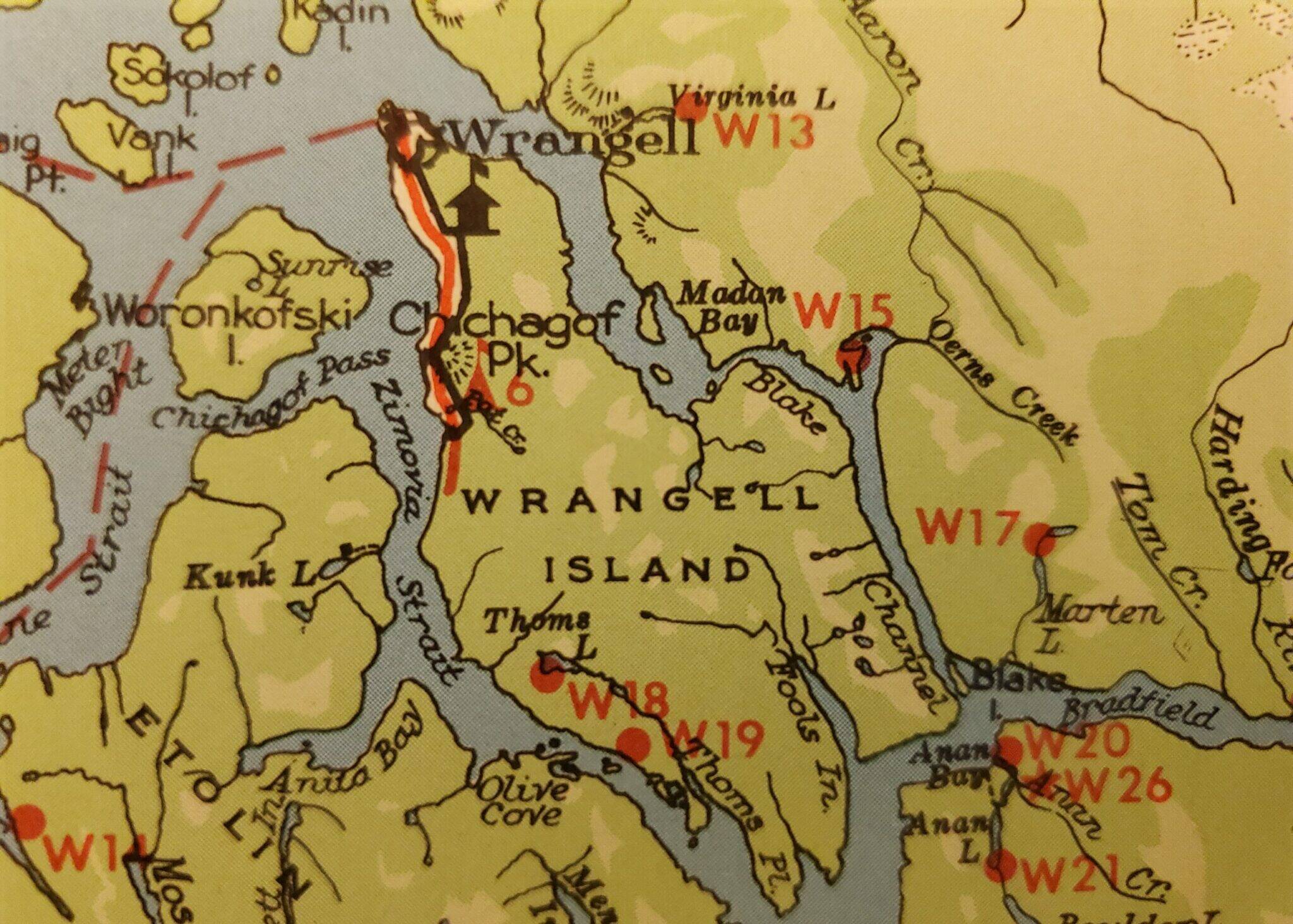
The Alaska Department of Transportation and Public Facilities is seeking bids for rockfall-prevention work along a highway in Wrangell that was the site of a catastrophic and deadly landslide in November.
The solicitations are for companies that would work this coming summer to stabilize slopes and perform other mitigation work at two known rockslide areas on the Zimovia Highway in Wrangell. An engineer’s estimate puts the expected cost for the work at between $250,000 and $500,000, according to state documents. Work is expected to be completed by next October.
The rockfall-mitigation work planned for this summer is not related to November’s deadly slide, which occurred elsewhere along the highway. That rain-triggered landslide in that community of 2,000 killed an entire family of two parents and three children, along with one of their neighbors.
Rather, this summer’s planned work is the latest phase in an ongoing and yearslong project to address what became recognized as a chronic problem along the highway. Dozens of rockslides occurred in a short stretch of the road between 2007 and 2019, the Wrangell Sentinel reported in 2021.
The project was nominated in 2019 for funding through the U.S. Department of Transportation’s Highway Safety Improvement Program, said Danielle Tessen, a spokeswoman for the Department of Transportation and Public Facilities. It received that federal funding in 2020, and the necessary geotechnical work began that summer, she wrote in an email. The Wrangell locations are among several in a statewide program that identified rockfall-prone sites, she wrote.
Rockfalls are among the varied landslide hazards in Alaska that have threatened personal safety and infrastructure in mountainous regions.
A separate rockfall problem has plagued the Southeast Alaska town of Skagway, a major cruise destination at the northern tip of the Inside Passage. Large rocks and boulders tumbling down a mountainside in 2022 damaged an important dock and even caused some damage to a cruise ship.
Earlier in the year, the Federal Emergency Management Agency awarded Skagway a $19.9 million grant to address that rockslide problem and protect the cruise dock.
Addressing the fatal November Wrangell landslide and the potential for similar events in the future, however, is a much bigger undertaking.
Gov. Mike Dunleavy on Nov. 21 issued a disaster declaration that will help affected Wrangell residents get assistance in the immediate aftermath. There is also work underway to make some short-term repairs, local radio station KSTK reported.
In the longer term, state officials have said, addressing landslide dangers in Alaska’s mountainous regions will require much more work to understand the terrain and risk factors.
State scientists have started such surveys. In November, the same month as the deadly November landslide, they published a report describing Wrangell Island’s topography based on LiDAR data collected in July.
• Yereth Rosen came to Alaska in 1987 to work for the Anchorage Times. She has reported for Reuters, for the Alaska Dispatch News, for Arctic Today and for other organizations. She covers environmental issues, energy, climate change, natural resources, economic and business news, health, science and Arctic concerns. This story originally appeared at alaskabeacon.com. Alaska Beacon, an affiliate of States Newsroom, is an independent, nonpartisan news organization focused on connecting Alaskans to their state government.
