
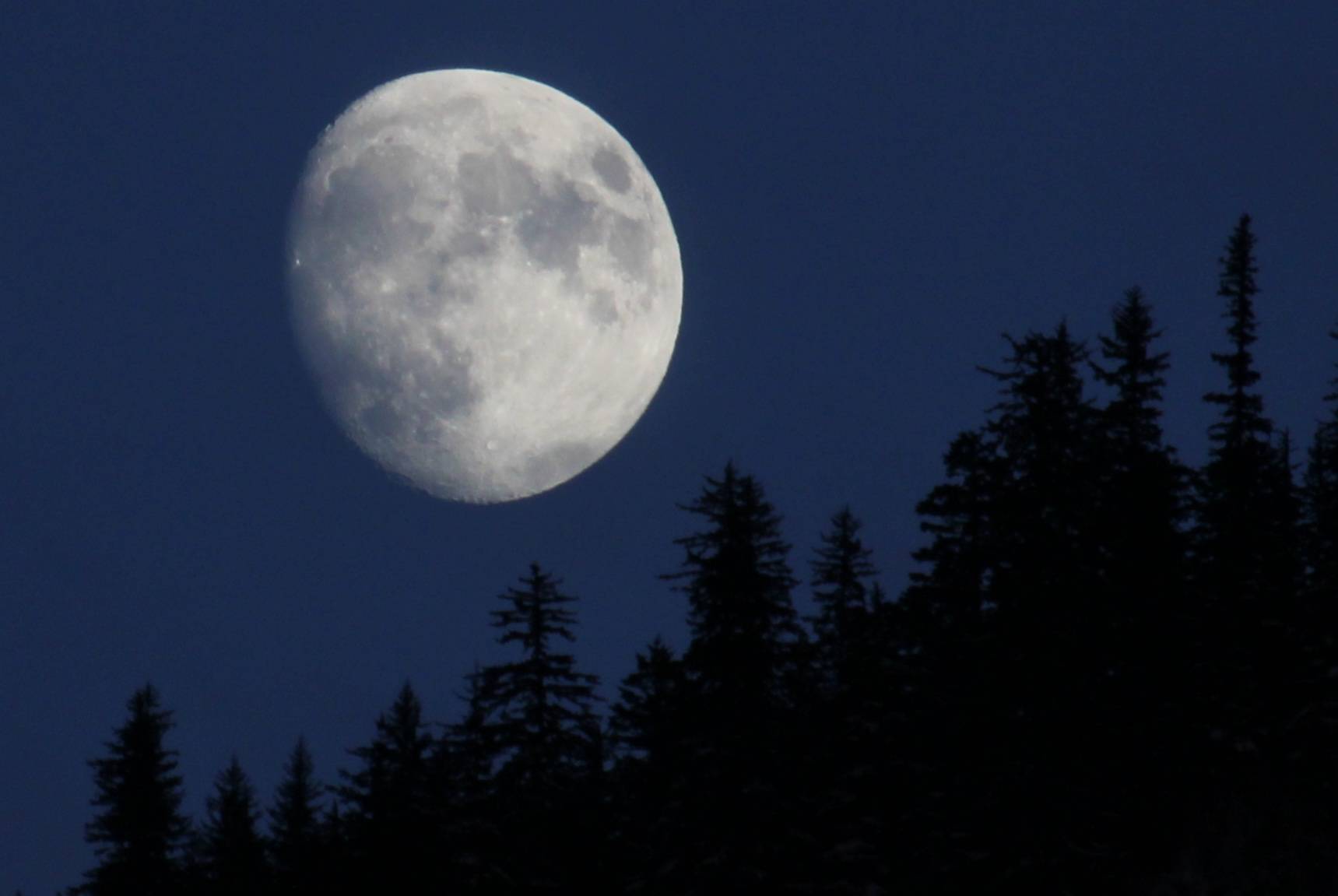
If recent predictions about increased coastal flooding during the next decade due to a moon wobble have you worried, you can scratch that off your list of concerns, at least for Southeast Alaska.
According to an oceanographer involved with the study, Southeast Alaska faces a different phenomenon — declining ocean depths.
William V. Sweet, an oceanographer with the National Oceanic and Atmospheric Administration, said ocean depths are dropping in Southeast Alaska as land rebounds from the retreat of glacial ice.
“Land is springing up and rising out of the mantle,” Sweet said in a recent phone interview with the Empire. “Regional ice sheets are melting and retreating. They have tremendous mass so the crust is pushed down. When ice melts, the land rises back.”
Sweet explained that the process is called “glacial rebound,” and even though sea levels are rising, the land is rising more quickly, which leads to lower overall sea levels in the area.
New arboretum manager takes root
The moon wobbles
According to NASA’s website, the moon wobble is a natural lunar process and is one of many factors that play a role in increasing or suppressing tidal fluctuations.
The moon is currently in an amplifying cycle, which will be followed by a cycle that reduces tidal fluctuations. However, when the next amplifying cycle occurs in the mid-2030s, sea levels will have risen around the planet, leading to increased coastal flooding in many places.
However, glacial rebound along with Southeast Alaska’s naturally dramatic tide fluctuations will mute the effect of the moon wobble in the region.
“It’s not to say that the wobble isn’t at play, it is anywhere there is a tide,” Sweet said. “It’s just not significant and it’s nothing compared to the tides you already have, which are among the most extreme in the country.”
Sweet said that the national study looked at several different factors to make predictions and that the totality of the changes is what matters for forecasts.
“You have to sum up several different factors. The variations in tide are significant but it’s the sea-level drop that’s critical,” he said.
Sweet said that tide gauges have been measuring local land and water fluctuations since the mid-1930s and that sea levels have dropped more than 3 feet during the time.
“You all are unique,” Sweet said. “With long records, we see a trend line and we see a decrease of 13 to 14 millimeters per year in Southeast Alaska.” He added that 10 years from now, tide heights would be about 6 inches lower than they are today.
Hoonah honors veterans with totem pole, future memorial park
Flooding still possible
Sweet said that while the long-term trend is sea-level drop, intense storms can still produce flooding, but not the same type of chronic flooding that could plague low-lying areas in the Lower 48.
“It’s the exact opposite of Louisiana, where the land just disappears,” he said.
However, dropping sea levels could still present trouble for existing infrastructure.
“To say that Juneau will have a flooding problem in 2030 is not appropriate,” he said. “I suspect the longer-term problem there is that what you built to access the water will be too high.”
• Contact reporter Dana Zigmund at dana.zigmund@juneauempire.com or 907-308-4891.
