
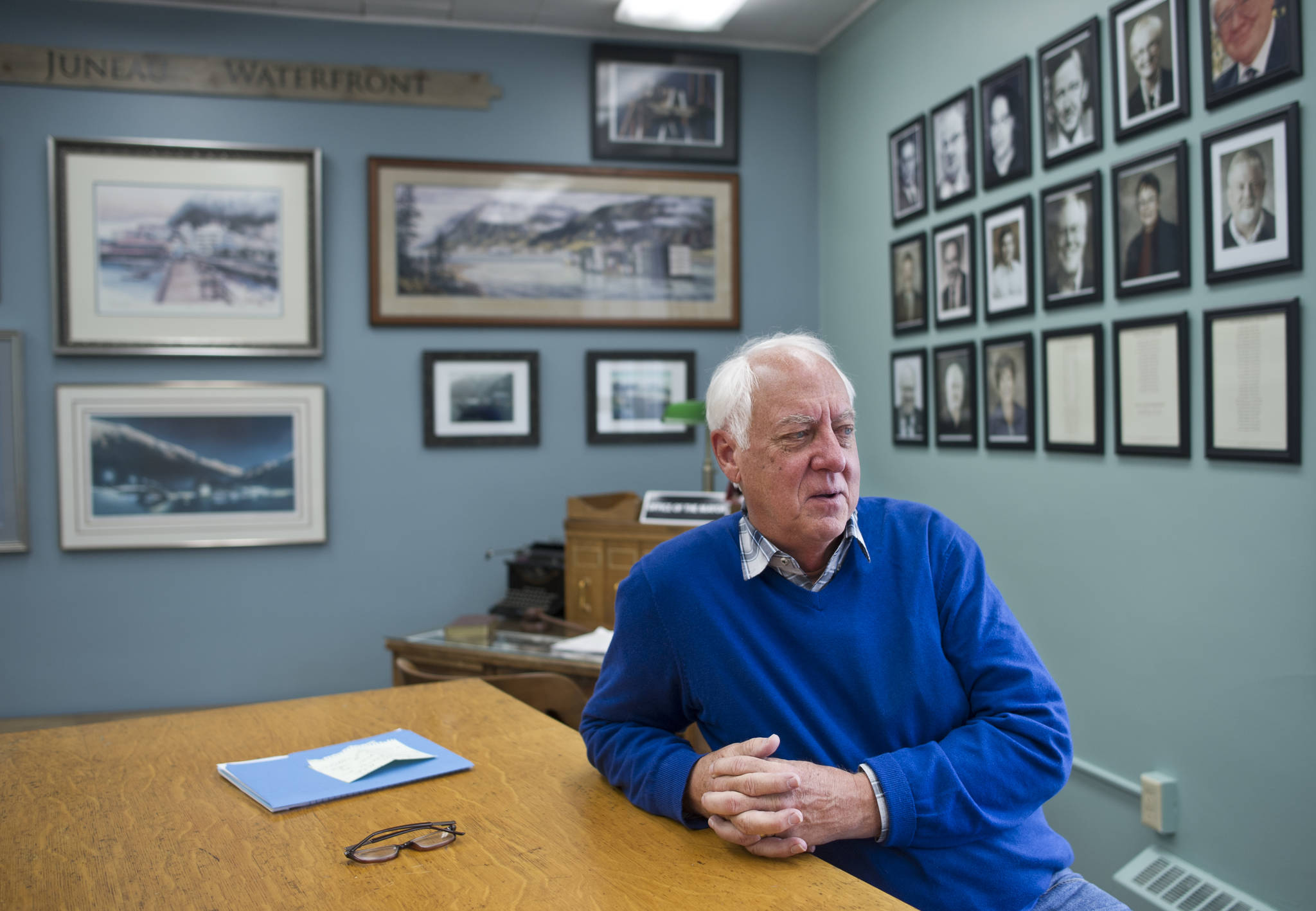
It didn’t take long for Ken Koelsch to realize that being mayor wasn’t going to be a glamorous gig.
Just days after winning a highly publicized election last year, Koelsch walked into City Hall to turn in his paperwork to Human Resources. When he strode into the office, the employee working there asked who he was, not recognizing him.
Quite a bit has changed since then.
Not only do Koelsch’s co-workers now recognize him, but the city has faced a number of challenges, from an increase in opioid abuse to a legal battle with the cruise industry. Sitting in his office almost exactly a year after being elected, Koelsch chuckled as he pondered whether the year has gone by slowly or if it’s sped by.
“It feels like I’ve been doing this forever,” Koelsch said.
Four contentious issues
Following the unexpected whirlwind election that ended with Koelsch’s victory, he and the City and Borough of Juneau Assembly have discussed numerous contentious issues, but four stand out to Koelsch.
Those four issues — the LGBTQ non-discrimination ordinance last summer, an ordinance supporting the Juneau Access Project, the anti-camping ordinance for Juneau’s homeless and the decision to exempt sales tax on cruise ships — are still fresh in Koelsch’s mind.
Those issues brought members of the public out in droves and led to lengthy discussions in the Assembly chambers, but the members of the Assembly tended to agree one way or another. There was only one dissenting vote with the LGBTQ ordinance and with the sales tax exemption, and the road access ordinance was approved by a 6-3 vote.
“We talk about unity in Juneau and there is a dichotomy in liberal and conservative viewpoints here,” Koelsch said, “but if you look at those four large issues, the only one that was close was the camping ordinance, and that was 5-4.”
That ordinance, both for the way it divided the Assembly and for the effect that it will have when it goes into effect April 15, weighs especially heavily on Koelsch’s mind. The ordinance forbids people from sleeping in doorways of downtown business, brought about as a reaction by longtime business owners.
It’s still unclear, however, where those people will go once they’re prohibited in large part from sleeping on the street. Koelsch and the city have discussed numerous solutions, including campgrounds and warming shelters, but there still is no clear answer to the problem.
“It was paramount to deal with that,” Koelsch said of the business owners’ interests, “but at the same time, we have not responded effectively, or as effectively as we can, dealing with homelessness here, and we needed to have that online at the same time.”
Looking ahead
As Koelsch looks forward, homelessness and opioid addiction top his list of issues to address in town. Those fit under the umbrella of general public safety, which was one of Koelsch’s main concerns during his campaign last year. Burglaries are rising quickly in Juneau in conjunction with the opioid problems, and Koelsch believes finding ways to treat those battling with opioid addiction would be a major component in increasing safety.
Koelsch said he’s looking for the city to fight the opioid problem by working backwards, beginning with finding places for addicts to find treatment. Just like the lack of housing for homeless, there’s a dearth of options for addiction treatment in Juneau as well. Though Koelsch wants to keep people in Juneau as much as possible, he is looking to do research on what the best options are for treating addiction.
“I need to sit down with a group of professionals,” Koelsch said. “Is it better to keep somebody in this place and have the same group of friends, the same challenges, or is it better to have somebody go outside for treatment? Is it better to come back or are you saying, basically, ‘It’s not a good idea to come back.’ I don’t have that answer. I think treatment around family and friends is always a good thing, but in this kind of addiction, maybe it’s not.”
Koelsch isn’t the only one at the city who’s looking to make addiction treatment a priority. City Manager Rorie Watt — who rose to his position just three weeks after Koelsch was elected to his — recently drew up a plan for the future of the city’s approach to dealing with issues of homelessness and addiction, entitled the Community Wellness Strategy. It’s only an outline at this point, so a firm solution is still fairly far off.
From being on the Assembly years ago and especially from being mayor this past year, Koelsch knows that finding solutions takes time. A good start, he said, is sifting through different points of view and getting everybody on the same page. With many of the main issues of the past year, the Assembly members compromised and came to agreements.
Finding unity is always a challenge, and Koelsch said that fighting issues such as homelessness and addiction will require finding common ground.
“We can have differences of opinion,” Koelsch said, “but when you’re finished (debating), acknowledge and move on. Let’s figure out how to make it better.”
• Contact reporter Alex McCarthy at alex.mccarthy@juneauempire.com or at 523-2271.
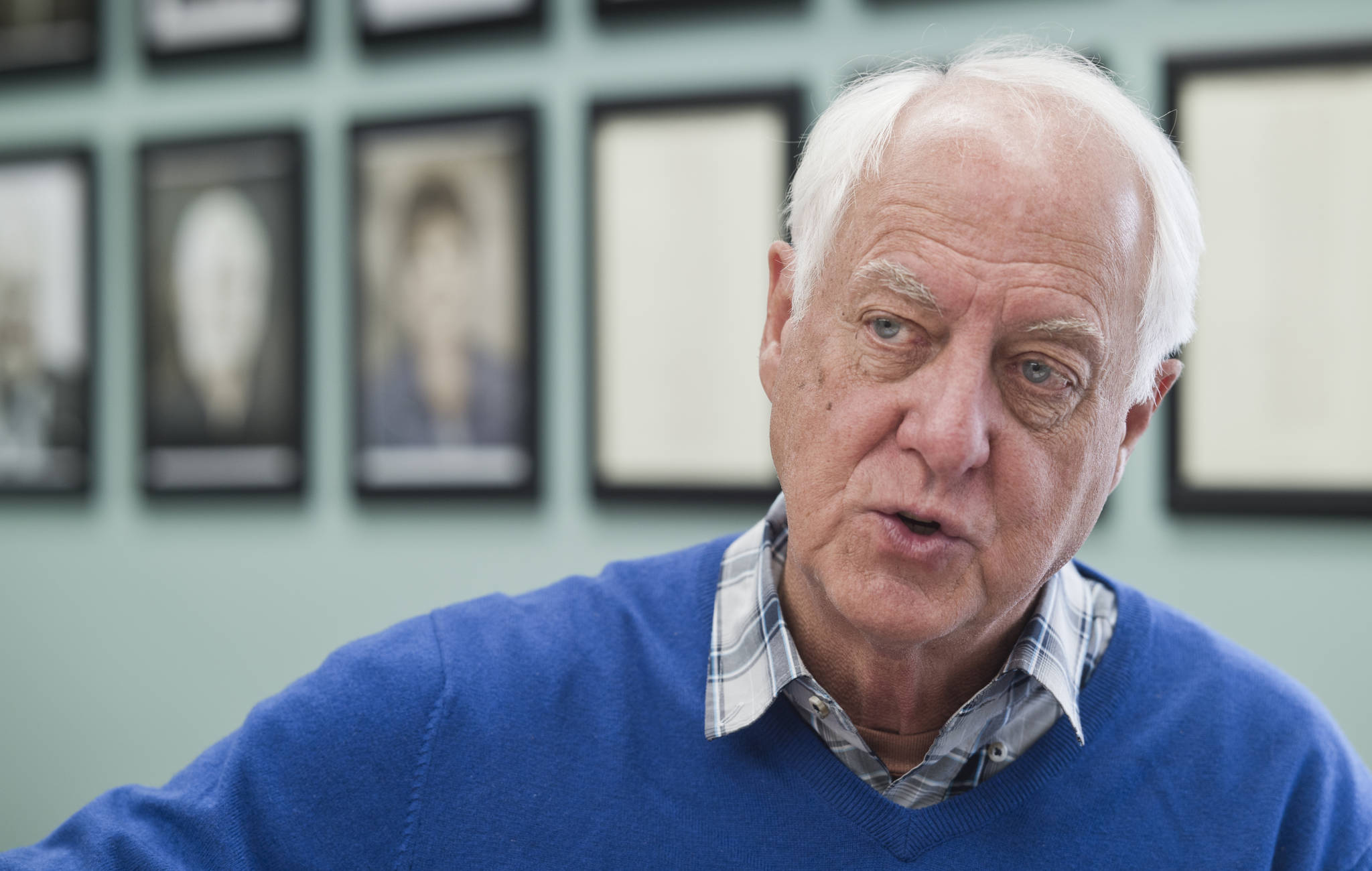
Mayor Ken Koelsch speaks about his first year as mayor from his City Hall office on Thursday, March 30, 2017. (Michael Penn | Juneau Empire)
