Polluting paradise? New sensors will show if Juneau’s air is safe
Published 3:00 am Sunday, April 21, 2019
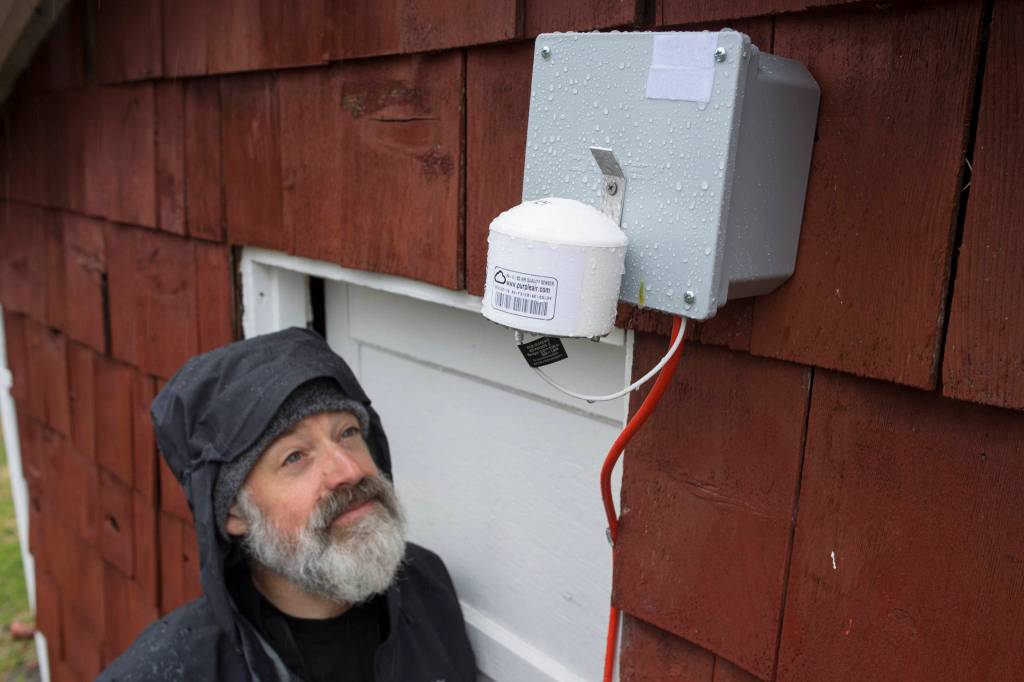
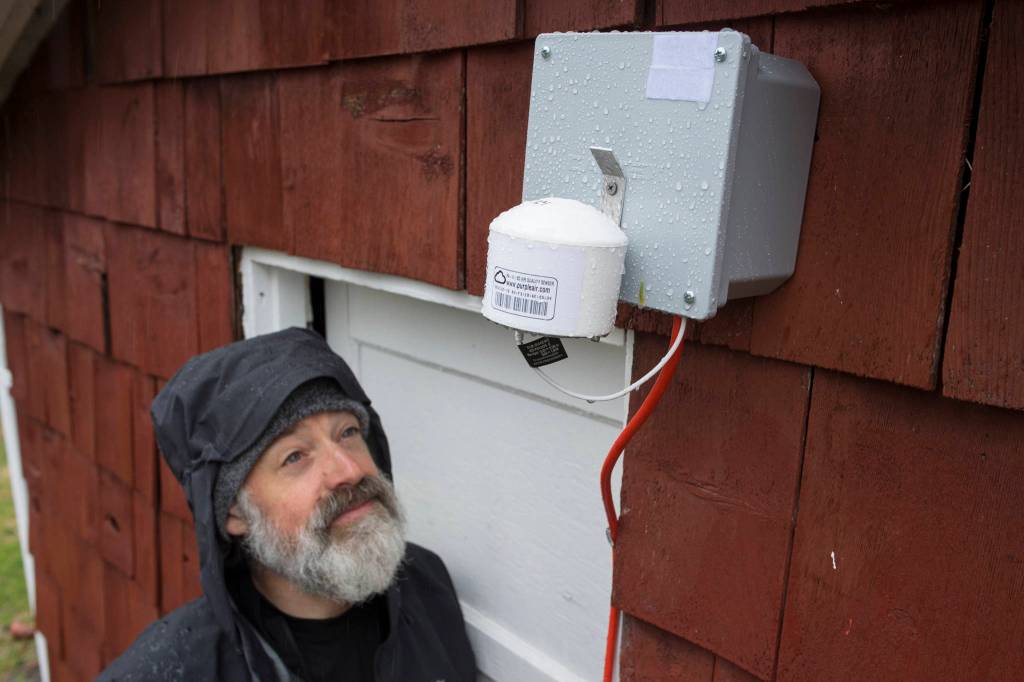
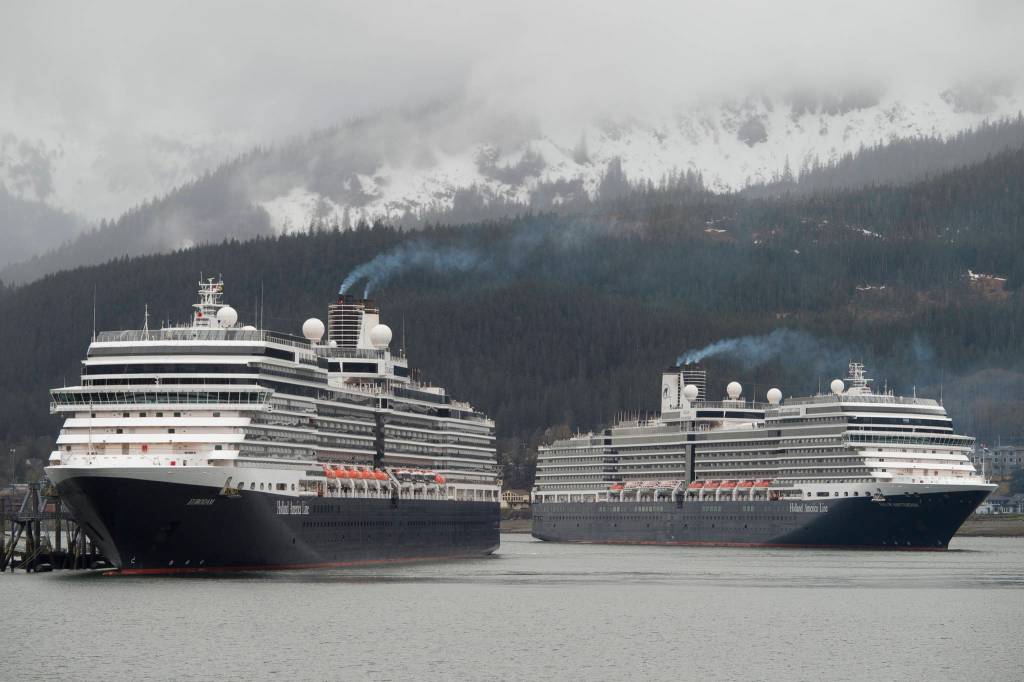
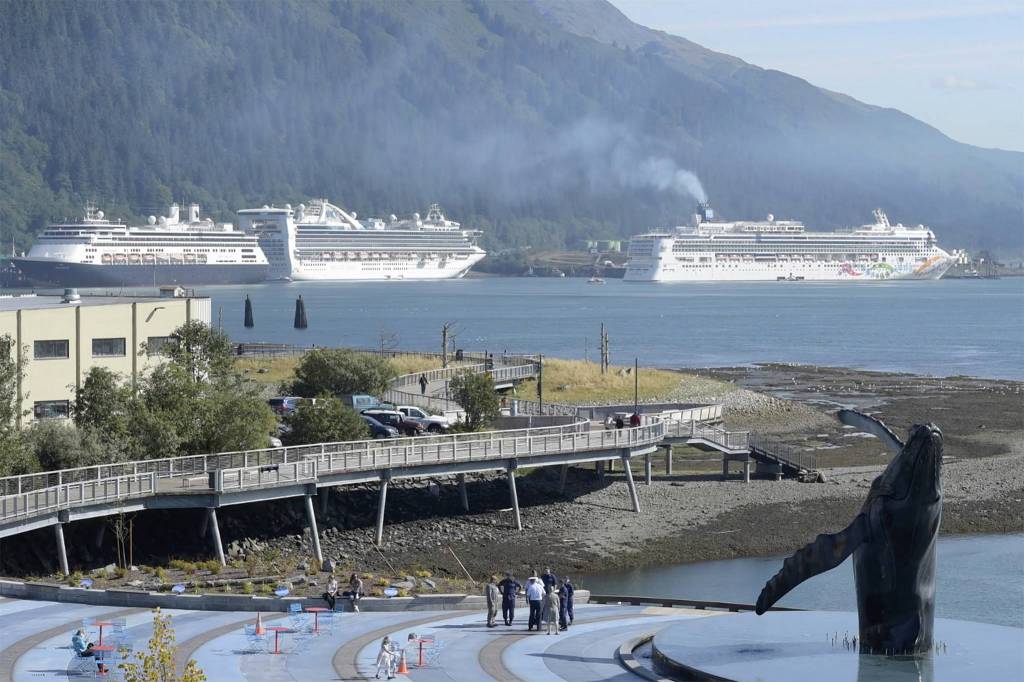


Mike Hekkers already knows cruise ship emissions have some impact on the air in his front yard, but he’s about to have some hard data about what’s in the air.
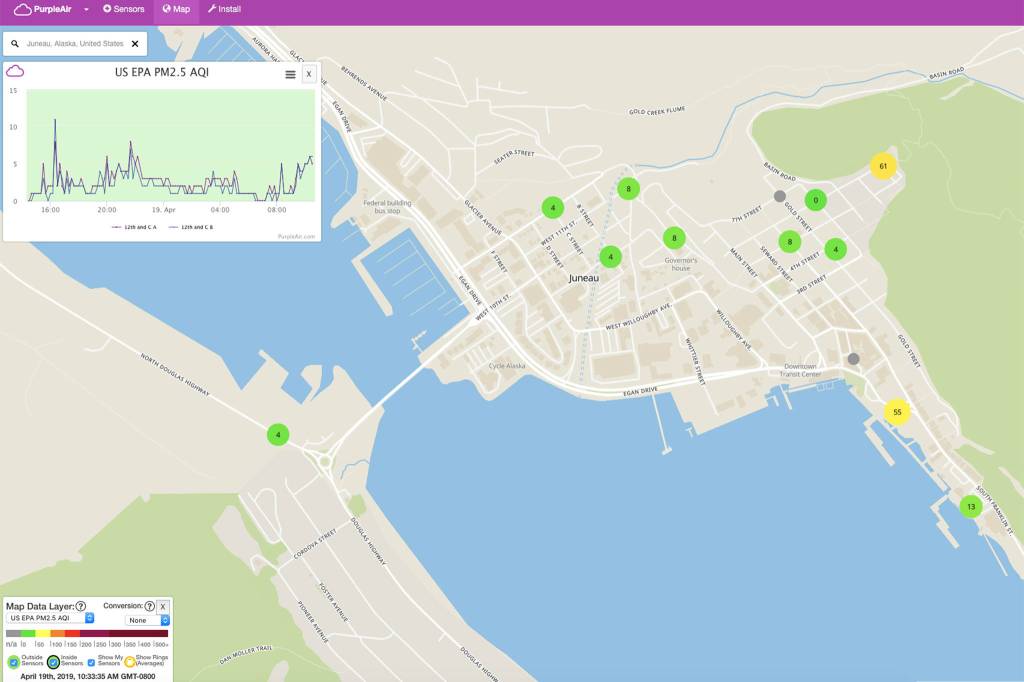
Hekkers’ yard is the site of one of 21 air quality monitors that are being installed around downtown Juneau by the Alaska Department of Environmental Conservation for the first ambient air study in Juneau in 17 years.
[Juneau to have its first ambient air study in 17 years]
“I think it’s really important to see how dangerous this pollution is — assuming it is dangerous,” Hekkers said in an interview with the Juneau Empire. “My son, he’s 15, he’s been breathing this air most of his life.”
The monitors will remain up through at least some of October in order to gather data about air quality in Juneau before, during and after cruise ship season, said Barbara Trost, environmental program manager for the Division of Air Quality.
They are clustered around downtown, near the docks and the Flats neighborhood, Trost said.
Hekkers volunteered to have an air monitor placed on his property.
[Opinion: New devices can help monitor cruise ship air pollution]
He said that if the wind blows a certain way, the fumes are “really bad” at his home on Third Street between Harris Street and Gold Street.
That observation led to multiple calls to DEC, which in turn led to an offer for Hekkers to host a PurpleAir sensor on his shed.
He’s not the only one who has been making calls. Over the past two years, there have been 223 public complaints about cruise ships received by the DEC.
[As blue haze rises, so do cruise ship complaints]
Public interest is a major reason the study is happening, Trost said.
Hekkers provides power to the small device, which uses a laser to provide measurements of particulate matter in the air.
Trost said the study is expected to cost about $45,000. About half of that total comes from equipment expenses, she said.
Much of the funding for the project is provided by fines paid by cruise ships that violated DEC guidelines, Trost said. Last year, there were nine violations statewide, with one in Juneau, based on 480 opacity readings, 202 of which happened in Juneau, according to the cruise ship program’s annual report.
The devices record and report data in real time through a wireless internet connection. That information can then be reviewed online at PurpleAir.com/map.
Also, Trost said the DEC’s website will eventually host data from the devices on the page for the Juneau air quality monitoring project.
Trost said the DEC data will focus more on hourly figures since health standards for particulate matter are based on a longer time period.
The health standard for Particulate Matter 2.5, which is what the air monitors will measure, is 35 micrograms per cubic meter over a 24-hour period.
Hekkers said the device on his property isn’t yet providing data, but once it is he will be interested to see how the numbers relate to what he can already smell and see.
“I will definitely check in on it when we’ve got a smoke plume downtown, and/or when I can smell it in the front yard,” Hekkers said.
[Ship exhaust generates flurry of complaints]
In addition to the PurpleAir monitors, Trost said there will be about 10 sulfur dioxide sensors around downtown Juneau. The health standard for sulfur dioxide is 75 parts per billion for an hour period.
The Ogawa sensors will not offer instant feedback.
“There’s a pad that has a chemical on it, and as the air moves over the pad, the SO2 in the air reacts,” Trost said. “That pad is rinsed, and that solution is then sent to the lab, and they analyze it.”
She said that means there is a limited number of analyses that can be done.
“We’re going to mostly do them in June and July,” Trost said. “We’re doing the heaviest cruise ship traffic is the idea.”
[How many tourists is too many?]
Thirty-seven ships, 567 voyages and 1.31 million passengers are projected to come to Juneau in 2019, according to Cruise Lines International Association. That’s a 19-percent increase from 2017, when visitors spent $705 million in Southeast Alaska, according to CLIA.
Depending on the results from the study and availability of funding, DEC may also conduct a more in-depth study that could include monitoring for additional pollutants and the use of more costly and accurate equipment or establish a long-term air quality monitoring network in downtown Juneau to provide a reliable baseline of air quality conditions from cruise ship visits.
Trost said she expects there to be some sort of public presentation of the information collected during the study, but she was not sure when exactly that would take place and how long it might take to analyze the data collected.
“We’re definitely going to have some outreach based on public interest,” Trost said. “That really is what urged this study.”
• Contact reporter Ben Hohenstatt at (907)523-2243 or bhohenstatt@juneauempire.com. Follow him on Twitter at @BenHohenstatt.