
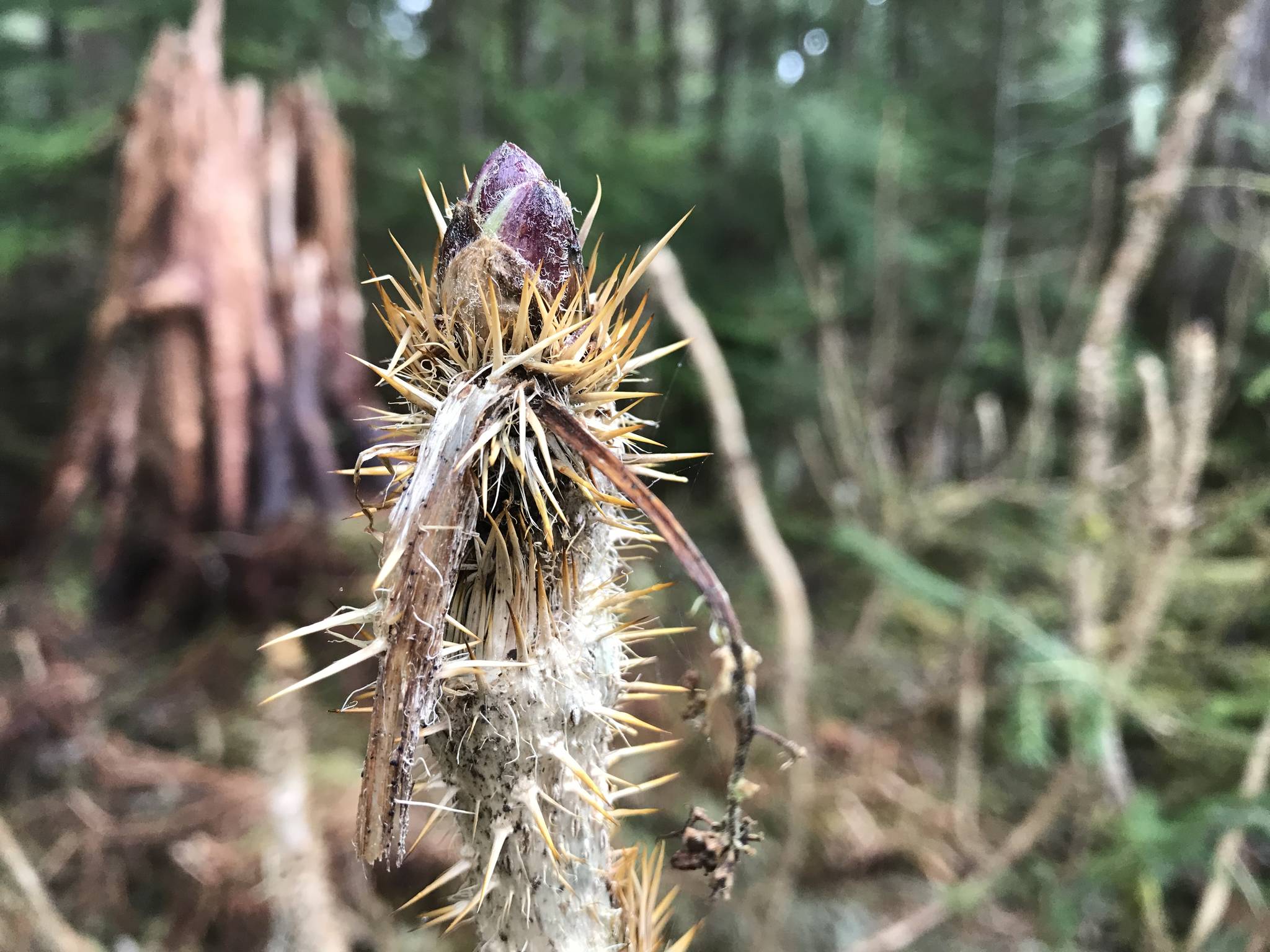
Between disbelief and wonder there’s a place of uncertainty keeping you rooted like the skunk cabbage in the mud. At any moment the deer can nibble off the new spring growth or the bears can dig up the roots.
I get out of the truck with my iPhone. My shoes squish into the mud, newly thawed from spring sunlight. The grass on the side of the road is still pale and dry, but sure enough, four bright yellow tubes protrude from the muddy ditch.
Today, my dad and I are out of our official hunkering down abode, Mickey’s Fishcamp, to get some fresh air and look for signs of spring at Pat’s Lake. In the truck, it’s easy to feel like things are normal, but the world now is hardly that. My dad, my husband and I, all live together at our fishcamp and we’ve been talking about death a lot. Not in a morbid manner, but matter-of-fact. COVID-19 talk. Do we want to be hooked up to a ventilator? Do we want to die at home? When do we want to go to the hospital? Whatever our decisions are, we still stand on the porch listening for grouse hooting on the hillside. We will still head out into the wilderness to check for bear tracks. Tomorrow is predictable because our favorite blueberry patch now has blossoms on it and it looks like it might be a good berry year because we had snow to protect the bushes.
My dad gets out of the truck and follows me to the edge of the ditch. “Years ago when I had my fishing boat, I would’ve been fishing Back Channel. When the skunk cabbage comes up, the kings are here.”
As I note how many skunk cabbage plants are emerging in the muddy ditch, I consider its healing properties reflected in the Tlingit saying: Your words are healing like the skunk cabbage applied to our open wounds. This moment, right here at the edge of spring, is helping get me through another day of uncertainty.
I think about New York Gov. Andrew Cuomo asking New Yorkers “Who are you sheltering for?” For me, that answer is my dad. We were practicing social distancing by the end of February. By the first week of March, my dad was limiting outings to stores and the and post office. We don’t do takeout or curbside pickup. If we’re in town, we’re in our vehicle and don’t get out. Our groceries are delivered. We have a drop off location away from the house for any deliveries. Our daughter checks the mail for us.
Further down the road it’s impassable by snow and deep ruts so we stop at a small muskeg and I step out and head down a narrow deer trail, past the bare alder and willow. In some places the muskeg holds my weight because it’s still frozen, even a few cranberries dot the moss. I pick a handful of leaves from the Labrador tea. It’s high in vitamin C and as a syrup it’s used for coughs and sore throats. The tea is used for the flu, stomach problems. Vivian Mork Yéilk’ says the ideal trifecta of cold-fighting medicines are in our backyard: s’áxt’ (devil’s club), gítgaa (spruce needles), and s’ikshaldéen (Labrador tea, Hudson bay tea, muskeg tea).
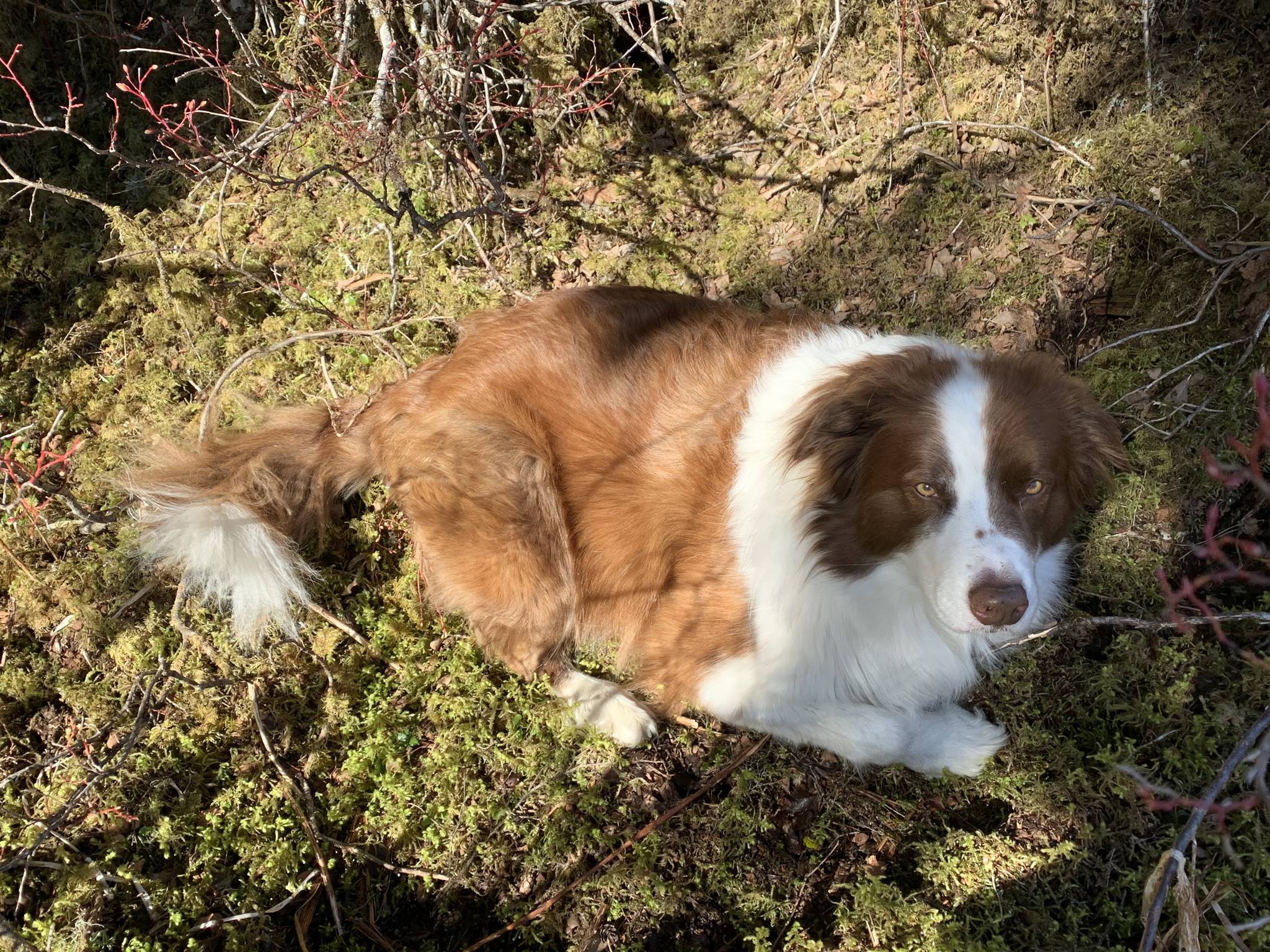
Oscar rests in the warm spring muskeg. (Vivian Faith Prescott | For the Capital City Weekly)
It’s hard to live with the threat of this virus, or even keep up with our governor’s updates. Sometimes, I disconnect and spend a day exploring the wilderness. My daughters and I message one another updates specific to Alaska and Wrangell. In our household we can tick all the risk factor boxes. My dad will be 80 in May and he’s medically “fragile.” But it’s hard to think of him like that. I can remember him lifting a car out of a ditch by himself when he needed to get my step-mother to the hospital. He tells me a story of pulling 20-foot lumber cants off the green chain in the sawmill, and of carrying a washing machine on his back once.
I try not to dwell on our human fragility as we pass the lake again and see four large white swans and a flock of Canadian geese. A goose steps gingerly on the thin ice. Spring is returning. A few weeks ago it seemed like everything was waiting and there was a sense of impending doom. Now, the first sign of skunk cabbage, the swans and the thawing muskeg refocus my thoughts to promise and to hope.
We drive to the end of the turnoff for the lake and instead of heading north toward the fishcamp, we cross the main road toward the beach and the old log haul out. Beside the road is a stretch of muskeg dotted with the red leaves blueberry bushes. Some of the bushes are already budding. I get out and walk into the muskeg. Oscar, my border collie, follows me. Beside the bushes are a few devil’s club stalks and I can barely make out a slight purple color. As I return to the truck, I note that protruding through the dry grass on the side of the road are the velvety looking tiny leaves of Indian celery.
We head back to toward town. The icicles and frozen waterfalls along the bluff road are melting in the sunlight. It’s likely that soon we’ll have a spring landslide. It happens every year, a large boulder or two rolls out into the road. Some things we can predict and other things we cannot, but mostly I think it’s a wonder humans even exit on this planet for the years that we do.
We’ve always taken comfort in knowing we’re living here together, that we’re not alone. That we can hunker down and shelter-in-place because I’m doing it for you and you’re doing it for me.
[One of these could kill you, one could make great tea]
What am I sheltering for? Hope. The world we will enter again, after our forced absence, after baking umpteen loaves of bread, after homeschooling our kids, after waving at our grandchildren through the window, after standing six feet or more from hugs, will be different. I can accept that. Still, my hope comes from seeing the skunk cabbage come up again, from watching the sandhills fly in formation over my fishcamp. There the world goes again and so must I.
When I headed out into the wilderness today, I assumed I was going to look for the evidence of spring: buds and shoots, melted ice, critters and birds. But what I was really doing was looking for hope. I needed reassurance. Will I be here in a couple of months? I don’t know. Will my dad or my husband succumb to the virus? Will the virus hurt the people I love in communities all over Alaska. I don’t know.
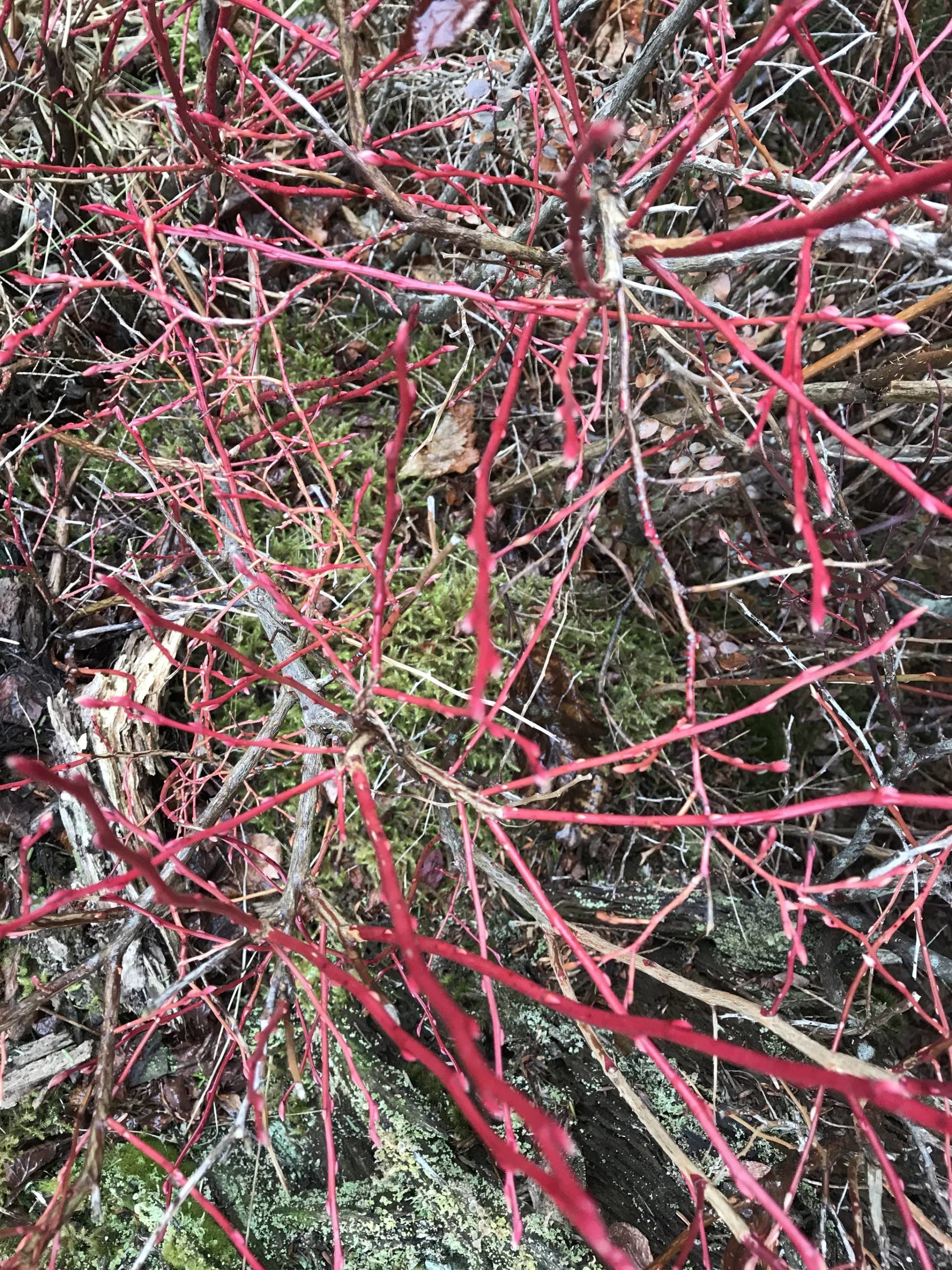
Blueberry branches as seen n Wrangell. It might be a good berry season because of this year’s snowfall. (Vivian Faith Prescott | For the Capital City Weekly)
What I do know is that while I sit here across from my dad in the warm spring sunlight on our deck next to the ocean, sipping immune boosting tea, rolling dice in a game of 10,000 that this is it. It is all we have. There is comfort in the change of seasons, the buds opening on the elderberry bushes, the beach grass sprouting green. And as soon as I return to considering where exactly I want my ashes spread in front of the fishcamp, the first humming bird of the season hovers near my head and gifts the sound of her wingbeats.
• Wrangell writer and artist Vivian Faith Prescott writes “Planet Alaska: Sharing our Stories” with her daughter, Vivian Mork Yéilk’.
