
By Mary F. Willson
For the Juneau Empire
Several species of voles occur in the Juneau area. We see signs of their activity in various places — tracks in the snow, tunnels in the grass, nibbled bark at the base of shrubs, and so on. But we seldom see the critters themselves. So, what is a vole, anyhow?
The word vole is used for several kinds of small rodents. Here in Southeast Alaska, we have voles of two genera: red-backed voles (two species of Myodes, formerly known as Clethrionomys) and three other species in the genus Microtus. There are many more vole species up north and over North America and Eurasia.
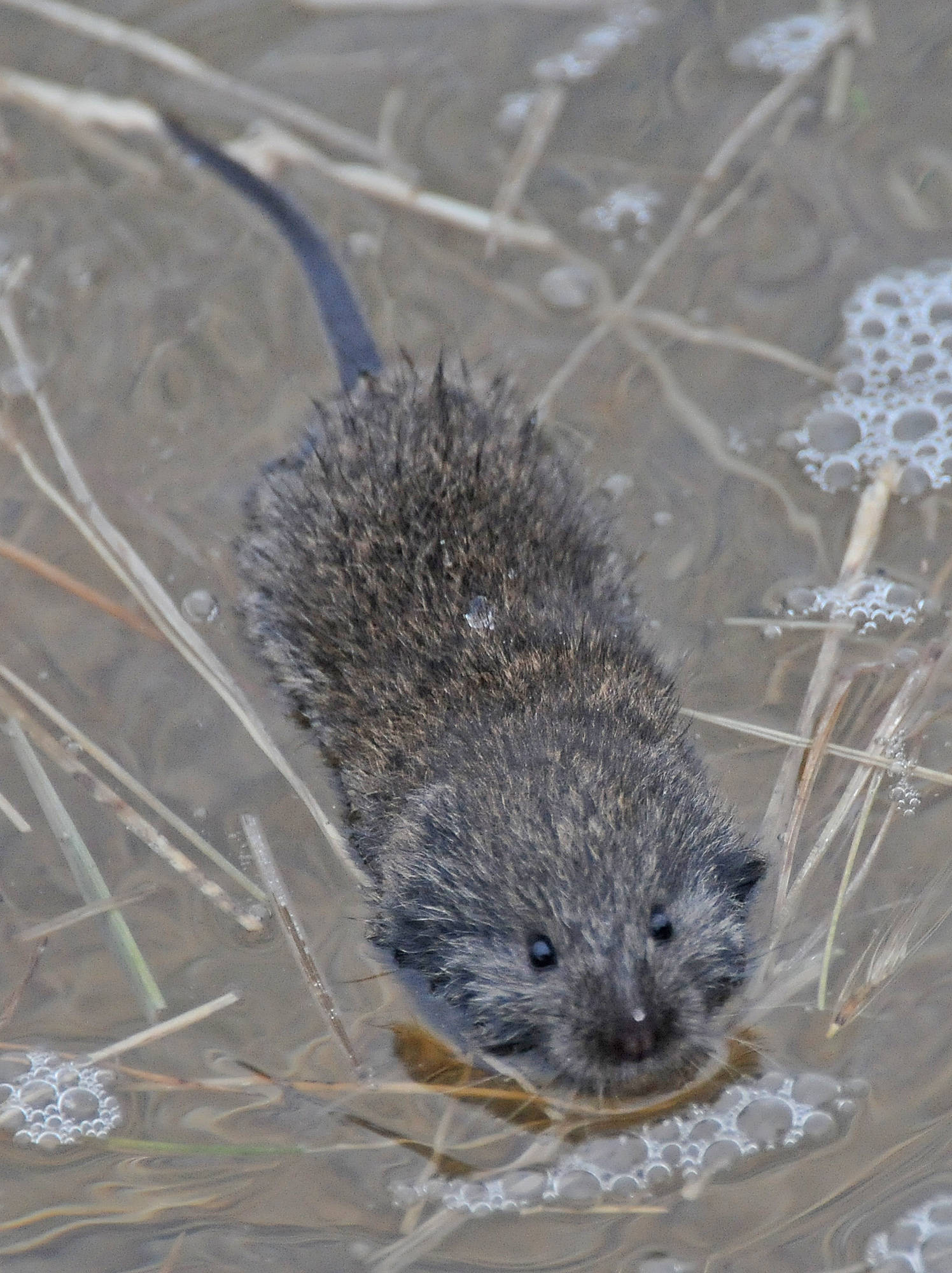
Voles have short ears and small eyes, and shorter tails than mice do. This vole was caught by an incoming high tide and had to swim for safety. (Courtesy Photo / Bob Armstrong)
Voles have short legs, short tails, and small ears. The three local species of Microtus voles have quite wide geographic distributions, favoring grassy habitats of several types including wetlands that may be flooded on a very high tide (we sometimes see voles scurrying for higher ground when a big tide comes in). Meadow voles like meadows; long-tailed voles like meadows, shrubby thickets, and mountain slopes; tundra (or root) voles like wet meadows and bogs at various elevations. They are chiefly herbivorous, eating mostly herbaceous vegetation and seeds. The teeth of Microtus grow continuously, as eating a lot of grasses and sedges (with tough fibers and silica) seriously wears down the molars. In addition, Microtus voles sometimes eat meat, if they can get it, and even become cannibals at times.
Myodes or red-backed voles are more omnivorous, eating fruit, fungi, lichens, sometimes snails and bugs, as well as grasses and seeds; they are occasionally cannibalistic. There are two species in Southeast, one in the northern part and one in the southern part, although both have much wider distributions in North America. They inhabit a variety of habitats, from meadow to forest, and are agile tree-climbers.
Voles have incisor teeth with the typical cutting edge of many rodents; incisors grow continuously as they are worn down. Their distinctive molar teeth have no cusps, making it possible for upper and lower rows of teeth to meet flatly and slide past each other. The flat surface of each row of molars makes a sort of zigzag pattern, looking like a series of triangles with the tips pointing in opposite directions. I have not found good information about how that configuration might work.
Voles are capable of prolific reproductive output, although they are not long-lived. Females of some species can breed when about four weeks old (sometimes even less); males mature a few weeks later. They can produce several or many litters per year (depending on the length of the season), because females can mate very soon after giving birth. Litter size varies, occasionally reaching a maximum at eleven young. Gestation takes about three weeks and the young are weaned when they are about two to three weeks old. Microtus nests can be in shallow burrows or above ground, somewhere along the grassy runways used for travel and feeding. Red-backed vole nests are often built under stumps and logs or even in tree cavities.
Mother voles do most of the parental care. The participation of fathers varies greatly, depending on the species. In most species, mating is promiscuous and male voles do little or no parental care, although male meadow voles may occasionally tend their young. However, in at least two species of Microtus in North America (prairie vole, pine vole), long-term monogamous pair bonds may last for as long as both members of the pair live. Males may help build the nest, and fathers help raise the young. Attentive fathers spend time in the nest, groom the babies, and retrieve them if they start wandering out of the nest. These observations lead ineluctably to the question of why the males of some species are monogamous and involved with parental care and others are not.
In the two species of Myodes in Southeast Alaska, paternal involvement with his nestlings varies from none to considerable, reportedly depending in part on the aggressiveness of the mother toward the male. But why does her aggressiveness vary?
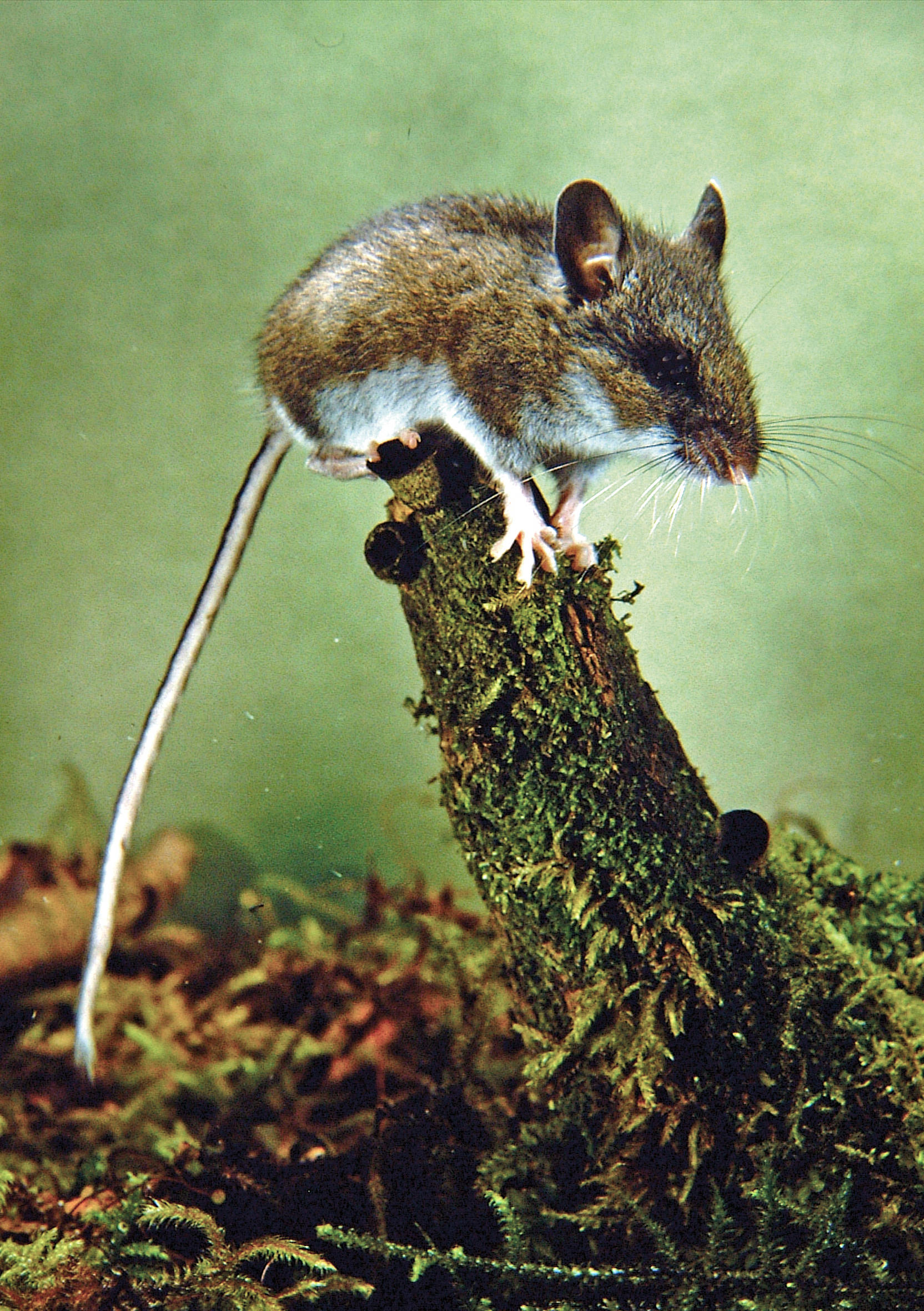
A deer mouse, with big ears and big eyes, has a long tail for balance when jumping on its long hind legs. (Courtesy Photo / Bob Armstrong)
To set the record straight, voles are not mice (although—confusingly— they are sometimes called that), although both are rodents. Our native mouse is called a deer mouse, supposedly because it has rather long hind legs and can jump well, with a long tail for balance. Both are classified in the taxonomic family Cricetidae but, within that group, voles and native mice belong to different evolutionary branches—the mice are related to packrats, and voles are related to lemmings and muskrats. Neither voles nor deer mice are very closely related to house mice and rats, which are usually classified in a different family.
• Mary F. Willson is a retired professor of ecology. “On The Trails” appears every Wednesday in the Juneau Empire.
