
By Mary F. Willson
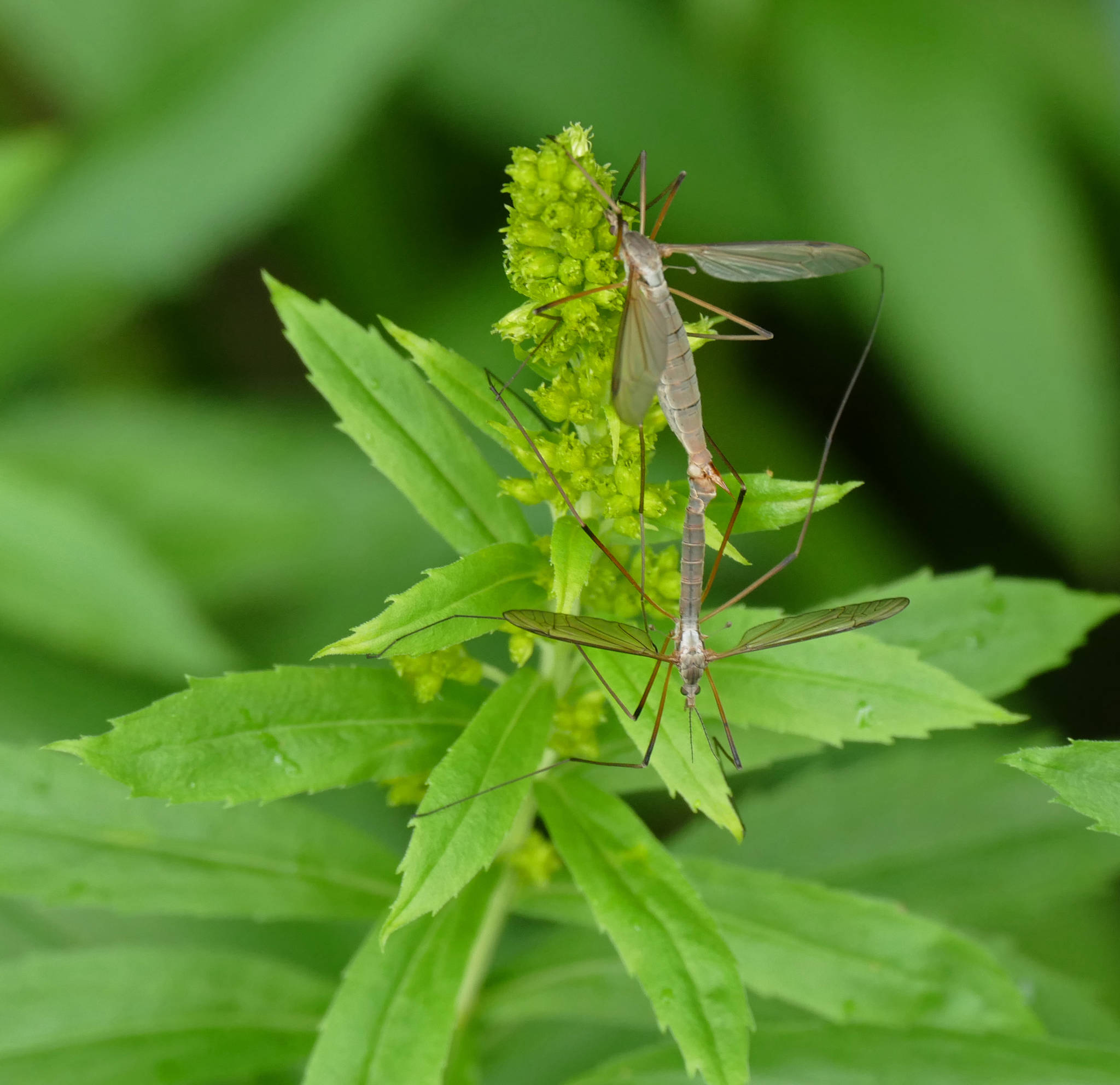
In early August I had reports of crane flies in large numbers gathering on the sides of buildings or clambering about in the grass. There are thousands of species of crane fly in the world, and I don’t know what species we have here in Juneau. Crane flies are sometimes called mosquito hawks, but the adults cannot eat mosquitos or anything else, although they may sip a bit of water or nectar — they do not have the mouthparts for biting. Crane fly is a more appropriate name, because these flies have very long legs (Why?).
Crane flies are called daddy longlegs in the U.K., but that nickname is just confusing here, because we use it for spider relatives that are also known as harvestmen.
The flying adults are interested in just one thing — mating. They only live for a week or two, so males and females have a short time in which to find each other. Females have pointed abdomens for depositing eggs, while males have clasping pincers at the end of the abdomen. Females already have mature eggs when they emerge from their pupal case, so they are ready to go. Once mating is accomplished, females go off to lay their eggs and then die. In the meantime, the adults are food for birds and other animals (including a cat that apparently finds them delicious).
Crane Flies on Goldenrod.wmv from Bob Armstrong on Vimeo.
Crane fly larvae are sometimes called leatherjackets, because they have a tough outer skin. Hatching from eggs laid in the soil, the larvae eat plant roots, decomposing organic material, and algae; they may occasionally emerge to feed above ground. Each larva spends a long time in the soil, eating and growing to a length of one to 1 1/2 nches or so. It may spend several winters there, often three years or more (four in Arctic tundra). In some arid parts of the U.S. they become dormant during drought times and resume eating only when a good rain wets the soil, so their larval time is even longer.
When it is ready, the larva pupates while it transforms into the adult. At least in some species, the pupa is oriented vertically in the soil, with the head very near the surface, so the adult can crawl out, dry its wings, and fly off to find a mate.
Birds know about these larvae and pupae in the shallow, damp soils. Robins and starlings poke around in the grass, and we often see crows and ravens doing that too — sometimes many of them in a field. I wonder how the birds find these tasty morsels! Do they see them, smell them, hear the larvae munching or the adult working its way out of the pupa or by some other means. And I wonder if bears ever go after them, as they do for other insects.
Some species have aquatic larvae, usually living on the bottom, where they feed on fallen leaves and organic detritus, but a few are predaceous. Most of them breathe air by coming to the surface and hanging there, while spiracles at the end of the abdomen take in air. The legless larvae may gain some traction for moving about on bottom substrates by means of stout hairs on the abdomen. These elongate, soft bodies are good food for Dolly Varden, grayling, and — no doubt — dippers too.
• Mary F. Willson is a retired professor of ecology. “On the Trails” appears every Wednesday in the Juneau Empire.
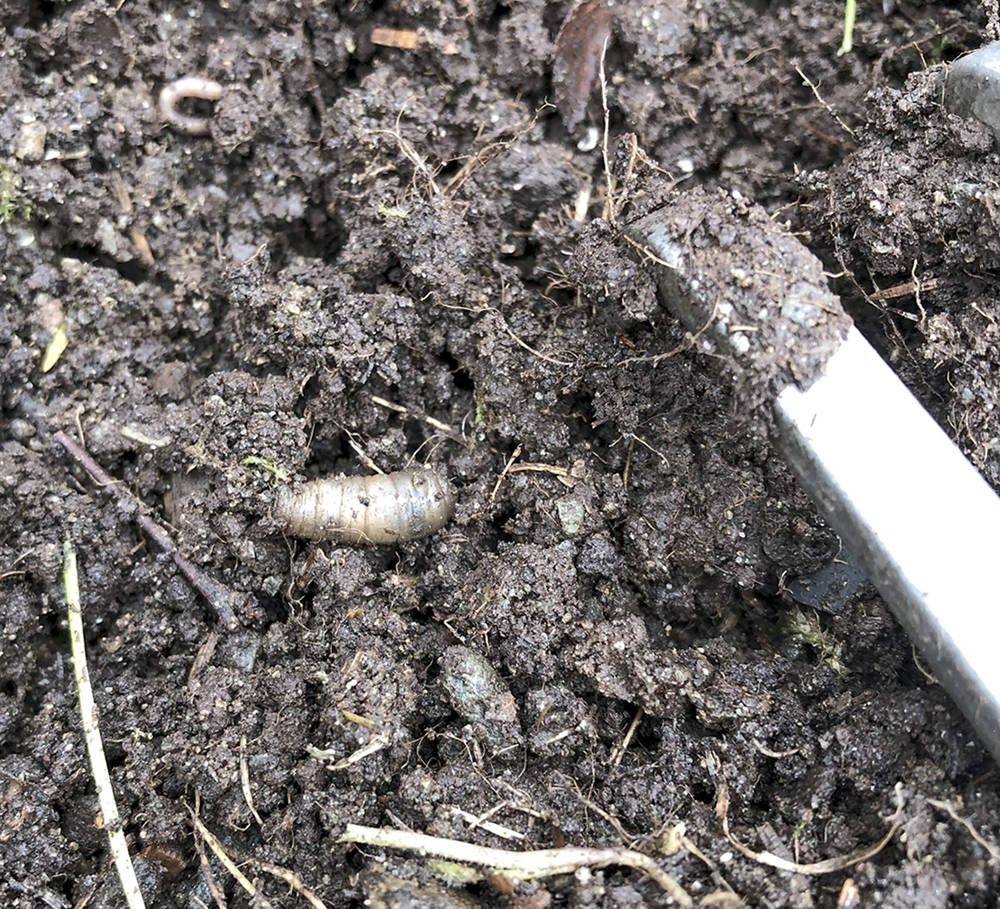
A crane fly larva is turned up from the turf; it’s a tasty morsel, sometimes called a leatherjacket. (Courtesy Photo / Ginger Hudson)
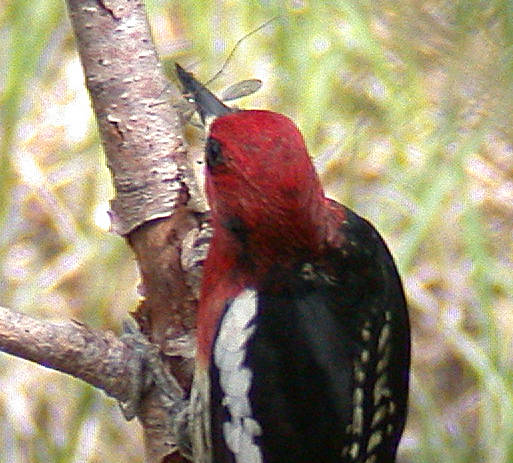
A red-breasted sapsucker munches on an adult crane fly. (Courtesy Photo / Bob Armstrong)
