
By Mary F. Willson
Animal courtship often involves more than fancy displays and songs. Some male animals also give courtship “gifts” to females, to help begin a mating relationship and help it on its way. But the gifts may also contribute to the well-being of the ensuing offspring and the mother. There may be both direct and indirect benefits to both giver and receiver.
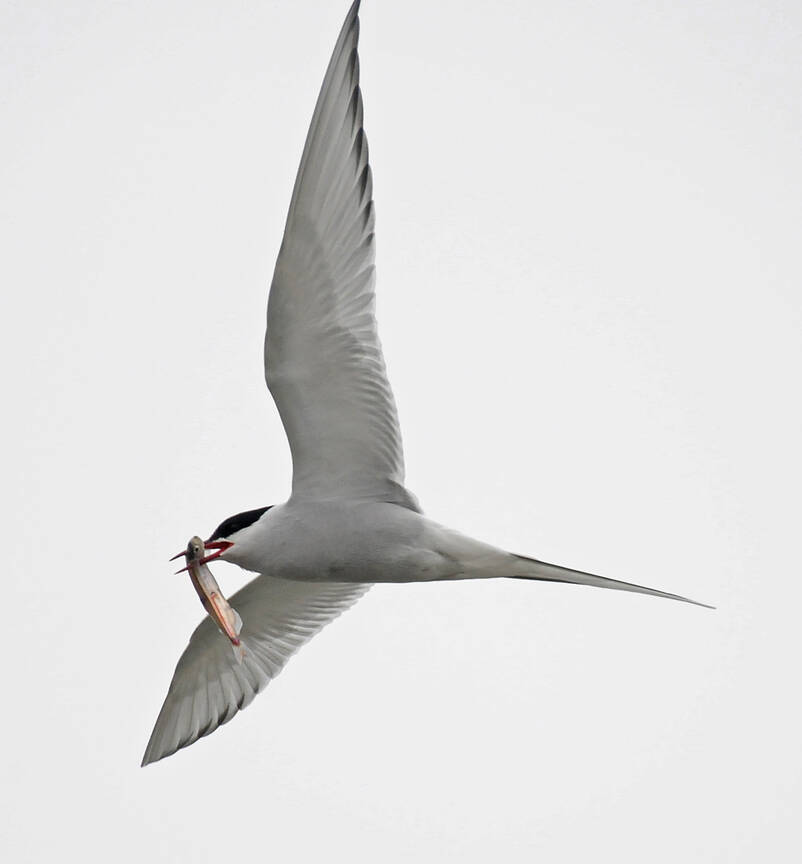
Courtship gifts are often a food item; many birds, from songbirds to seabirds, engage in courtship feeding. Once a pair-bond has begun, the gift-giving often continues through the egg-laying period, when the female is fertile. Gifts of food come in a variety of forms. For instance, male kingfishers offer small fish to their females, and male shrikes commonly offer insects. The European great gray shrike with large gifts is reported to obtain better chances of copulating with his mate than one bringing small gifts—and he also gets more mating opportunities with other females when he goes gallivanting!
Females receiving gifts generally are in better condition, may lay more eggs, and are more likely to incubate successfully, so her reproductive success is enhanced. The direct advantage to the gift-giving male includes not only more copulations (and so, more eggs fertilized), but he also gains less direct benefits from the improved success of the female incubating his eggs. His gifts might also help keep her attention from wandering males looking for a chance to mate.
Male dance flies of some species capture another insect and present it to a female, copulating with her while she eats. If the prey is small, she may eat and run, before copulation is finished. Other species of dance fly (genus Hilaria) wrap the prey in a balloon of silk, which the female must unwrap in order to eat the prey. If he finishes copulating before she is finished eating, he sometimes takes back the gift and rewraps it for another female. In a related genus (Empis), some species just present a balloon of saliva bubbles that’s empty—and the females apparently accept that.
Male nursery web spiders in Europe give prey (usually silk-wrapped) to a female, who unwraps and bites it (instead of him). The male then copulates, spider style, by transferring sperm from his genitalia to his pedipalps (modified legs) and inserting the laden pedipalps in the female’s reproductive tract. He may keep one leg on his gift, lest she try to escape with it. However, sometimes the gifts are deceitful, just an inedible item wrapped in silk—that seems to work too, but perhaps not as well.
Some male insects transfer nutrients to a female along with their sperm, in a package called a spermatophore. Depending on the species, the female may eat the part with nutrients or simply take it up into her reproductive tract. Experiments with fireflies and bush crickets have shown that spermatophore nutrients are indeed taken up by females and soon metabolized. In other species, the spermatophore contains protective substances. For instance, female fire-colored beetles take up spermatophores containing cantharadin (a poisonous and blistering compound); the females cover their eggs with it to protect them from predators.
In some cases, although there may be immediate reproductive advantages to both gift-giver and recipient, there may be other effects as well. For example, in the fruit fly (Drosophila melanogaster), the male’s gift may increase the female’s current reproductive success but decrease her long-term reproductive fitness.
There are still other ways of transferring things from one mating partner to another, such as the transdermal injections used by some invertebrates. For example, earthworms (which are hermaphroditic, the two partners exchanging sperm when they mate) have stiff hairs on the clitellum (the expanded segments near the front end of the body). Those hairs puncture the partner’s skin and may somehow manipulate the partner’s reproductive physiology. The famous ‘love darts’ of terrestrial, hermaphroditic snails and slugs are fired by both partners when they mate, just before sperm is exchanged. Apparently, mucus on the dart helps open the canal to the organ where incoming sperm is stored and improves sperm viability. Most snails produce one dart at a time, but some can produce many of them (they are made of calcium carbonate, chitin, or cartilage). Now the question arises: Are these really gifts with the typical reciprocal benefits or does only the donor benefit?
Mary F. Willson is a retired professor of ecology.”On the Trails” appears every Wednesday in the Juneau Empire.
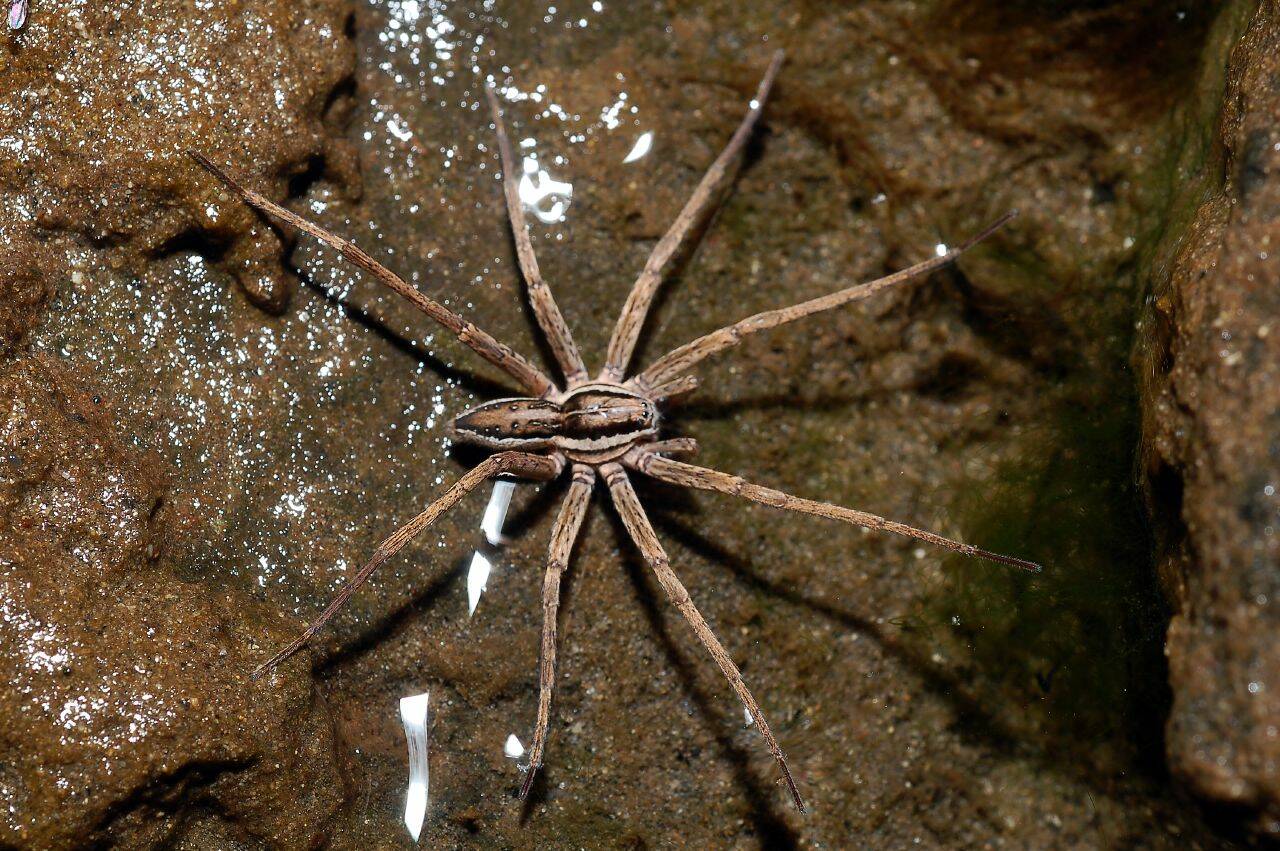
This public domain image shows a male nursery web spider. Male nursery web spiders in Europe give prey (usually silk-wrapped) to a female, who unwraps and bites it (instead of him). (Bryce McQuillan / Wikimiedia)
