
Several things combined, recently, to bring me a strong wave of nostalgia for the Midwest.
I love the oak trees — their varied forms and leaf shapes and acorns. On top of that, my brother in Wisconsin regales me with tales and pictures of the birds that throng his feeders — orioles, goldfinches, rose-breasted grosbeaks, catbirds and more — species that I’ve not seen for a long time. Then one of my old post-docs, in Chicago, wrote to me about all the spring flowers that grace the woodland floors — Dutchman’s breeches, bloodroot, spring beauty… Aaahh, I do miss all that!
[Opinion: We owe it to future generations to work together]
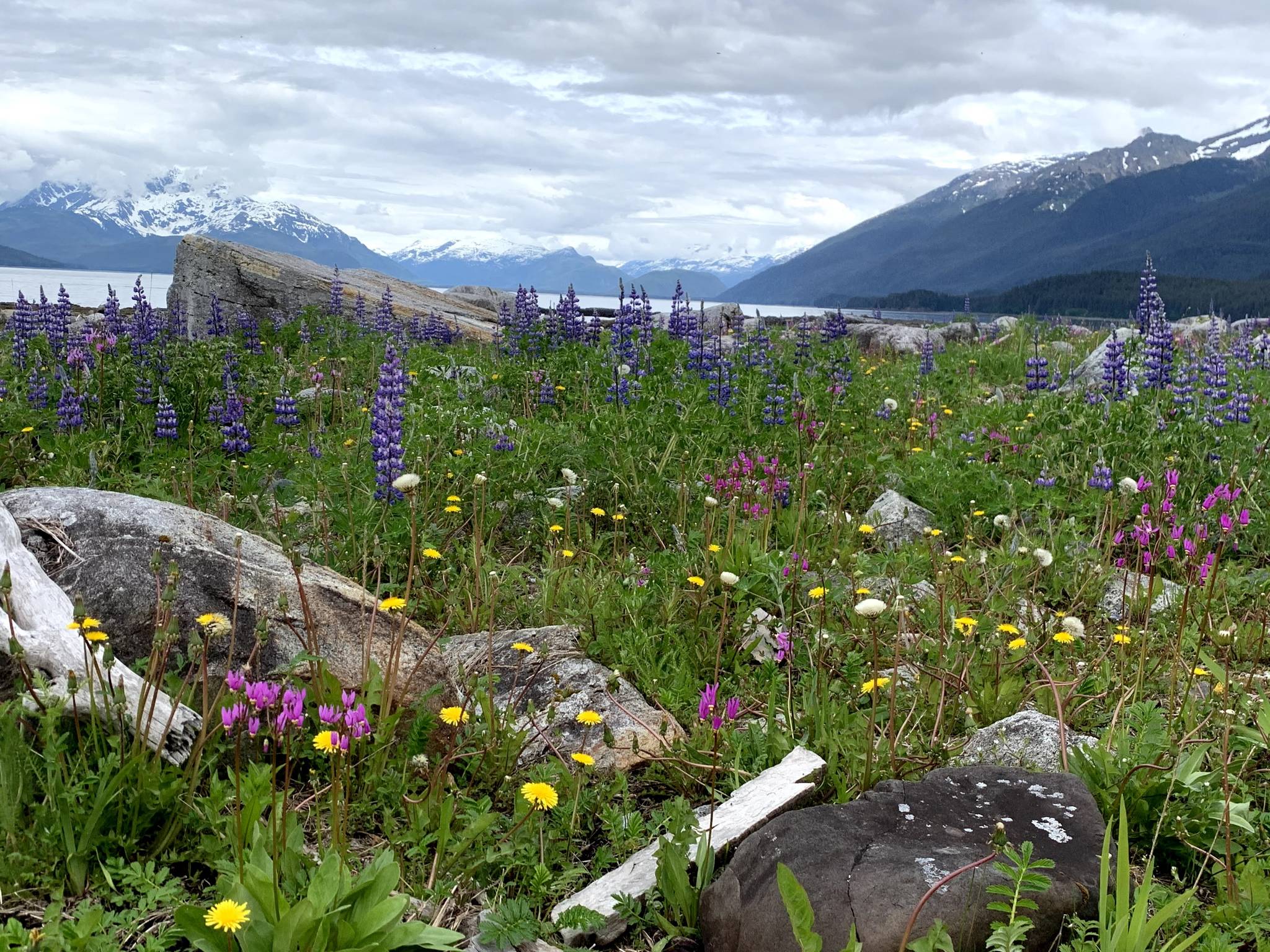
However, on the last weekend in May, a bunch of regular Saturday hikers went out to Cowee Meadows. On the way down the trail, we enjoyed the many bog laurels and bog rosemary flowers in the muskeg, and we stopped to inspect the young bracken ferns for nectaries. Cowee Meadows is a place I like to visit several times as spring becomes summer, to see the seasonal development of the flower show. A couple of weeks ago, there were a few shooting stars, some buttercups and marsh marigolds, but little else. But now, the meadows were awash in color: lots of yellow buttercups, shooting stars in all shades of pink, joined now by tall blue lupines. Hidden under the taller plants were violets, starflowers, and the coming chocolate lilies. Even without the famous irises and the banks of roses, which will bloom in a week or two, this is a spectacular sigh — hard to beat! Carpets of strawberry flowers out near the river weren’t bad, either, even though I never get there in time to harvest any of the fruits. Nostalgic feelings were successfully subdued.
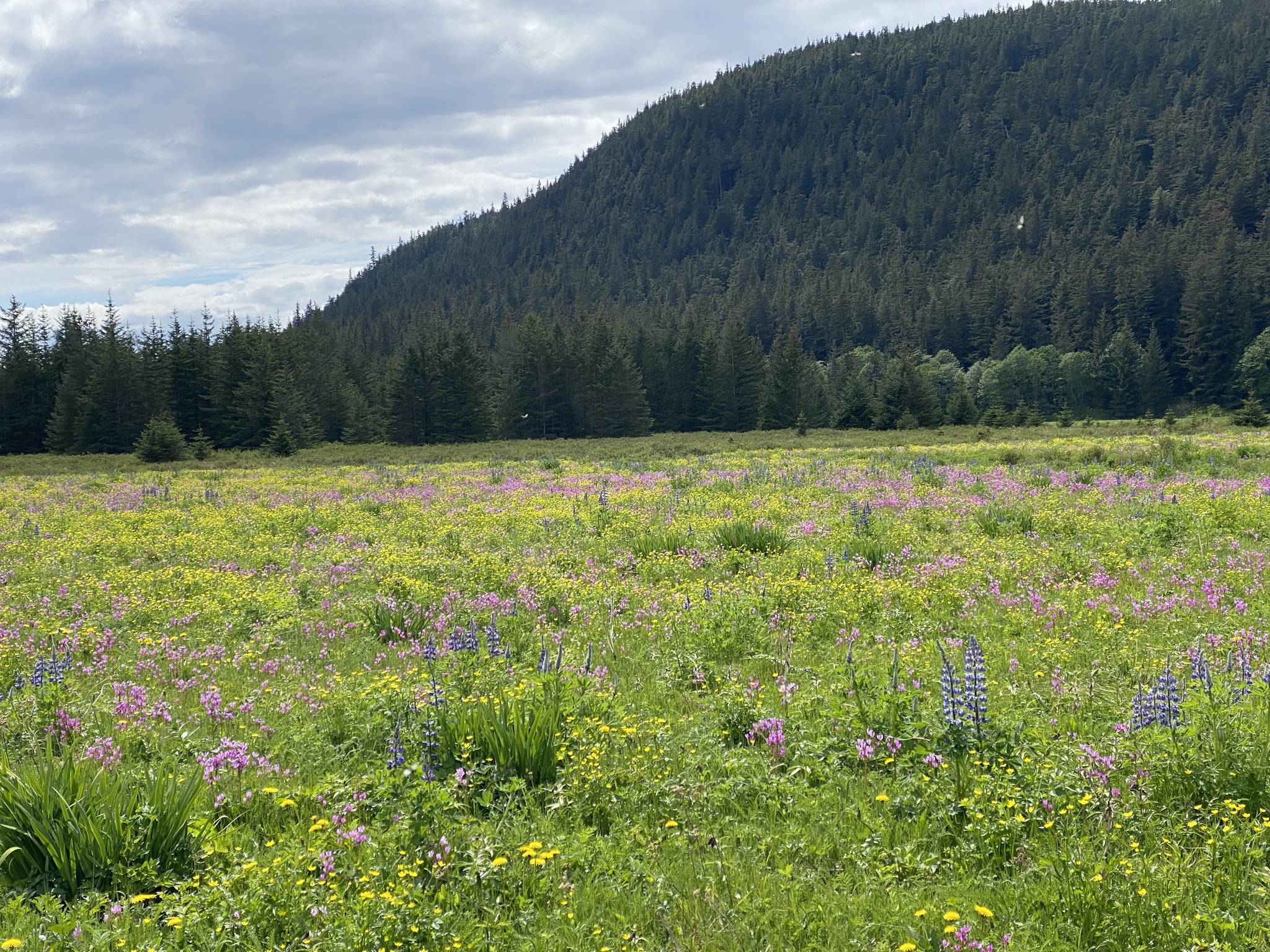
Cowee Meadows, seen in this photo, is a place Mary F. Willson likes to visit several times as spring becomes summer to see the seasonal development of the flower show. (Courtesy Photo | Deana Barajas)
One of the most common plants in these meadows is the shrub called sweetgale (Myrica gale). It is very aromatic, and the nodules on the roots fix atmospheric nitrogen into a form usable by vegetation. The books say that sweetgale is typically dioecious — male and female on separate shrubs, but occasionally hermaphroditic — both sexes on one plant. Yet the shrubs all looked the same to me; where is the other sex? Then, I read that, for unknown reasons, sweetgale males commonly outnumber the females by a big margin. So the many shrubs we see bearing small cone-like structures are presumably males. But if so, what do the females look like? Two field guides and a few official floras were no help at all; if they illustrated any flowering parts, it was the typical cones, and the verbal descriptions were unhelpful. Finally I discovered a website — thank you, Minnesota — that illustrated both male and female inflorescences.
It turns out that the rare female inflorescences look like small, red tufts along a twig. Knowing a characteristic that is useful in the field, we have now found two stands of female sweetgale shrubs and a few mixed-sex individuals in a population that is overwhelmingly male. Good to have that sorted out!
Another satisfying observation on this hike was seeing tiny toadlets making their way through thick tangles of herbage. I don’t know in which pond or slough they spent their time as tadpoles, but with patience, they can travel quite a distance once they have legs. One of these toadlets was crawling about on the upper beach, which is hardly a suitable place for a growing toad. Although it is tempting to catch them, we must remember that if we have insect repellent on our hands, it can poison them through their skin. And, in any case, it is illegal to hold, transport and release them. Better to just observe and protect them!
When I got home, there was fun at my bird feeders.
[Bog plants and bird feeder begin to bustle]
When the pushy jay and the big hairy woodpecker aren’t there, chickadees, nuthatches, and juncos use the peanut butter feeders daily. I started watching more closely as the three smaller birds pecked at the peanut butter lumps on the feeder. Peck and gobble, peck-peck and gobble. But the last peck gets a little gobbet that doesn’t disappear into the inside of the bill. A small wad of peanut butter is carried off into the woods, and I’m betting that it goes to a chick.
• Mary F. Willson is a retired professor of ecology. “On The Trails” is a weekly column that appears every Wednesday.
