
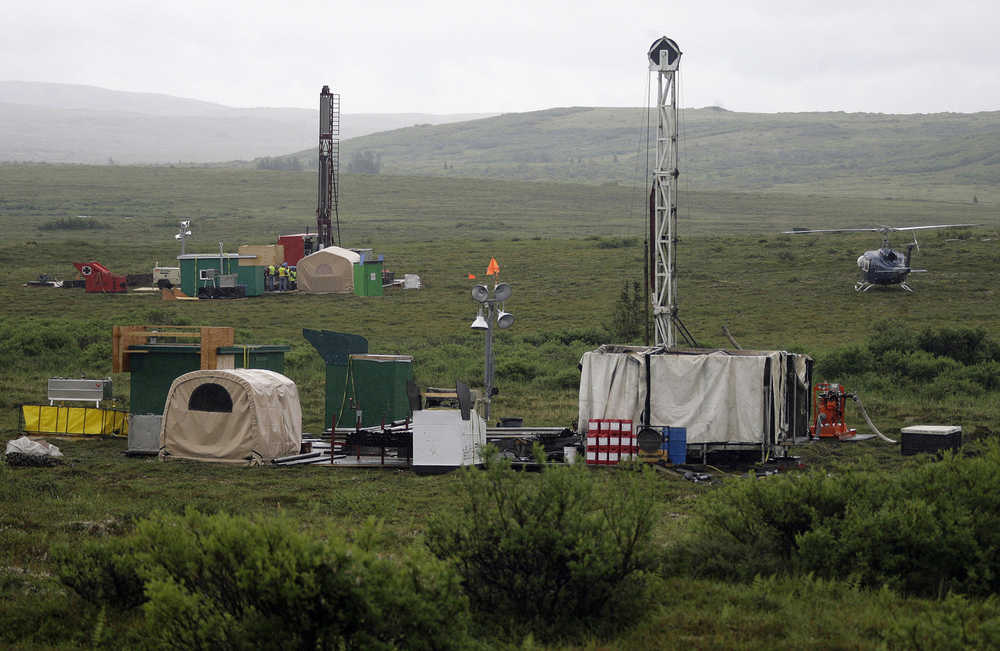
JUNEAU — A government watchdog found no evidence of bias in how the U.S. Environmental Protection Agency conducted a study on the potential effects of large-scale mining on a world-class salmon fishery in Alaska’s Bristol Bay region.
The inspector general for the EPA also concluded in a report released Wednesday that the agency did not predetermine the study’s outcome. The state of Alaska and the owner of the proposed Pebble Mine, Northern Dynasty Minerals Ltd., were among those who asked for an investigation.
The EPA, petitioned by Alaska Native tribes and others to protect Bristol Bay, launched the study of the watershed in 2011. It concluded that large-scale mining threatened one of the world’s most productive salmon fisheries and posed risks to Alaska Native cultures that rely on fish.
The study was the basis for an agency proposal to restrict and potentially block development of what it says could be one of the largest open-pit copper mines in the world.
While the inspector general’s report found no bias, it determined that a now-retired EPA employee in Alaska used his personal email in 2010 to suggest edits to a tribal petition. That petition requested that the agency take action under the federal Clean Water Act to protect the Bristol Bay region.
An attorney for the tribes sent the document to the employee before it was submitted to the EPA, but it was unclear whether he reviewed it in a personal or official capacity, according to the report. It found no proof of anything illegal but that the worker may have misused his position.
The inspector general was not able to review all of the employee’s work emails, noting that the EPA said more than two years’ worth of messages were missing, and didn’t have access to his personal account. The employee’s supervisor said he didn’t know about the worker’s actions but they seemed inappropriate.
EPA regional administrator Dennis McLerran said the employee was not a decision maker in the case, and regardless, thousands of people were concerned about the effect of mining in Bristol Bay, prompting additional scientific review. The inspector general report shows the study was done with integrity and followed proper procedures, McLerran said.
Tom Collier, CEO of the Pebble Limited Partnership, the group working to advance the mine, called on Congress to continue its oversight of the EPA’s actions and said the group is not through arguing that the agency acted inappropriately “and perhaps illegally.”
He said Pebble showed the inspector general “incontrovertible evidence” that the EPA had reached final decisions before doing scientific study and manipulated the scientific process.
The partnership said in a statement that Collier was concerned that the inspector general could whitewash its investigation, so the group commissioned a study by former U.S. Defense Secretary William Cohen. Cohen concluded that the fairest route would have been to follow a permit application and environmental review process.
Pebble Limited Partnership sued over the study, alleging that the EPA was in cahoots with anti-mine activists. A federal judge ordered the agency to stop work on potential mine restrictions pending the outcome of the lawsuit, which has not been resolved.
The partnership has called the deposit one of the largest of its kind, with the potential of producing 80.6 billion pounds of copper, 107.4 million ounces of gold and 5.6 billion pounds of molybdenum over decades.
The inspector general report said it reviewed the processes used by the EPA to conduct its watershed study, poring over about 8,400 emails sent or received between Jan. 1, 2008, and May 18, 2012, for three current or former EPA employees. It also interviewed EPA staff and managers, Pebble’s CEO, attorneys for the state, and tribal representatives, among others.
McLerran of the EPA called the inspector general’s review independent and extensive.
