
It’s not a good day to be a turkey. It’s not a good day to be a microbe in Juneau’s wastewater-treatment plants either.
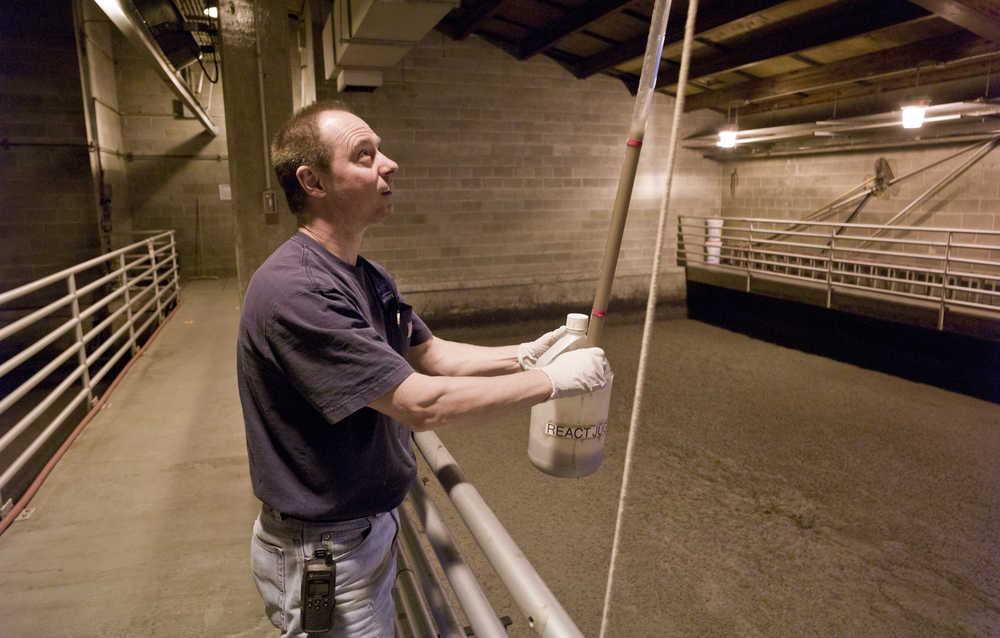
The city relies on microorganisms and ultraviolet light, not chemicals, to treat all of the 1.2 billion gallons of wastewater it processes annually. In the Mendenhall Valley plant, which treats most of the city’s wastewater, these microbes live in eight giant tanks called sequence batch reactors.
Each tank — or SBR, as plant operators know them — is 25 feet deep and holds 325,000 gallons of wastewater. They also hold “trillions upon trillions upon trillions” of microbes that breakdown harmful organic compounds and separate out solid material, according to Marissa Capito, an engineering assistant at the plant.
“Think about your gut bacteria that helps you break down food, same idea,” Captio said. “We just let nature kind of do its work.”
Inside each SBR, is a thriving but fragile ecosystem. Countless microbes live, eat, reproduce and die inside these tanks. Much like the way gut flora is affected by what we put in our stomachs, these microbes are sensitive to what we dump down our drains.
In plant-operator lingo, a sudden influx of inorganic, or otherwise disruptive, material entering the wastewater treatment system is called “getting hit.” Each Thanksgiving, the city’s three wastewater-treatment plants “get hit” in a big way.
Humans generally enjoy turkey and the other makings of a Thanksgiving meal, but the microbes that treat our wastewater don’t.
Though they are the “bread and butter” of the wastewater-treatment process, according to Capito, they aren’t meant to eat our bread and butter, or any other food scraps people put down disposals. They are also unable to process the cooking and turkey-frying oil we inundate them during this time of year.
Karen Sewell has been working as a wastewater-treatment plant operator in Juneau for about 15 years. She worked for 10 years in wastewater treatment in Oklahoma before that. She knows all too well what Turkey Day means for the microbial ecosystems she works every day to maintain.
“It’s about to ramp up for sure,” she said referring to the amount of grease and food people will feed into the wastewater-treatment system during the next couple of days.
Keeping trillions of microbes healthy isn’t an easy task. At times “it can be a headache,” Sewell said, but during Thanksgiving it can become more like a migraine.
Capito and Samantha Stoughtenger, the wastewater utility superintendent, advise allowing cooking oil to solidify and throwing it in the garbage along with any leftovers that might otherwise be put down the sink. The city’s household hazardous waste facility in Lemon Creek — located on Commercial Drive on the way to Costco — accepts turkey-frying oil.
If these cooking byproducts make their way into the wastewater-treatment system, they wreak havoc on the microbes that live there.
Standing on a catwalk that runs between two of the grand vats, Capito pointed out what a healthy SBR looks like Wednesday afternoon.
The tank appeared alive, swirling and bubbling as the microbes worked. It was a bit frothier than plant operators would like, but lab tests indicated that the microbes were doing their job.
“These are happy microbes,” Capito said, pointing to the tank. “They’re getting air. They’re getting food to eat. They’re doing their thing.”
An unhealthy SBR, according to Sewell who has seen plenty in her career, is another matter entirely. Like a nightmarish bubble bath, an unhealthy tank can become so frothy that the wastewater foam overflows the vat.
“It’s nasty,” Sewell said. “Things get ugly when the foam comes up.”
Even worse, the microbes are unable function properly, and the quality of the treated wastewater that the valley plant discharges into the Medenhall River drops.
The Alaska Department of Environmental Conservation regulates the city’s wastewater utility. If the city’s wastewater effluent falls below DEC standards, the wastewater utility can face fines or stricter standards when it goes to renew its permit, both of which ultimately impact Juneau residents.
“If we’re effectively treating everything that comes in, it’s cheaper for everybody, but we don’t control what comes in our door,” Stoughtenger said.
• Contact reporter Sam DeGrave at 523-2279 or sam.degrave@juneauempire.com.
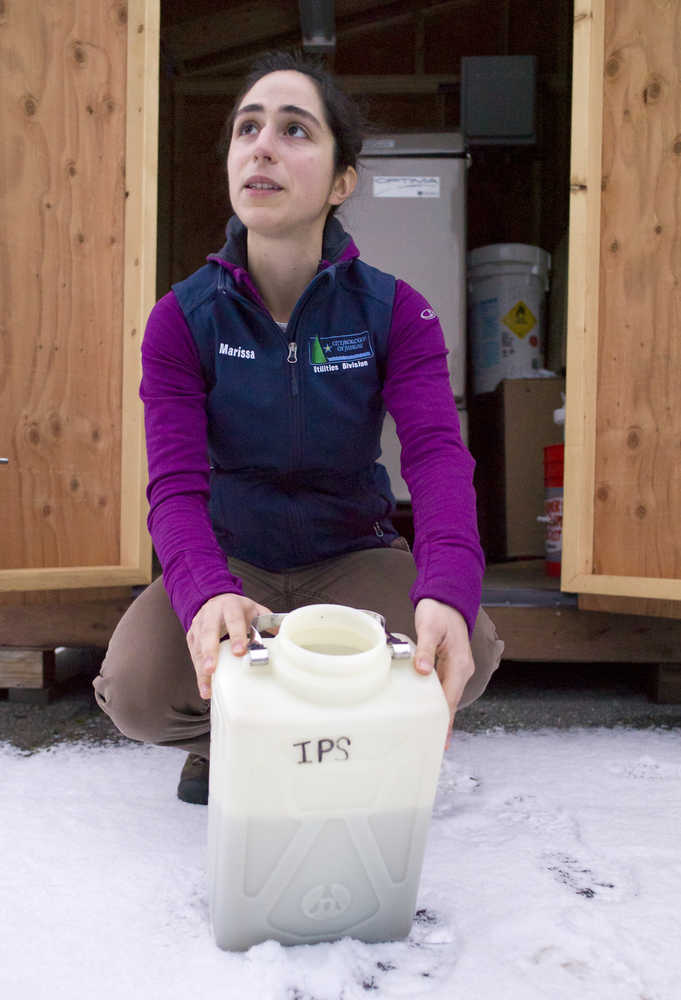
Marissa Capito, an engineering assistant at the Mendenhall Water Treatment Plant, shows a sample collector at the plant on Wednesday. Home owners putting food waste and oil down the drain cause major issues on how well the treatment plant works.
