
The Alaska Legislature is considering a new plan to cut the state’s subsidy of oil and gas drilling, but opponents of previous versions say the proposal still fails to do enough.
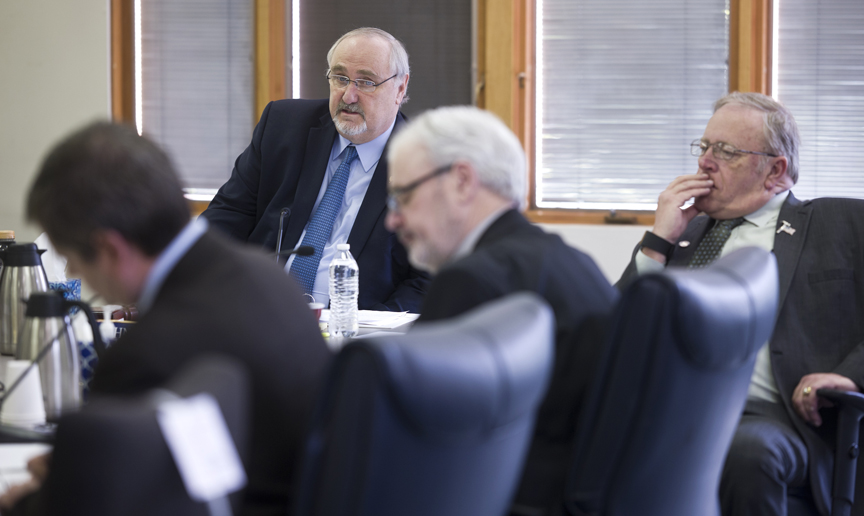
On Tuesday morning, the House Rules Committee held a preliminary hearing on House Bill 247, a measure originally proposed by Gov. Bill Walker but rewritten by every committee it has visited.
According to analysis by the Alaska Department of Revenue, Walker’s proposal would have saved the state between $230 million and $305 million in fiscal year 2017, which starts July 1. Those savings would have risen to as much as $515 million in fiscal year 2019 before decreasing in following years.
The proposal unveiled Tuesday, again according to estimates provided by the Alaska Department of Revenue, would save the state nothing in fiscal year 2017 and might even cost the state more money. Savings would increase over time, reaching as much as $390 million in fiscal year 2022 before decreasing.
Ken Alper, director of the state’s tax division, said the analysis of the new version of the bill is based on a previous, slightly different version of the proposal. The Department of Revenue is expected to reveal a more complete analysis in a hearing Wednesday morning.
“It’s an accumulation of many different ideas,” Rules Committee Chairman Craig Johnson, R-Anchorage, said of the new version after Tuesday’s hearing.
The new version of the bill retains less of a subsidy than pro-oil legislators want. It starts its cuts later than cost-cutting legislators want.
“We’ve got something nobody loves,” Johnson said, adding that might be a sign that the committee is on the right track.
Johnson said even he isn’t sure if he’d support the bill when it comes to a floor vote.
While disagreement might be the sign of a good compromise, the bill could fail if it lacks support. That could jeopardize any hope of a solution to the state’s $4 billion annual deficit. Walker had envisioned reductions to the drilling gas subsidy as the second-biggest piece of his plan to balance the budget.
House Minority Leader Chris Tuck, D-Anchorage, said cutting the state’s subsidy for oil and gas drillers remains a first step toward a larger budget deal. Without cuts to the subsidy, Alaskans might face tax increases but see new revenue go to the oil industry, not government operations.
“It’s unfair to ask Alaskans to reach into their pocket to pay the oil industry,” Tuck said. “We have to fix this first.”
Only 21 votes are needed to pass legislation in the House, but the support of Tuck and other members of the Democratic-led minority is needed for the Legislature to spend from the state’s $8.2 billion Constitutional Budget Reserve.
Using the reserve is thought necessary to pay for next year’s budget, but using the reserve requires a three-quarters vote in the House and a three-quarters vote in the Senate.
On the flip side, too much compromise on behalf of the minority could result in the bill losing support from members of the House Majority who live in districts where the oil industry is the biggest employer.
After Tuesday’s hearing, Johnson said the groups interested in the bill are the governor, the majority, the minority, the minority within the minority, and the minority within the majority.
The Legislature must find a balance among all those groups to get the votes it needs to pass HB 247. Passage of the bill would permit lawmakers to judge whether they can support the spending of a portion of the Alaska Permanent Fund or additional taxes.
Rep. Paul Seaton, R-Homer, could be called one of the leaders of the minority within the majority. He serves in the House majority but has encouraged further cuts.
He said a good version of House Bill 247 would accomplish three things: protect companies newly arrived in Alaska, lower the liability for the state, and have an immediate budget impact.
“I don’t think that this proposal accomplishes any one of those,” he said.
The House Rules Committee is expected to meet again several times Wednesday to gather additional information, hear public testimony, and hear from the industry. Members of the committee face a 2 p.m. deadline to offer amendments to the bill.
Those amendments could be considered as early as Thursday, and a floor vote on the bill could come as early as this weekend, but the only firm deadline is May 18. That’s the Legislature’s 121st day and the constitutional limit of the regular session. Lawmakers can extend the session for 10 more days with a two-thirds vote of the House and Senate separately, but after that, there will be no more time without a special session.
• Contact reporter James Brooks at james.k.brooks@juneauempire.com.
Related stories:
On oil and gas subsidies, House commits turnover
