
Dozens of people attended the opening of “Gestures of Our Rebel Bodies,” a group exhibition by seven Indigenous artists, at Aan Hít in downtown Juneau on Saturday, Jan. 24. Tlingit & Haida presented the exhibition in collaboration with the Institute of American Indian Arts and Sealaska Heritage Institute, and it will remain on display until June.
Ursula Hudson, one of the exhibition curators and a Tlingit artist based in Pagosa Springs, Colorado, said her work explores the intersection of creating art out of ancestral responsibility while pushing traditional boundaries.
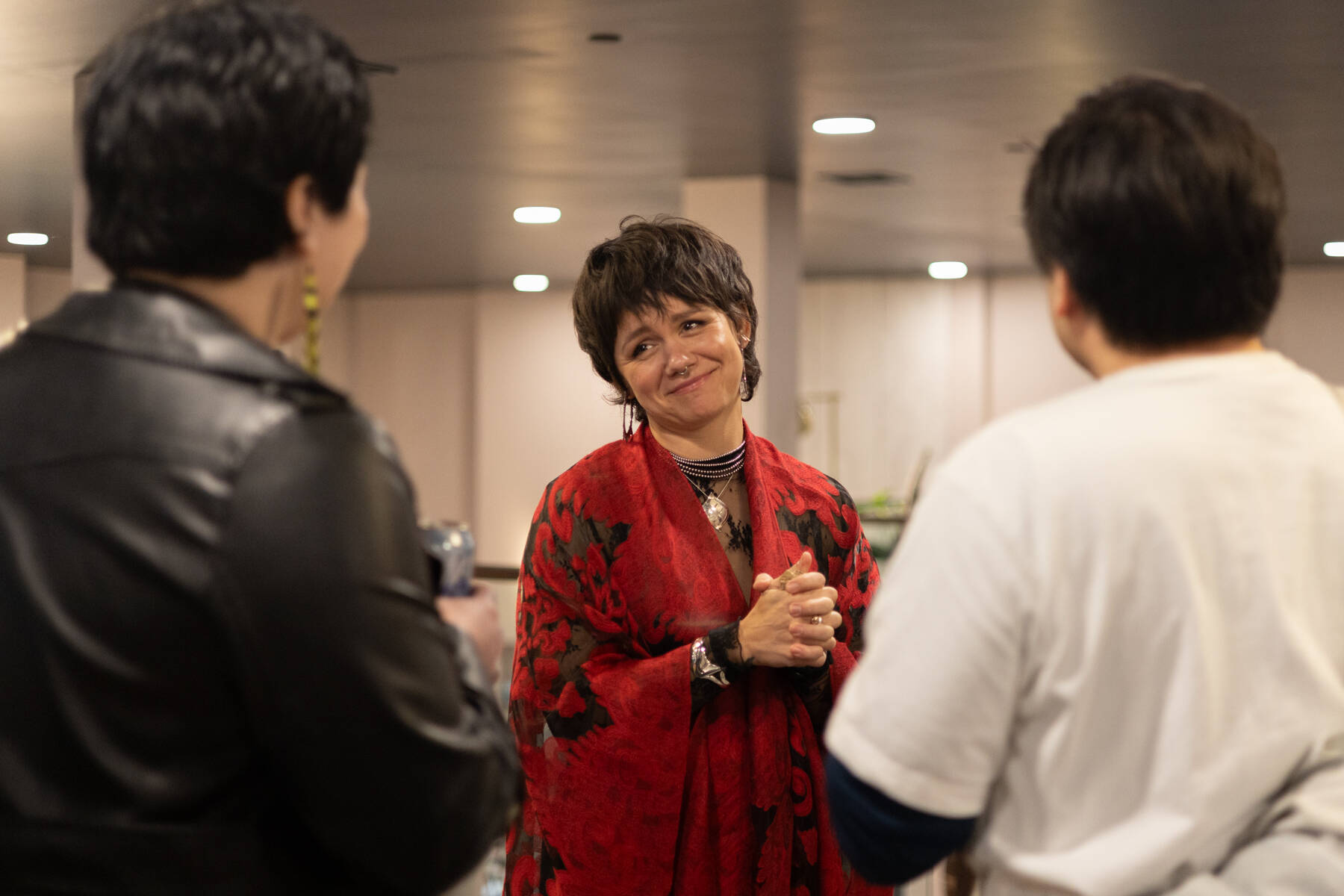
Tlingit artist Ursula Hudson speaks to attendees during the opening night of “Gestures of Our Rebel Bodies,” which features work from seven Indigenous artists, on Jan. 24, 2026. The exhibition will be on display at Aan Hít in downtown Juneau through May. (Chloe Anderson/Juneau Empire)
Both of Hudson’s parents are artists, and she learned the fundamentals of painting, weaving, regalia-making and collage by observing their work. She learned beadwork and garment construction from women in her community, and later in life, she earned a master’s degree in fine arts from the Institute of American Indian Arts in New Mexico. Hundreds of hours of her work hang on the gallery’s walls, embodying the Southwest’s vibrant color palette.
Kimberly Fulton Orozco worked alongside Hudson as co-curator. Based in Austin, her work reimagines traditional Haida imagery by incorporating found materials. Her series “Insecure Mix” finds a place for everything from feathers and wool to cassette tapes and buttons, representing Fulton Orozco’s lifelong exploration of her identity.
“At one point early on in my art making, I had a teacher who gave me permission to keep collecting,” she said. “I’ve always had these collections of things, and I’ve always felt like there’s a purpose for them. Everything carries spirit. When you put them together, you never know what they’re going to make.”
Fulton Orozco and Hudson organized the exhibition over a span of six weeks. The two women managed to fill Aan Hít’s walls by reaching out to other artists in their community. Fulton Orozco said the timeline was tight, but referred to it as “good stress.”
“We have these things that we want to do in our lives, and the only way to do them is to take the opportunity to execute the vision in a timely manner,” she said. “We don’t know when the next opportunity will come along, so you have to seize it and do it.”
Albuquerque-based Tsimshian artist Erin Haldane heeded the call, displaying several of her collages and prints. Haldane creates surrealist pieces inspired by mythology and dreamscapes through her primary mediums of printmaking, watercolor and oil painting. She gestured to a set of prints depicting her struggle to teach herself formline art.
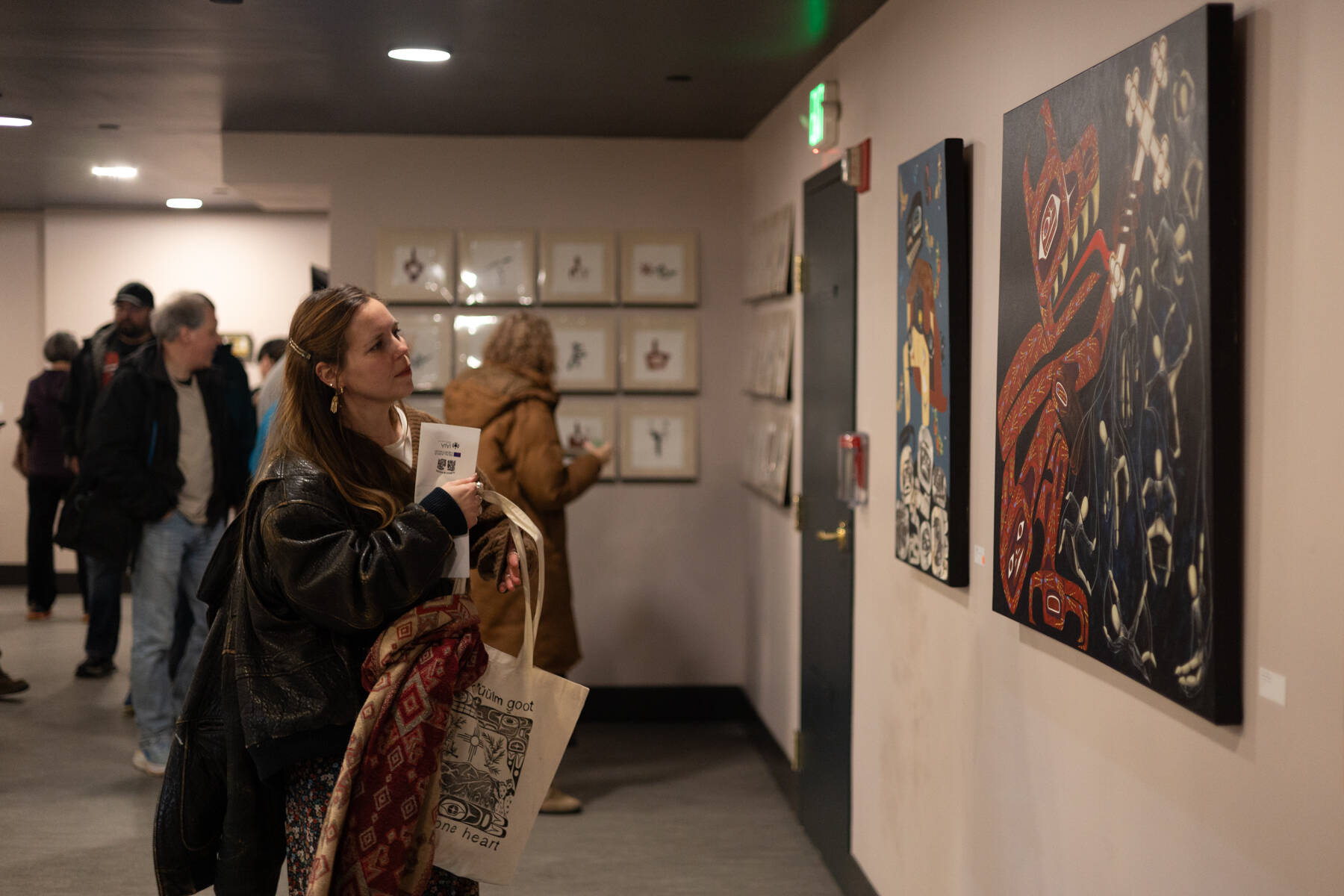
Tsimshian artist Erin Haldane examines other artists’ work on Jan. 24, 2026. Haldane, who works primarily in printmaking, watercolor and oil painting, has several collages and prints on display at Aan Hít in downtown Juneau through the exhibition “Gestures of Our Rebel Bodies.” (Chloe Anderson/Juneau Empire)
Haldane said her favorite piece is her collage “Dreaming Tsimshian,” which depicts the moon with butterfly wings hovering over a house covered with formline art. The viewer can see a glacier through the open door, and the house is nestled in the woods.
“Our dreams are so informed by our own reality,” she said. “When you grow up in the forest, surrounded by these images, I wonder, what did our ancestors’ dreams look like?”
The exhibition will be on display at Aan Hít in downtown Juneau through May.
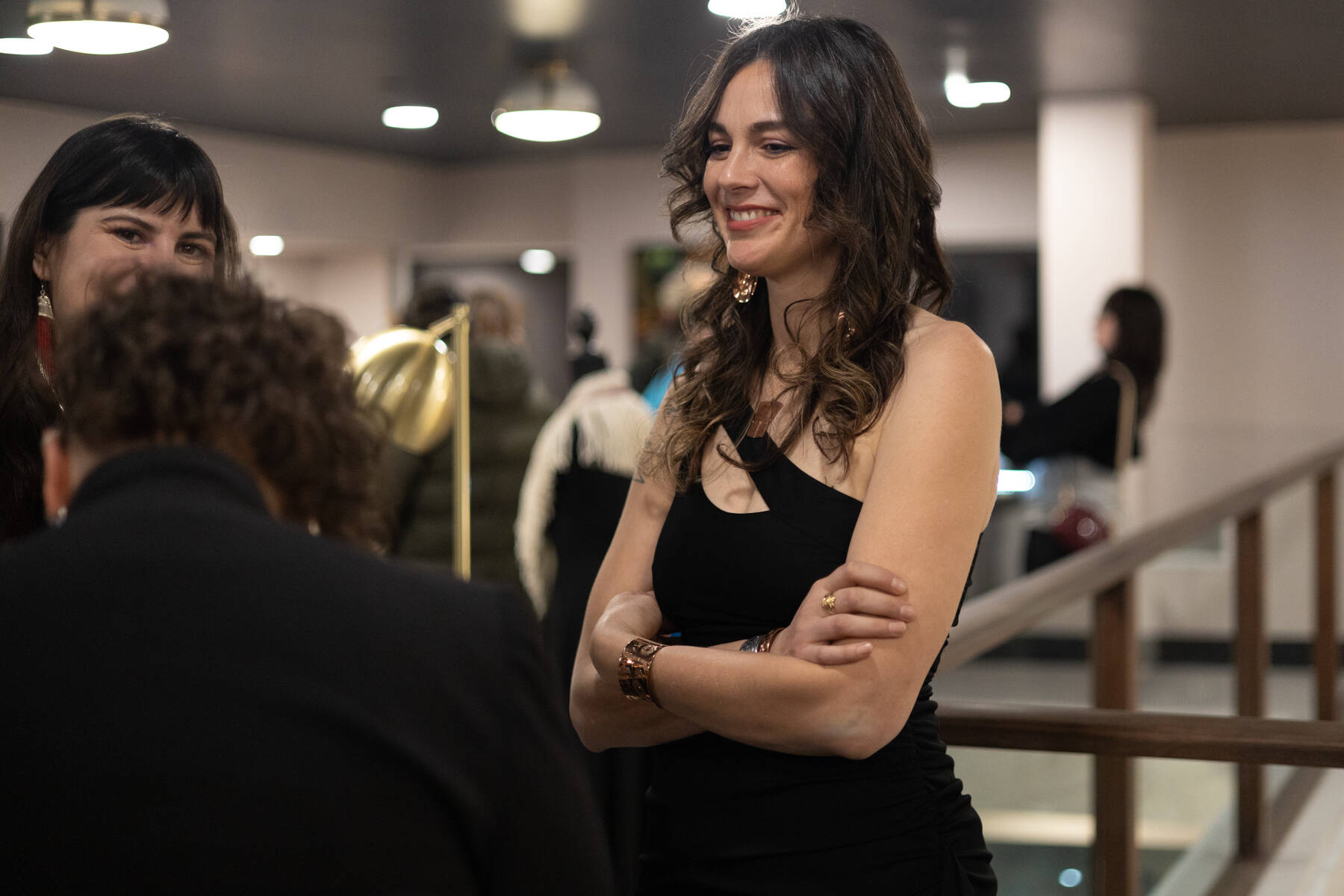
Haida artist Kimberly Fulton Orozco is pictured in Aan Hít in downtown Juneau on Jan. 24, 2026. Fulton Orozco is one of the curators of “Gestures of Our Rebel Bodies,” an exhibition featuring work from seven Indigenous artists. (Chloe Anderson/Juneau Empire)
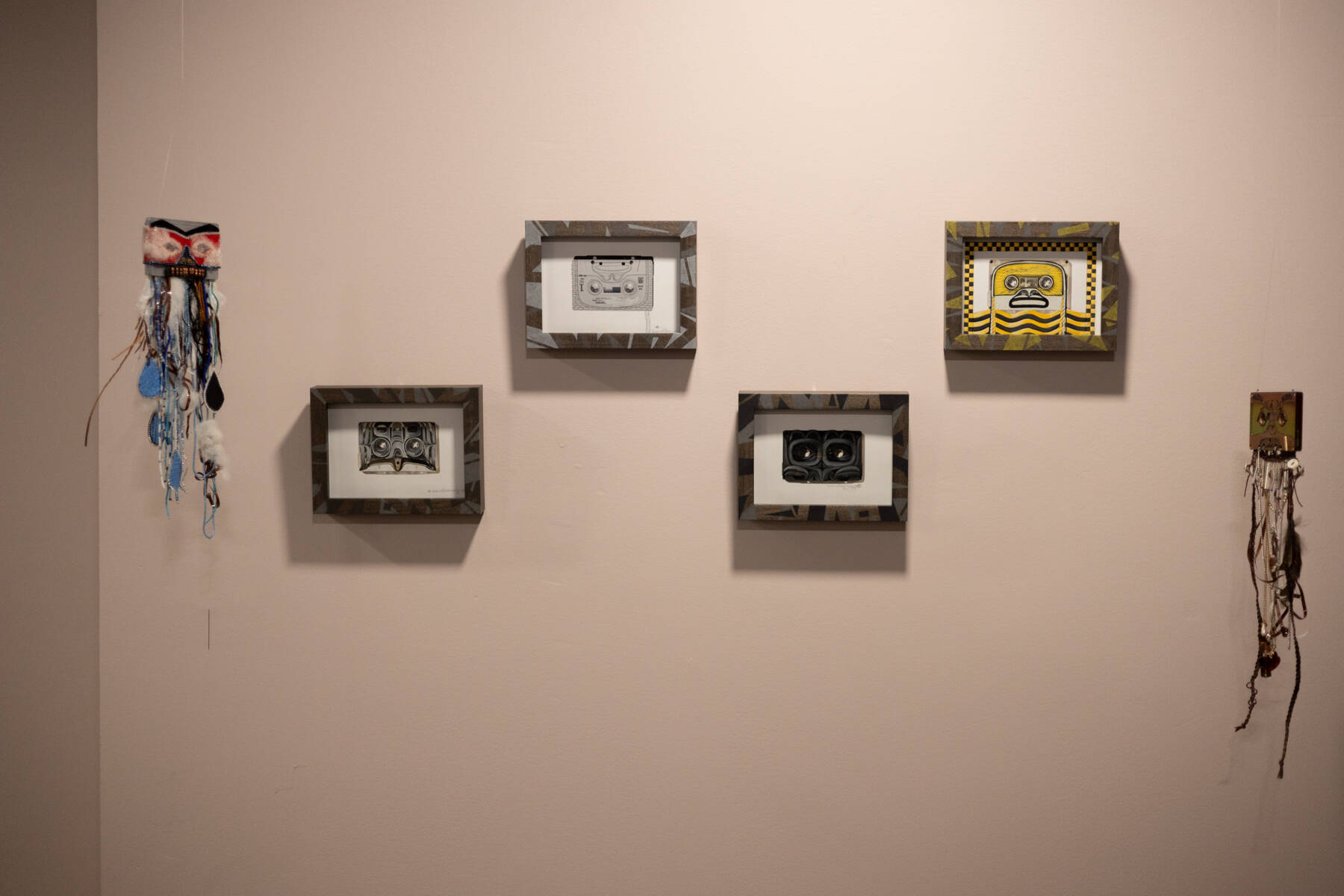
Pieces from Kimberly Fulton Orozco’s installment “Insecure Mix” are pictured in Aan Hít in downtown Juneau on Jan. 24, 2026. (Chloe Anderson/Juneau Empire)
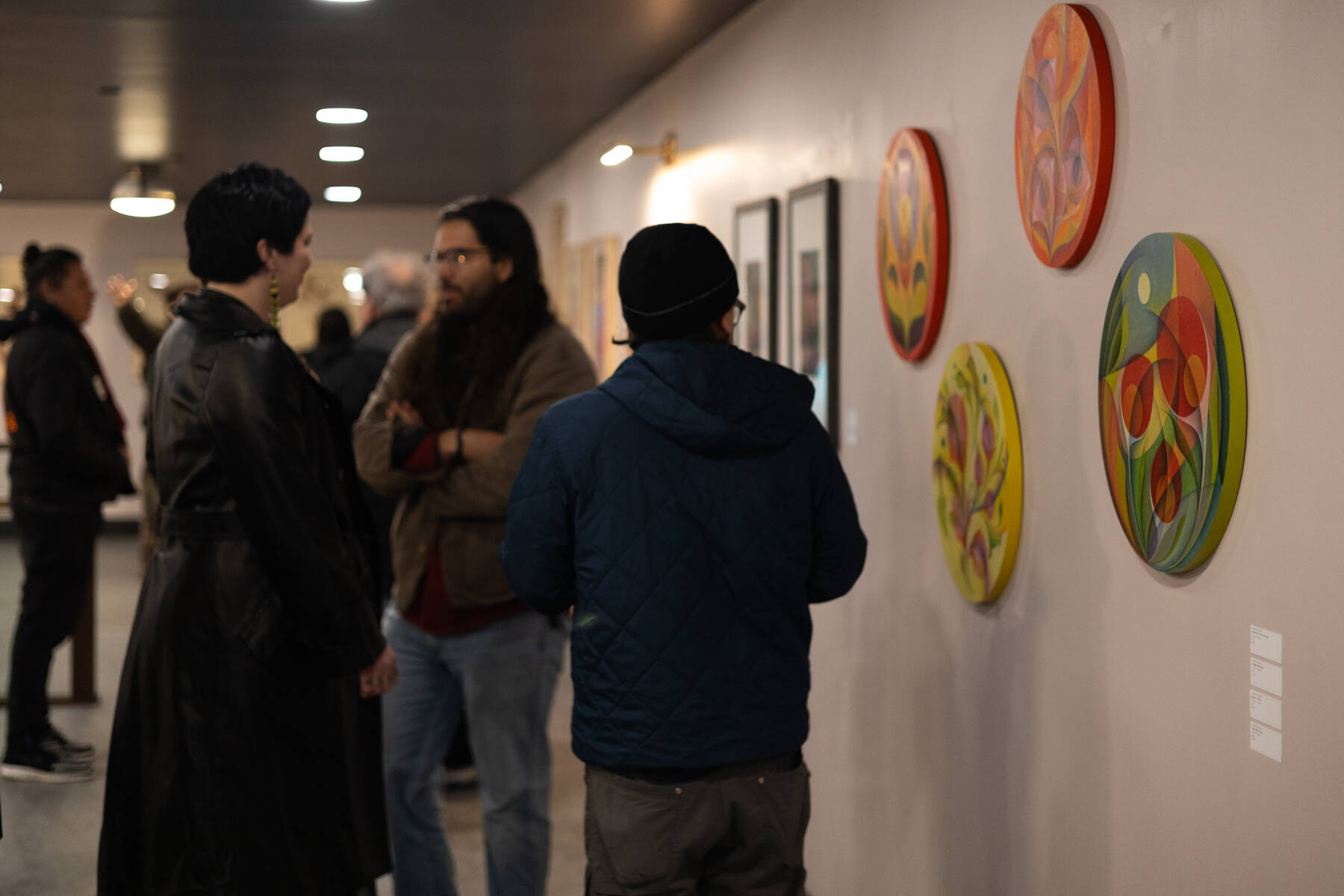
Exhibition attendees admire paintings by Tlingit artist Ursula Hudson during the opening night of “Gestures of Our Rebel Bodies” at Aan Hít on Jan. 24, 2026. (Chloe Anderson/Juneau Empire)
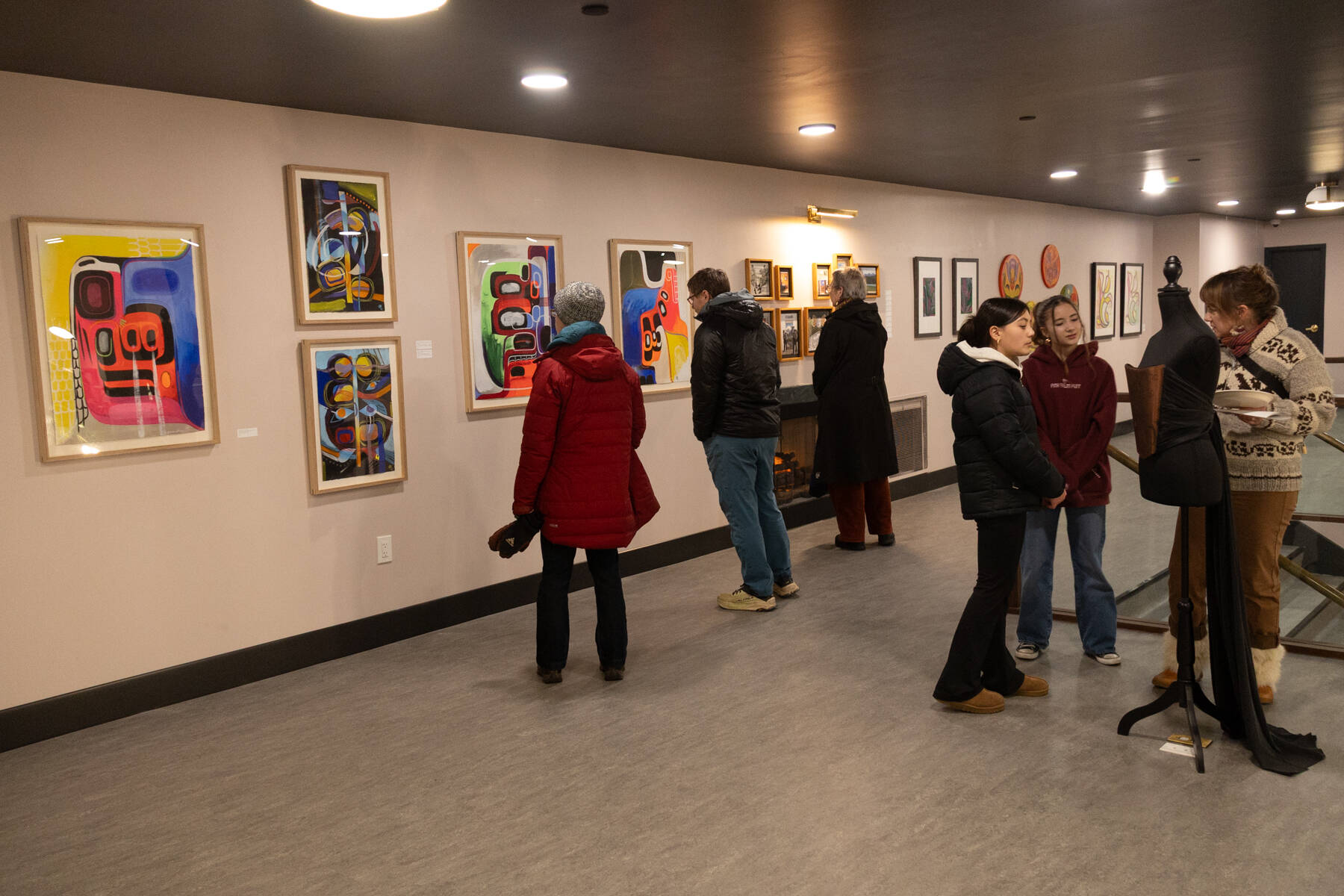
Dozens of people attended the opening of “Gestures of Our Rebel Bodies,” a group exhibition by seven Indigenous artists, at Aan Hít in downtown Juneau on Saturday, Jan. 24. (Chloe Anderson/Juneau Empire)
