
Local and regional items in Gov. Mike Dunleavy’s proposed state budget for next year are largely getting the same “starting point for discussions” reaction from affected officials affected as is occurring statewide, with some funding items getting criticism while at the same time giving kudos to the governor for an apparent willingness to negotiate.
There’s adequate funds for existing Alaska Marine Highway System operations, about $13.4 million for the Lemon Creek Correctional Center and $775,900 for the governor’s mansion. There’s also some head-scratchers such as nearly $8 million for disability-related projects in Juneau that mostly isn’t for the capital city, and $10 million for drones to study the Arctic that are “mistakenly” being sent to Southeast universities rather than Fairbanks and other northern campuses.
As always there’s a long list of large and small allocations for Juneau and Southeast Alaska items, but the document presented Thursday by Dunleavy, a Republican, is filled with material that will go through technical as well as political shifts during the coming months. Which means not only will there be long discussions with lawmakers about some items where funding levels are controversial — such as essentially flat funding education – but the language will be tweaked so those drones end up in the Arctic.
“I’m glad he emphasized it’s a starting point budget,” state Sen. Jesse Kiehl, a Juneau Democrat, said Friday. “That’s an indication of the version of Governor Dunleavy we’re going to work with.”
One of the starting points for the governor is making what he calls a “full PFD” a priority, which in his proposed budget for next year is estimated at $3,800. But his budget also includes a deficit of about $265 million that will have to be covered by some of the $2.1 billion in reserve funds, and since total Permanent Fund dividend payout for checks of that amount would total about $2.4 billion it’s among the items of concern to some lawmakers despite its political popularity.
“The unfortunate thing is the proposed PFDs are so high we’re going to have to draw from savings,” Kiehl said. While Dunleavy is initiating a proposal to monetize carbon credits as a way to help fund future budgets — and adamantly opposing tax increases or PFD reductions — the senator said the reality is “we are going to need a broad-based tax” before long-term financial stability is possible.
The Alaska Marine Highway, which has been subject to drastic cuts by Dunleavy during his first term in office, is getting what he calls “full funding” for operations in next year’s proposed budget – which as with education essentially means keeping the status quo.
“That might need some tweaking, but a commitment to ships that we have the ability to run is a good sign from the governor,” Kiehl said.
The proposed capital budget does include $22 million in general funds for the Alaska Marine Highway Fund for “overhaul, annual certification and shoreside facilities rehabilitation.” Dunleavy noted the capital budget is intended to leverage leverage $1.7 billion in federal funds including those from the bipartisan infrastructure bill, which contains substantial funding for ferry vessel and facilities upgrades.
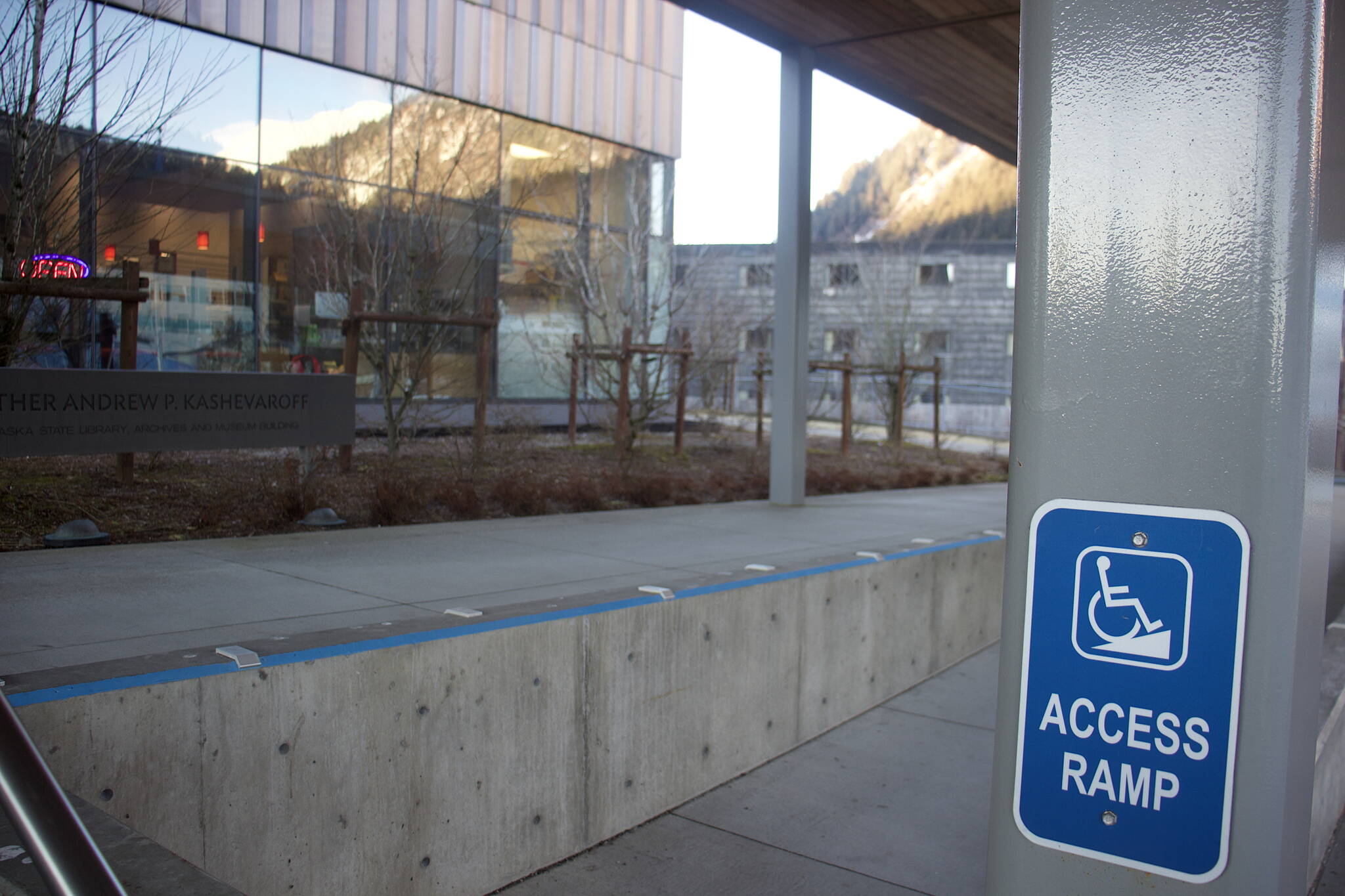
There are no specific general fund items in the capital budget for Juneau-based projects, aside from the estimated $8 million for Americans with Disabilities Act compliance projects. Jeff Turner, a spokesperson for the governor, noted in an email the the actual projects being funded are still being determined, but they are statewide and the planning office for coordinating the process is in Juneau.
School and university funding is among the most contentious issues, both locally and statewide, which Dunleavy acknowledged is likely going be altered during legislative negotiations.
His so-called “full funding of education” means there’s no increase to a budget where the per-student funding formula (Base Student Allocation) hasn’t increased for the past several years, thus resulting in less actual funding due to what the governor highlighted in his presentation as record inflation. In addition, there is a 1.6% cut to the University of Alaska.
Dunleavy, during Thursday’s news conference announcing the budget in Juneau, was defensive when asked by a reporter why an increase to account for inflation wasn’t in the education budget.
“For me to put a number in the budget, some will say it’s too little. Some will say it’s too much,” he said. ““So what we’ve done is we’ve put forth a budget here on Dec. 15 to begin that discussion.”
Kiehl, a member of the incoming Senate majority that will include nine Democrats and eight Republicans, was among the lawmakers and others involved with the education budget process who were less than satisfied with the flat funding and explanation provided.
“I would have liked to see more leadership from the governor on education,” he said. “He made it clear he wants the Legislature to take the lead on that and that is something we will do.”
A statement Friday by the Association of Alaska School Boards noted it is encouraged the Senate majority is “focused on sufficient education funding to support the outcomes we desire for all students” given the increasingly difficult financial situation schools are facing.
“Years of ’flat funding’Alaska’s public education system has prevented school districts from keeping up with rapidly increasing operating costs,” the association’s statement notes. “Significant revenue shortfalls have resulted in catastrophic teacher shortages, the elimination of needed programs and services, and a continued decline in opportunities for student success.”
Dunleavy, during his news conference, suggested that while increases are likely to emerge from negotiations during the session, there may be a political ask in return.
“We certainly have to fund our educational system,” he said. “But we also have to demand that we get outcomes that most people — most parents, students and others — expect.”
Kiehl said other items in the proposed budget that are notable at first glance include a public health initiative targeting transmitted infections (“it’s aimed at newborns, but it goes further than that”) and “some openness to public services for Alaskans in need.”
“This is showing this is a governor we’re going to be able to work with,” he said.
As for those drones, the $10 million for the University of Alaska is to initiate Arctic-related work Dunleavy said can make the state a leader in such activity. But the language in the budget allocates it to state House districts 1-5, which after redistricting essentially cover Southeast Alaska, while the intent is to send them to the university’s Fairbanks group which had those district numbers prior to the numbers and boundaries being redefined.
While that’s essentially a clerical glitch, it means people reading the budget to see what’s in Juneau’s districts (33 and 34 in the budget, rather than the current districts 3 and 4) may be mislead at times since the new boundaries reshift some Juneau boundaries as well as include some northern Panhandle communities such as Haines and Skagway.
“The maps on the elections website are still listed as interim rather than final,” Turner noted. “Once the updated data file with the new districts is received the new district boundaries will be entered into the budget system.”
Operating budget items for Southeast Alaska:
$21,707,800: Alaska Seafood Marketing Institute
$13,352,900: Lemon Creek Correctional Center
$5,582,000: Ketchikan Correctional Center
$14,865,200: Mt. Edgecumbe High School
$4.944,000: Johnson Youth Center
$18,238,300: Southeast Regional fisheries management
$846,100: Southeast hatcheries
$775,900: Governor’s house
$3,187,300: First Judicial District
$3,675,500: Southcoast region transportation support services
$8,283,200: Southcoast region transportation construction
$3,045,900: Southcoast region transportation facilities
$25,277,000: Southcoast region transportation highways and aviation
$41,910,100: University of Alaska Southeast Juneau campus
$5,241,000: University of Alaska Southeast Ketchikan campus
$7,409,400: University of Alaska Southeast Sitka campus
Capital budget items for Southeast Alaska:
$7,957,252: Americans with Disabilities Act compliance projects (technically, but in reality a statewide allocation).
$22 million: Alaska Marine Highway System Fund for overhaul, annual certification and shoreside facilities. The budget also lists $29 million for statewide deferred maintenance
• Contact Mark Sabbatini at mark.sabbatini@juneauempire.com
