
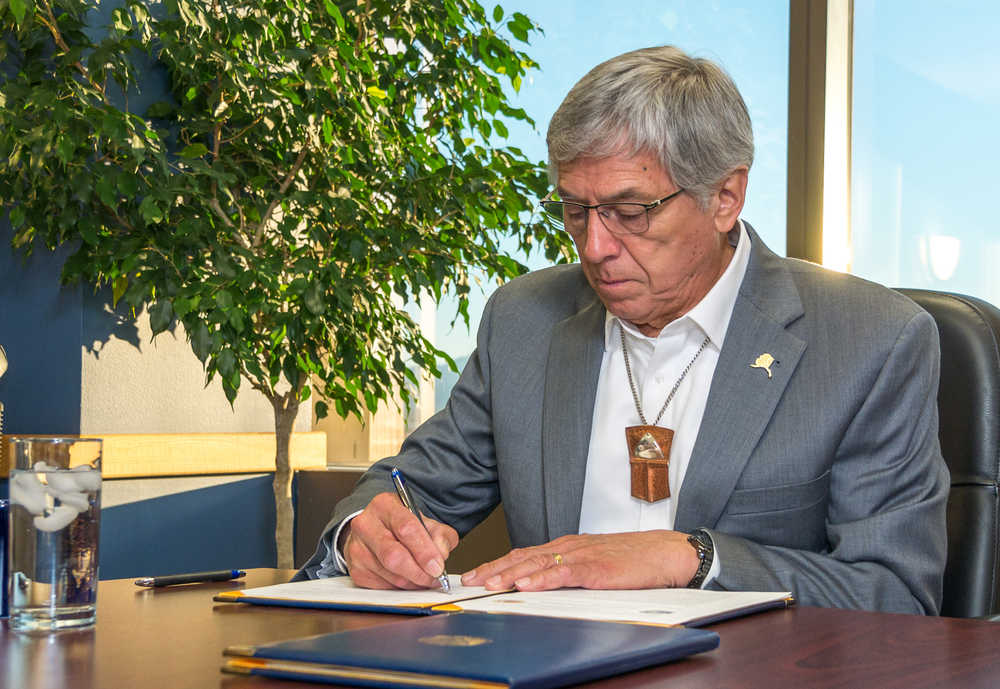
Alaska Lt. Gov. Byron Mallott signed an agreement with Canadian officials Thursday, marking a step toward cooperation in protecting Southeast Alaska’s border-straddling rivers from proposed mining projects in British Columbia.
The Statement of Cooperation establishes a working group of commissioners from three Alaska State Departments and deputies from two Canadian ministries to facilitate ongoing discussions on transboundary mines between the Alaska, B.C. and stakeholders from tribal and environmental groups.
“I am pleased that we were able to move forward with this measure,” Mallott stated in a Thursday press release. “It is another step in Alaska’s commitment to open and transparent collaboration with our Canadian neighbors on the vital issue of safeguarding our precious transboundary watersheds that feed our people and nourish our cultures.”
Mallott signed the SOC in Anchorage, conferencing via video with B.C. Minister of Energy and Mines Bill Bennett and Minister of Environment Mary Polak, who also signed the SOC. Mallott has worked with Canadian officials and tribal and environmental organizations to draft the statement since late 2015.
“British Columbia and Alaska have a long history of working together and supporting each other, as good neighbors do,” Bennett said in a prepared statement. “This Statement of Cooperation between British Columbia and Alaska ensures we are working together effectively on trans-boundary water quality, environmental assessments and permitting for mine projects, and reporting on mine discharges, operations and closure.”
The statement is legally non-binding, but does not preclude Alaska from seeking federal intervention in the issue, something environmental, tribal and fishing industry groups say is crucial to protecting Alaska’s salmon interests.
“It’s not legally binding, so overall things don’t change,” Frederick Otilius Olsen Jr, Chair of the Tribal Transboundary Mining Working Group said by phone. “This is an international issue and we need international solutions. This being nice across the border is nice, but that’s all it is, it’s just nice talk.”
Olsen was referring to intervention from the International Joint Commission, a U.S.-Canadian federal group tasked with settling disputes over shared waters. Olsen and officials from 11 other Southeast tribal, environmental and fishing industry groups have previously signed letters asking for IJC intervention. Alaska’s Congressional delegation has also requested federal intervention through the IJC, petitioning Secretary of State John Kerry to explore the issue in two letters, the most recent sent Sept. 8.
Olsen cited a May report from British Columbia’s Auditor General which found “major gaps in resources, planning and tools,” in B.C.’s mining regulation. The report also found B.C.’s mines underinsured for watershed cleanup by $1.2 billion, money that would be needed for a cleanup in the event Canadian mines pollute Alaskan waters.
“The SOC is just one step,” Heather Hardcastle, campaign director for Salmon Beyond Borders said in a phone interview Thursday. “Alaskans have been seeking for a while now binding agreements that can only come from intervention from the federal government.”
Olsen and Southeast Alaska Conservation Council’s Guy Archibald also expressed concern over some of the statement’s language, which they say is too vague. Archibald stressed that the phrase “significant degradation,” as it’s defined in the SOC, could leave the door open for mine pollution.
“No lowering of Alaska’s water quality by BC mines should be allowed,” Archibald wrote in an email to the Empire. “In Alaska, any lowering of water quality requires the polluter to go through a public process. … Even under a permit, the lowering of water quality cannot be to the point where the designated uses, such as maintaining aquatic life, are lost. Is this giving BC the right to lower our water quality to that point without it being considered significant?”
• Contact Sports and Outdoors reporter Kevin Gullufsen at 523-2228 or kevin.gullufsen@juneauempire.com.
