Keeping a nose out: SEADOGS takes guesswork out of searches
Published 10:30 pm Monday, November 4, 2019
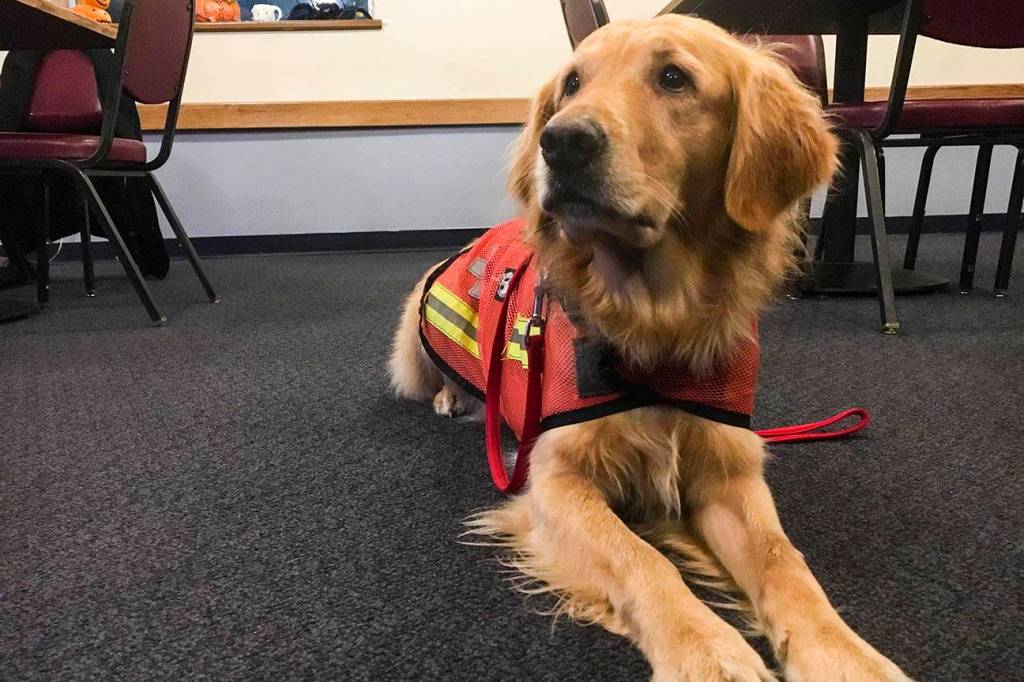
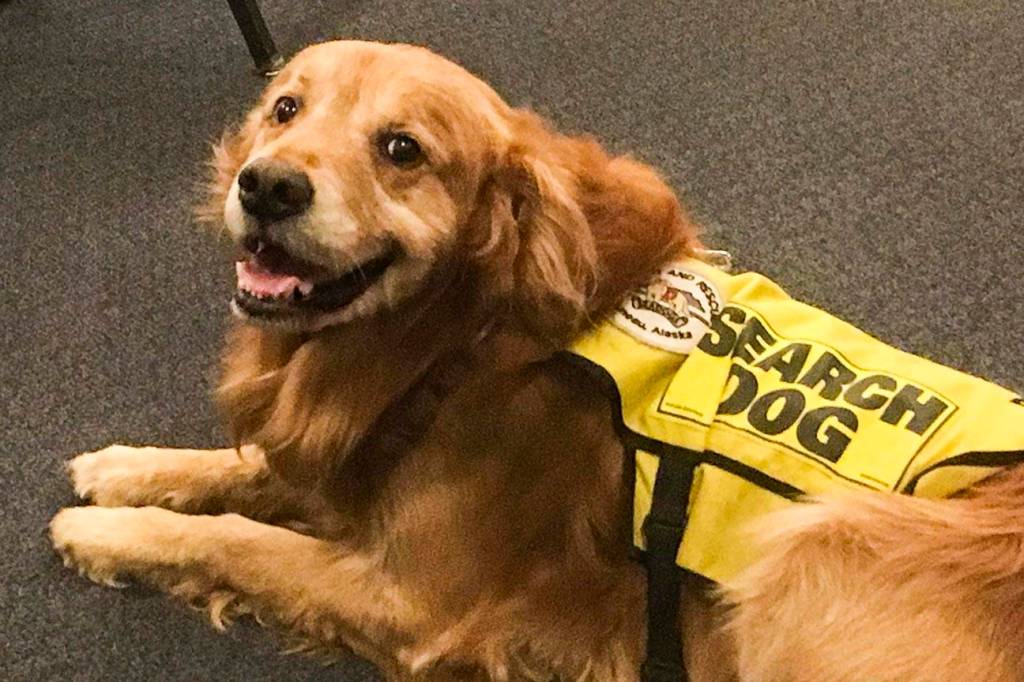
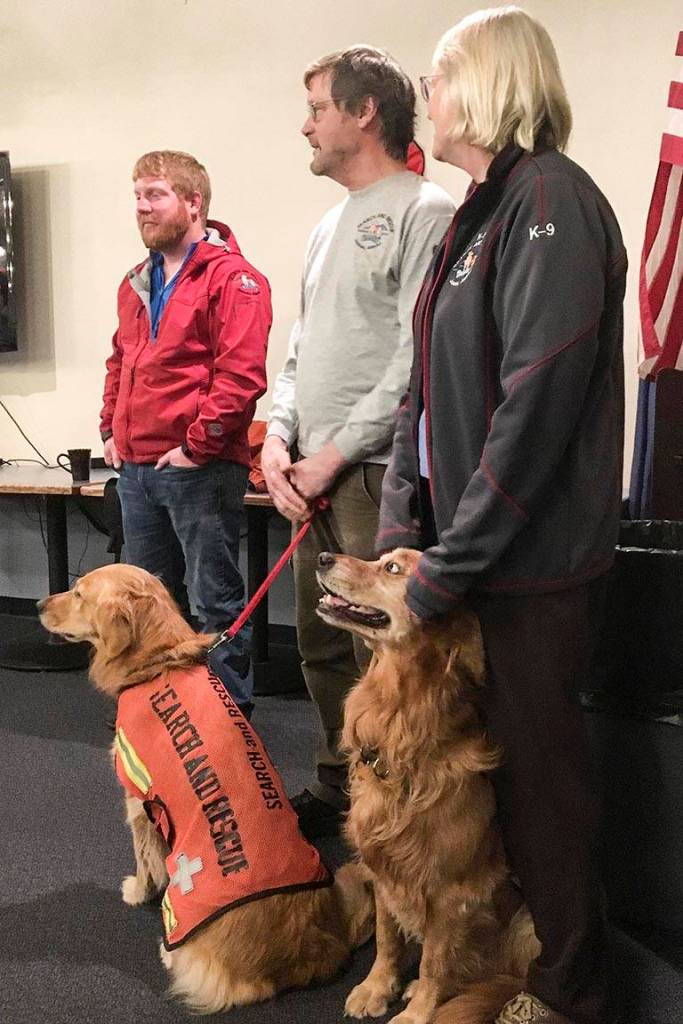


When it comes to searching for someone lost in the wilderness, a nose can trump a hundred pairs of eyes.
That’s the principle the Southeast Alaska Dogs Organized for Ground Search (SEADOGS) is organized on. Juneau’s local all-volunteer K-9 search team, organized following the death of a child in the wilderness above Juneau in 1978, has been a go-to asset for the Alaska State Troopers for the many missing persons cases that crop up in Alaska.
On Monday night, members of the team — both two and four legged — visited the Moose Lodge to meet members of the public and teach people a little more about what they do – and how to avoid needing their services.
“After a couple of years, it got to the point where we’re usually one of the first people they call when there’s a search,” said Bruce Bowler, the recently retired president of the group. “We’re the search in search and rescue.”
The team, currently comprised of roughly eight dogs and their partners, was the second of its kind in Alaska, preceded by an Anchorage group by about a year, Bowler said. Bowler said it took a few days to convince the Alaska State Troopers that a K-9 search team could be an asset, but they came around eventually.
[Training with SEADOGS: How Juneau’s search and rescue dogs sharpen their skills]
The troopers weren’t the only ones who envisioned working dogs primarily in a security role, as opposed to search and rescue, Bowler said. SEADOGS also worked with the Royal Canadian Mounted Police to show them the possibilities inherent in K-9 search teams.
“At one time, we were the only search dog team in the state and worked from Attu to Barrow,” Bowler said. “We were finding people underwater, we were finding people under snow, we were finding people under collapsed buildings.”
“I stopped counting after my 700th search,” he added.“I’ve been incident commander on probably half of those.”
The dogs
Each dog takes roughly 1-3 years to get certified for wilderness searches, the bread and butter of their work, Bowler said. But there’s more to the job than just finding people lost in the woods.
Avalanches, water searches, mudslides, and even isolating a single scent trail in a crowd of hundreds are all part of the work, said Geoff Larson, new president of SEADOGS and founder of Alaskan Brewing Company.
Dogs routinely practice avalanche search techniques at Eaglecrest Ski Area. Volunteers are buried for the dogs to find. Dogs also practice water searches, where they’re able to smell bodies dozens of feet below the surface, Larson said, allowing divers to go down and recover them.
Dogs can also do what’s called trailing — searching for an individual in crowded places to help narrow down their location, Bowler said. This is useful when an elderly person or someone suffering from a mental handicap such as Alzheimer’s Disease may have wandered away and gotten lost, Bowler said.
[Overdue Juneau hunter found by JMR, SEADOGS]
Dogs practice following what’s known as a scent cone, Bowler said, zeroing in on a victim’s location before localizing the victim, returning to their partner and guiding them to the victim. With the search part of the search and rescue completed, rescuers can stabilize and evacuate the potentially injured person.
“This is the big one that we train for,” Bowler said. “Properly trained search dogs will reduce rescue time if they’re called in time.”
Training needs to be kept up constantly.
Regular dogs will sniff at any scent that piques their interest, but rescue dogs need to focus on human scents to the exclusion of all else. A rescue dog’s service life usually goes up till about nine years old before they retire, Bowler said.
Once dogs are certified field-ready, they and their handler go on a call list for any time there’s a search and rescue call-out. These calls can come anytime, and handlers need to be ready to go from a cold start at all times. Most dogs are golden retrievers, labrador retrievers, border collies, Australian shepherds, and German shepherds — intelligent herding and working dogs.
How to avoid meeting them
• Wear bright colors.
• Don’t go out in the wild alone.
• Pack a light overnight bag with water, snacks, and a space blanket.
• Let someone know when you’ll be back.
• If you do get lost, call the Alaska State Troopers at 465-4000. The ASTs have ultimate command over all search-and-rescue activity in Alaska and bring groups like the SEADOGS or Juneau Mountain Rescue in to help if their expertise is required.
How to volunteer
If you are interested in working with the SEADOGS, they meet every Wednesday evening at 6 p.m. and can be contacted through their website.
• Contact reporter Michael S. Lockett at 757-621-1197 or mlockett@juneauempire.com.