

Juneau’s elected officials and a local entrepreneur have recently been pushing two major power projects that could reduce the city’s carbon pollution.
Their efforts also could boost a pillar of the region’s economy: mining.
One of the projects, a private proposal to build a new hydroelectric plant, could help one of Juneau’s two large-scale mines sharply cut its dependence on expensive, carbon-intensive diesel power.
But the other proposal, a public effort to electrify the city’s cruise ship docks, might have an opposite, unintended effect: It could force the area’s other large mine to burn more fossil fuels, potentially adding to that mine’s operating costs and climate impacts.
Both infrastructure proposals, still years from being built, are part of a broader push in Juneau and across the country to use more renewable energy as climate change, driven by the burning of fossil fuels, ramps up.
They come also as mining companies in Alaska face mounting financial and political pressure to find alternatives to carbon-based fuels.
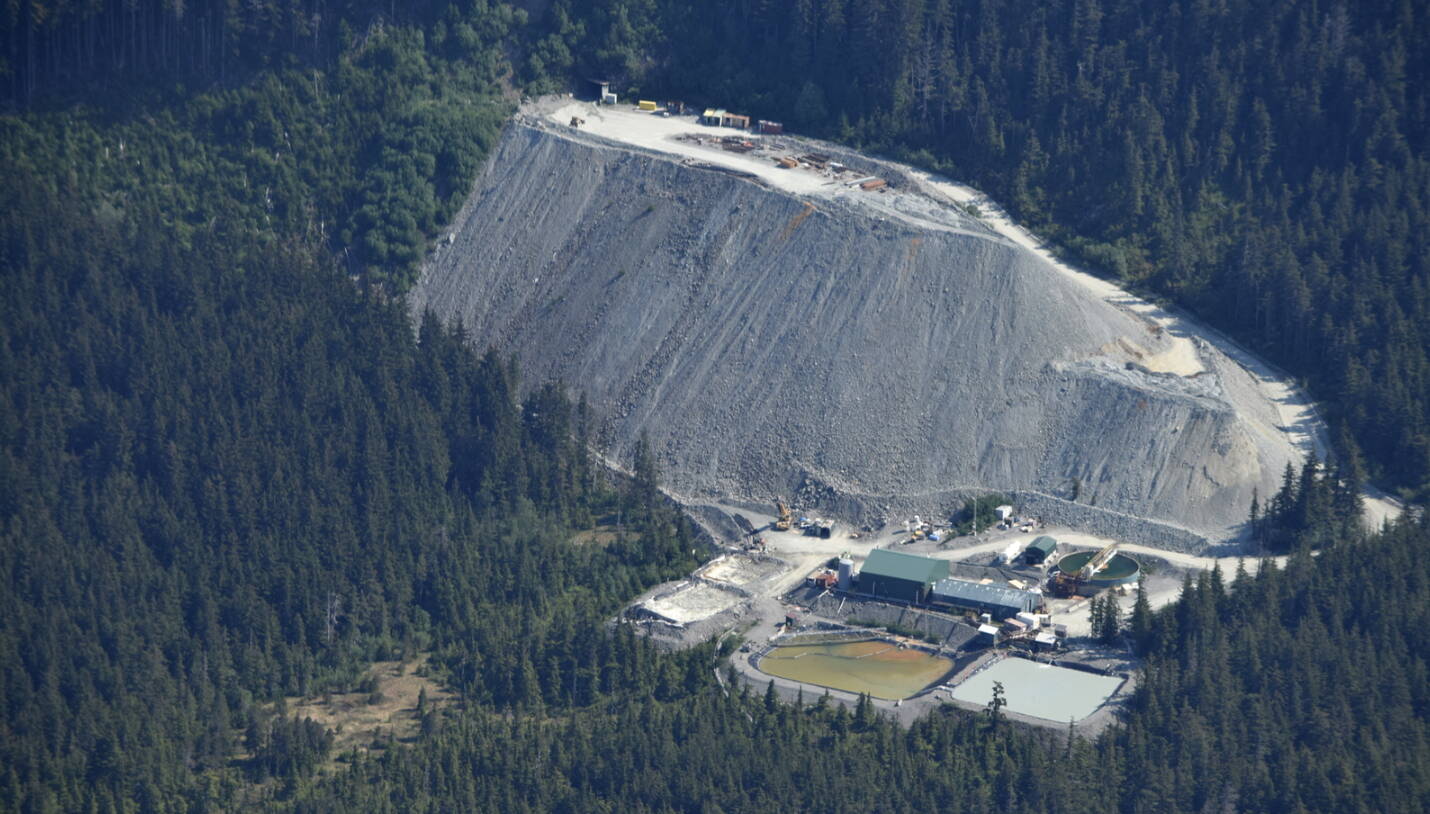
An aerial view of part of Southeast Alaska’s Kensington gold mine. (James Brooks via Wikipedia under Creative Commons 2.0)
The state’s hardrock mines — which need a huge amount of energy to crush, grind and separate valuable minerals from rock — still largely run on diesel and coal. Industry leaders have warned in recent years that Alaska’s high electricity prices and planet-warming emissions could stifle growth.
“Energy is a major cost driver at mines and anything we can do to be more energy efficient, or seek out cheaper sources of energy, adds value to our operations,” said Mike Satre, director of government affairs at Hecla, the publicly traded company that operates one of the two big Juneau area mines.
The complications around mining and power supply in the region underscore the challenge of translating lofty green energy goals into reality, even in areas like Juneau where there’s broad agreement about the need to leave fossil fuels behind.
Utilities across Alaska have struggled to advance large renewable projects even with generous tax credits offered by the Biden administration, and some projects have already experienced setbacks as the Trump administration aims to pull those incentives back.
Renewable energy advocates say obstacles include high construction costs and tricky politics among mining companies, other energy-intensive industries, electric utilities and state regulators.
“The interests do align,” said Steve Behnke, a long-time board member of Renewable Juneau, a local advocacy group. “But the nitty-gritty economic, financial issues don’t.”
Fissures between various energy players are now driving a heated debate in front of state utility regulators over a Juneau entrepreneur’s proposal to build the new hydroelectric plant. An anchor customer would be Kensington, a major gold mine some 45 miles north of Juneau.
Kensington is off the grid and generates its own electricity by burning imported diesel. It consumed about 4.5 million gallons of fuel last year, said Rochelle Lindley, a spokesperson for the mine’s multinational owner, Coeur, which is also publicly traded.
Kensington’s burning of diesel spews some 46,000 tons of carbon dioxide into the air annually and accounts for roughly 15% of Juneau’s total greenhouse gas emissions, according to a city-commissioned report from 2021.
To limit pollution, Coeur upgraded its power plant in 2019, reducing the mine’s fuel consumption by 25%, Lindley said in an email. The company also has spent more than $200,000 to offset some of the mine’s emissions in a partnership with Renewable Juneau, which helps local residents install power-saving electric heat pumps in their homes.
But Coeur is still looking for alternative energy sources to lower its emissions, Lindley added. Companies like Coeur are facing global pressure from investors and government regulators to reduce their use of fossil fuels.
“We would be supportive of any provider that could bring clean, renewable energy to our mining operation,” Lindley wrote. She said Coeur has explored multiple options to reduce its dependence on diesel and carbon emissions, including an onsite fleet of batteries.
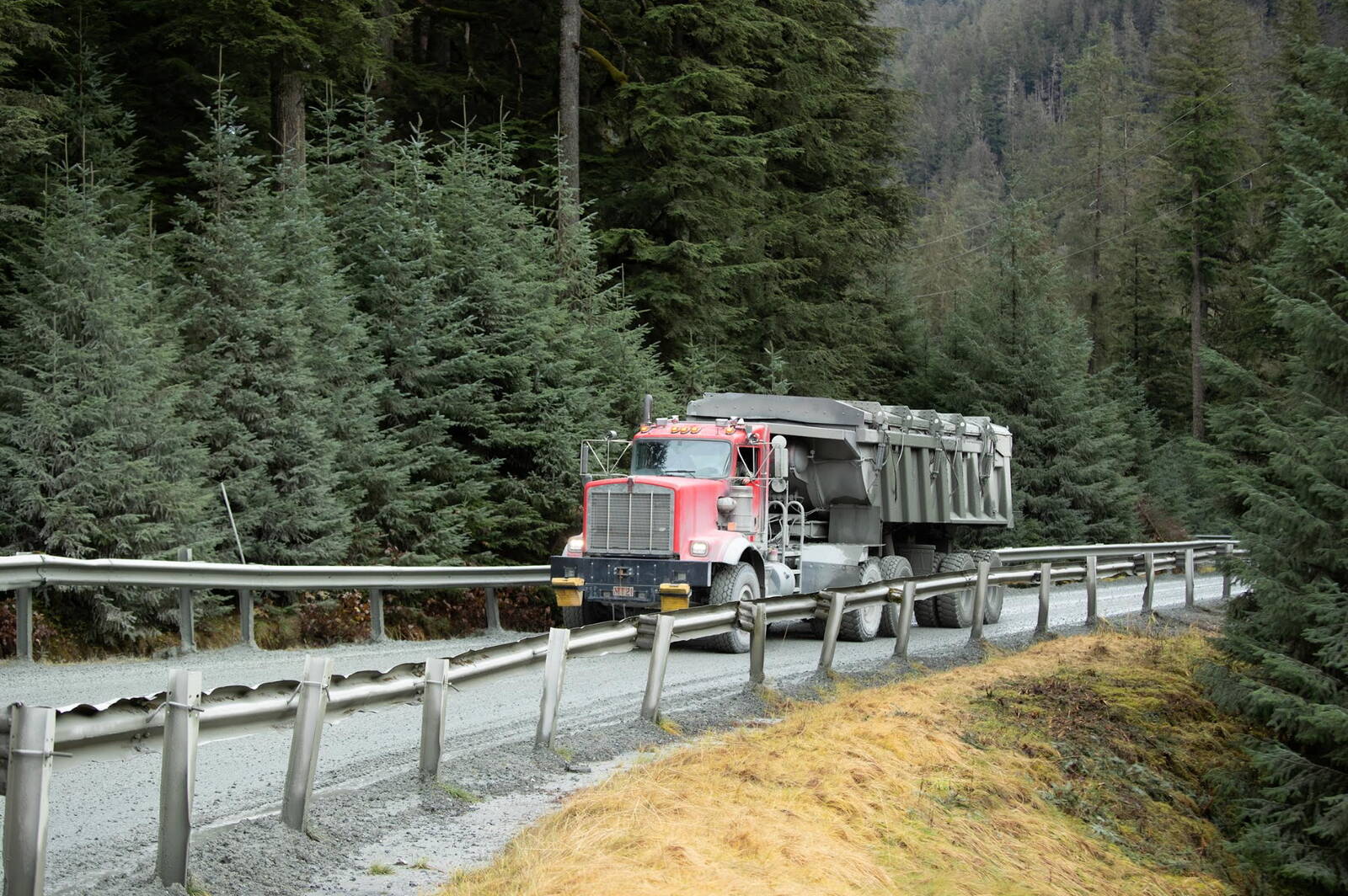
A truck rumbles down a road at the Greens Creek mine. (Hecla Greens Creek Mine)
Kensington’s demand for cleaner power is central to the long-running hydroelectric proposal from a local businessman and energy advocate, Duff Mitchell. His company, Juneau Hydropower, wants to install a dam at a lake some 30 miles south of Juneau, build a power plant and battery storage system and run transmission lines that would connect the project to Kensington.
The company says its $170 million proposal could increase the region’s energy capacity as much as 25%.
Mitchell first announced the idea more than a decade ago but submitted a new application to state regulators in November.
Coeur has already signed a power purchase agreement with the firm, according to filings to the Regulatory Commission of Alaska, which oversees the state’s utilities.
Juneau Hydropower also says it would sell electricity to a smattering of proposed developments north of Juneau, outside the service area of the city’s existing electric utility, Alaska Electric Light and Power. The potential buyers include a new state-proposed ferry terminal, another gold mine that’s still years from construction and a private ore dock under development on land owned by a local Alaska Native corporation.
Mitchell’s project has support not only from Coeur but also from local labor unions and a Juneau economic development group.
But it still faces hurdles, including questions about financing and how the company would transmit electricity across infrastructure currently used by privately owned Alaska Electric Light and Power, or AEL&P.
AEL&P, a subsidiary of Washington state-based Avista Corp., opposes Juneau Hydropower’s proposal, arguing that it lacks evidence of financial viability and risks unintended impacts on AEL&P’s existing customers.
Mitchell said Juneau Hydropower looks forward to proving that “we are fit, willing and able,” the legal standard it must meet for regulators to approve its operating certificate.
Juneau Hydropower’s effort to increase regional energy capacity comes at the same time that city officials are, separately, pursuing a project that could increase the city’s demand for electricity — a plan that could come at the expense of Juneau’s other major mine, Greens Creek.
Eager to slash emissions from the massive cruise ships that call on Juneau in huge numbers each summer, city officials want to electrify two public docks — allowing the vessels to run on hydropower instead of burning diesel while they’re in port.
Boosters say the project, which could cost some $25 million, would cut down on air pollution from ships that Juneau residents periodically complain about.
Even with one of Juneau’s docks, privately owned by Princess Cruises, already connected to the grid, cruise ships still account for about 8% of the city’s yearly carbon emissions.
But rather than fully eliminating those emissions, connecting the city’s two public docks to the grid might just shift the burden of burning diesel to another major energy consumer: the Greens Creek mine.
Greens Creek, unlike Kensington, is already tied to Juneau’s grid and benefits from surplus hydropower.
During rainy years, the mine can operate almost entirely on relatively affordable, renewable energy. In a typical year, it gets some 90% of its electricity from the grid, according to Hecla.
But the mine only gets renewable power when AEL&P has some to spare. And that’s not always the case.
During droughts, when the region’s reservoirs are low, AEL&P shuts off power to Greens Creek, which then must barge in and burn vast amounts of pricey diesel fuel.
Southeast Alaska is expected to experience more droughts due to climate change. And the mine is already in that position right now: Citing dry conditions, a rise in energy use and weather delays on a construction project, AEL&P cut power to Greens Creek in January.
The interruption could last six months and increase Hecla’s costs by $5 million, a company executive said in a recent call with investors.
If the city plugs its docks into the grid, and AEL&P adds more cruise ships to its customer list, Greens Creek could face new competition for an already limited supply of surplus hydropower.
The grid’s energy supply is like a balloon, said Clay Good, a Juneau-based clean energy advocate and educator. “If you squeeze it at one end, it’s going to bulge at the other,” he said.
For now, AEL&P says electricity sales to the mine would be unaffected if the city ties its cruise docks into the grid.
The utility would add cruise companies as “interruptible” customers, according to Debbie Driscoll, a spokesperson for the utility.
That means that, like Greens Creek, cruise ships would receive excess grid power only when it’s available, Driscoll said in an email. Greens Creek, because it’s a preexisting customer, would have priority over the ships, she added.
Still, a 2022 study commissioned by Juneau’s city government contemplates an array of other scenarios, including one where the utility limits power to Greens Creek in favor of cruise ships.
The study suggests that spending millions of dollars to electrifying the cruise docks won’t pencil out unless ships do have priority over Greens Creek. Putting them lower on the list would be “problematic,” says the study.
Satre, with Hecla, said the mining company keeps in close touch with AEL&P, but added that the “only assurances we have are based on our current contract to purchase surplus power.”
“If additional surplus customers come online, then yes, we have priority,” he said. “However, there is always the possibility of different arrangements.”
Increasing other uses of excess hydropower and forcing Greens Creek to generate more of its own energy with diesel would “reduce predictability and increase costs,” Satre added.
Greens Creek’s current contract with AEL&P also helps make electricity more affordable for Juneau residents. The utility uses revenue from its sales to the mine, its biggest buyer of excess power, to offset costs for higher-priority customers, said Driscoll, the utility spokesperson.
Greens Creek has saved Juneau ratepayers close to $90 million since it plugged into the grid in 2009, she said.
Behnke, the renewable power advocate, said many Juneau residents view the mine’s deal with the utility as positive for both the city and the mine. He suggested it could serve as a model for other major energy users looking to save on energy and lower their emissions, like Kensington and the cruise industry.
“We don’t see why a deal with Kensington and shore power couldn’t be just as good,” Behnke said.
• Max Graham can be contacted at max@northernjournal.com. This article was originally published in Northern Journal, a newsletter published by Nathaniel Herz. Subscribe at this link.
