
Alicia Miller’s Juneau Community Garden plot overflowed with kale and swiss chard. Scattered in her four plots this year are garlic, sunflower, collard greens and cabbage.
A transplant from Maine, Miller is a knowledgeable gardener. Her harvest will supply her with fresh greens for a while. Though she can count on her green thumb for kale all winter, if barges stopped bringing food to Juneau, she’ll be on a plane back to Maine.
“I would get out of town. Seriously, I would move back to Maine where my family’s at. By whatever means possible, that would be my strategy,” Miller said.
Like Miller, Brooke Keller and Bryon McRae, University of Alaska Southeast students from Washington, wouldn’t know what to do, either. That’s part of the reason they attended a Friday Evening at Egan lecture about food security.
“The most natural answer would be to survive off fish, berries, mushrooms and whatever else grows here. But if we can’t trust that they’re being protected or safe for us to eat, that can be very dangerous,” McRae said.
A growing number of Juneauites have realized the capital city’s food supply is vulnerable.
“I don’t know what I would do. I think it’s easy to feel a little bit defeated,” Keller said. “I’m not native to here, so I wouldn’t know what seaweed to collect or what mushrooms to eat.”
About 95 percent of Alaska’s food supply comes from out of state. Much of that arrives by barge. A local food bank and Juneau’s stores would be able to feed residents in the short term, but there’s no cache of food able to supply the town in the long-term.
About 38 percent of Southeast Alaska households keep some kind of garden. The food they harvest, in Juneau, would account for about 19 pounds of food per person, according to a recent study by the McDowell Group.
In 1955, according to numbers provided by food security researcher and University of Alaska Southeast professor Dr. Lora Vess, only about 45 percent of Alaska’s food came from out of state.
Vess has worked to understand perceptions of food security around the region. Over the past several years, she’s interviewed dozens of fishermen, farmers and foragers, hoping to understand the threats they see to Southeast’s food supply.
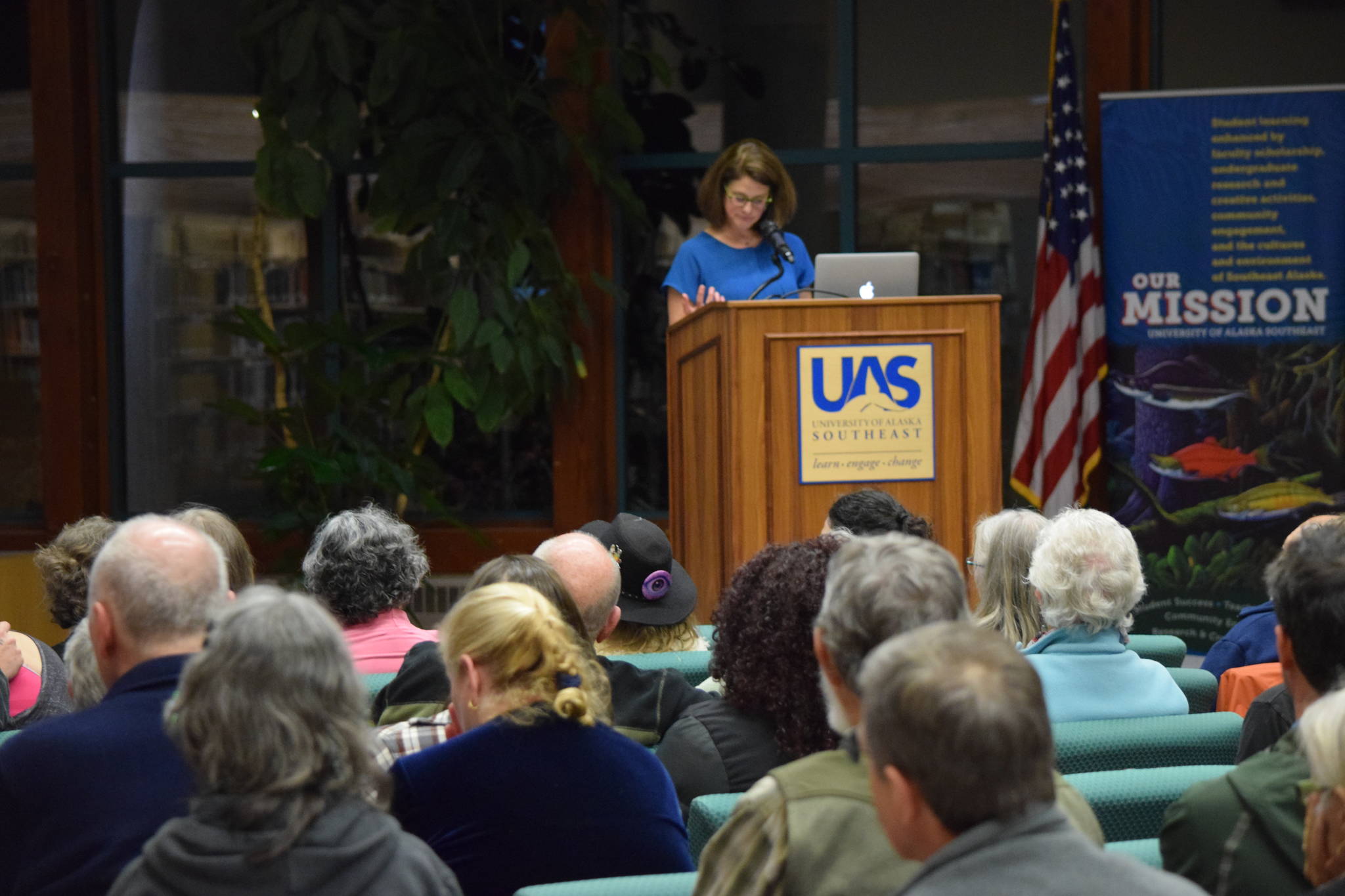
She presented her results at a Friday Evening at Egan lecture at UAS. Bolstering Juneau’s food supply, she said, first requires an understanding of how locals see the problem.
In her interviews, she found that environmental threats to fisheries, disruptions to the food supply from climate change and threats from government policy topped the list of topics.
Fishermen talked about threats from British Columbia’s mining industry. Foragers talked about climate change. Farmers trying to sell their produce told Vess about government subsidies to their larger competitors.
“People had a pretty good understanding of what threats were specific to what they were doing to produce food,” Vess said.
The people Vess talked to skewed middle-class. None were growing or harvesting their food to save money. Many reported actually losing money in the process.
Vess pointed out that many around Southeast are already working to make it easier for people to grow, catch or shoot their own food.
One idea floated by Darren Snyder, a Juneau-based food researcher for the University of Alaska Fairbanks, would be to partner with grocers in town to keep a rotating supply of food in reserve in the case of emergency.
For now, many feel like Robert Sylvester, a local who attended Vess’ lecture, who does not know where to get his next meal when emergency hits.
In the event the barges stop running to Juneau, “I’ll panic. That’s what I’ll do. I’ll run around in circles,” Sylvester said.
• Contact reporter Kevin Gullufsen at 523-2228 or kevin.gullufsen@juneauempire.com.
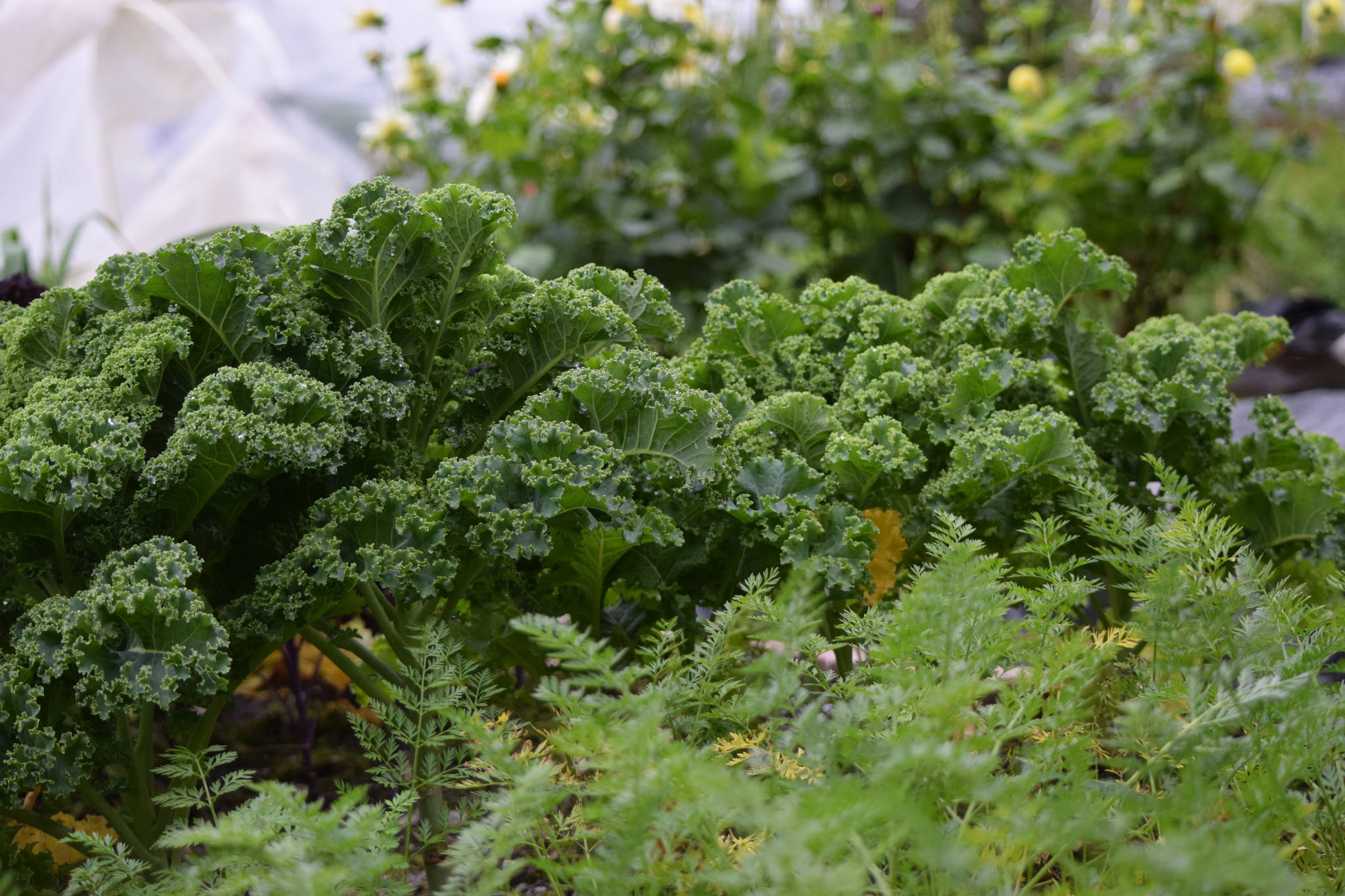
Some leafy greens grow at the Juneau Community Garden on Saturday. (Kevin Gullufsen | Juneau Empire)
