
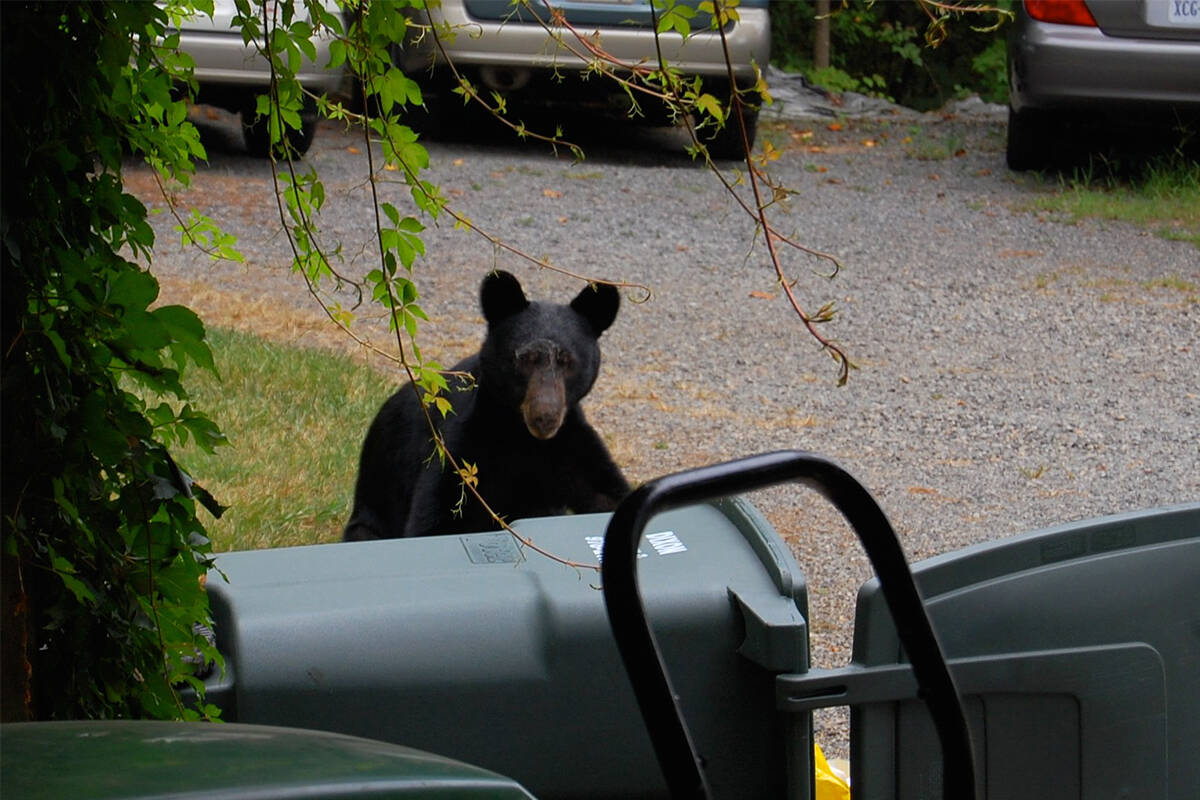
With the salmon run trickling out and winter on its way, fall is a busy season for bears to turn to trash as a food source.
The Alaska Department of Fish and Game receives bear calls year-round, but fall is one of their busier seasons for human-bear interactions. In September and October, bears enter hyperphagia, a period when they eat as much as possible to prepare for hibernation.
This year has been relatively quiet for bear activity, according to Carl Koch, Juneau Area Wildlife Management Biologist for ADF&G. He said he’s received just two bear calls in the past three days — an unusually low number for this time of year.
The department responds to reports of “problem bears.” When a bear becomes a serious threat to public safety or property, it’s typically euthanized. So far this year, ADF&G has euthanized three bears in Juneau. Last year, five bears were euthanized downtown alone, where they were getting into trash and entering shops.
Koch, who has spent the past ten years working in area management for ADF&G, recalled one year when the department captured 20 bears.
If a captured bear is released, Koch said, it’s often because they suspect they haven’t caught the right one. To identify individual bears, the department compares photos and paw prints from the reported incident.
“We don’t usually remove bears for just getting into trash,” Koch said. “We expect people to follow the law and secure their garbage.”
Juneau’s trash ordinance, adopted in 2004, enforces fines for “bear attraction nuisances”: $50 for a first offense, $200 for a second, and $300 for a third and subsequent offenses within two years.
“The fine can just keep escalating to the point where it’s cheaper to buy a bear-resistant can than to keep getting fined,” Koch said. “Most people want to solve the problem and don’t take that many attempts.”
ADF&G also focuses on public education around bear safety and securing trash.
“We could go back to the same dumpster and kill a bunch of bears and never solve the problem, whereas, if we work with people to secure the dumpster, then that is a long-term solution,” Koch said.
According to Abby McAllister, wildlife education and outreach specialist at ADF&G, bear encounters also peak in early spring — when bears emerge from their dens — and in mid-summer, when berries and salmon are scarce and downtown is bustling with tourists and their food remnants.
“More visitors means more visits to the food truck area, more coffees purchased at local coffee shops,” McAllister said. “Foods with a lot of sugar in them smell very, very interesting to bears.”
To help address these issues, ADF&G is partnering with the City and Borough of Juneau and Alaska Waste to install more user-friendly, bear-proof trash cans downtown.
McAllister said many tourists avoid bins that require them to reach into a slot to open, so the city plans to install new containers that open like a mail collection box. She hopes the design will be more intuitive and encourage more use.
Norwegian Cruise Line donated funds to commission a local artist to decorate the new receptacles, making them more eye-catching, McAllister said. The artwork will depict scenes of bears in their natural habitat, eating the food they’re meant to eat.
