
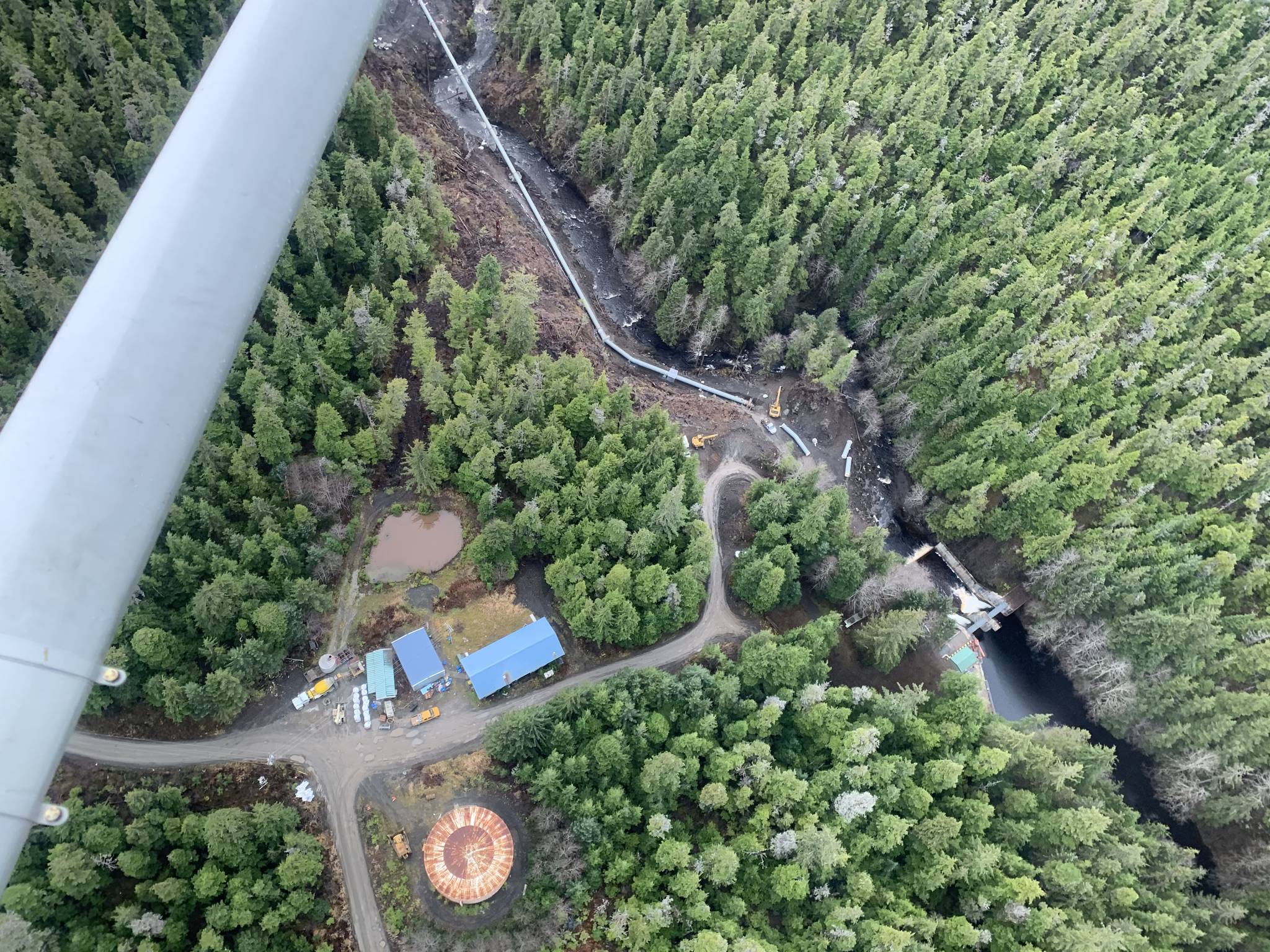
Juneau’s power comes from its hydroelectric power stations here in town, but it’s far from the only community in Southeast Alaska that derives its energy from water running downslope.
The region contains the majority of all hydropower projects in the state, according to the National Oceanic and Atmospheric Administration. But for those locations that don’t have hydropower or other power sources in place, diesel generators are a common method of power generation.
A number of communties and organizations, including the town of Tenakee Springs and the Inside Passage Electric Cooperative, are aiming to remedy that. Diesel is costly, generates pollution, and has much higher maintenance requirements, said Jodi Mitchell, CEO and general manager of the nonprofit Inside Passage Electric Cooperative.
IPEC maintains power-generation facilities in a number of smaller communities in the Southeast where access to power from larger grids is impossible, including a number of hydroelectric facilities. And they intend to expand that number, Mitchell said.
“Hydro is definitely cheaper to operate than diesel. It requires a lot less maintenance and a lot less replacement of parts and that sort of thing. And of course, it doesn’t require fossil fuels,” Mitchell said in a phone interview. “I’m excited that hopefully these projects can be funded by federal dollars, because the state doesn’t have the money anymore.”
Powering the Southeast
IPEC currently has three projects operating in Hoonah, Kake and near Haines, Mitchell said, with two projects in development: one in Angoon and a second plant in Hoonah. The hydro plants will lower power costs for IPEC’s member-owners, which can be several times the national average, Mitchell said. Hydropower both stabilizes and lessens power costs by not relying on expensive diesel purchasing and shipping, Mitchell said.
“It reduces our variable cost of production by not having to pay for diesel. It’s very variable,” Mitchell said. “Right now, it’s on the way up again, which is scary.”
Clean generation of power is also a major upside.
“The push toward combating climate change is a huge reason for hydro power,” Mitchell said. “In communities where IPEC is using diesel power, I’m sure we’re the biggest polluter.”
The community of Tenakee Springs is also pursuing a hydropower project, spearheaded by Tenakee resident Art Bloom. The project has been a long time coming, Bloom said in a phone interview.
“I’ve been working on this since 2003. It takes a long time to get various permits,” Bloom said. “It’s very incremental. You get a little money to do a feasibility study. If that pans out, you get a little more to do some design work. It seems endless.”
Bringing the men to the mountain
The project, built on Tenakee’s Indian River northeast of the town, was first examined in the 1970s, Bloom said. Construction on supporting elements began in 2013, and is currently about half finished. However, Bloom said, debris from the storms that savaged the region in late 2020 is impeding access for salmon up the fish ladder and landslides that will require heavy equipment to clear have blocked the service road.
Both the equipment to build the dams and the materials to build them need to be shipped to any location by barge, Bloom said. It’s not a cheap process, Bloom said — a one-way barge trip from Juneau to Tenakee starts at $25,000, before even beginning on the cost of the equipment and material itself.
“That’s one thing about building a project in rural Alaska,” Mitchell said. “All of the heavy equipment has to be shipped in on a barge. That’s very expensive to have to ship equipment around.”
One of the major expenses can be the pipe that goes into the penstock, the pipeline leading from the dam to the turbine house. Thousands of feet of high-quality steel pipe, the cost of which went up substantially as a result of the previous administration’s tariff policies, is not a middling expense, Mitchell said.
“The one in Kake was 2,100 feet of penstock,” Mitchell said. “We try to build them to last. But having to ship all that penstock to Kake was expensive. Sometimes, the cost of shipping things can be as much as the cost of materials.”
For many of the projects, funding is an issue as funds stopped being available from the Alaska Energy Authority due to the state’s financial situation.
“We were kind of at a stopping point before that storm. We were funded by a grant from the Alaska Energy Authority,” Bloom said. “Like all these projects in Alaska, they end up costing quite a bit more than you think.”
Bloom said they’re applying for a number of grants from a number of agencies to both handle the immediate problem of clearing the landslides and logs from the fish ladder, as well as to finish the overall project.
“The unknowns that caused the cost to be higher have already been encountered. The powerhouse site is prepared and it should be a fairly straightforward construction,” Bloom said. “Our biggest hope is that the infrastructure project that’s been proposed by the federal government will provide a lot of funding for these shovel ready projects.”
If they’re unable to get funding rapidly to clear the blockages, Bloom said, they’ll have to help the coho by hand to ensure the run isn’t too negatively impacted.
“If for some reason we were not able to get the equipment up there time, we’d probably go up there with a crew and net salmon and get them up above the blockage,” Bloom said. “That’s kind of a last resort, is that we’d go up there and capture the adults and transport them around the blockage. It can be done.”
Meanwhile, IPEC is looking at the future, looking to phase the diesels completely out, considering geothermal, tidal, solar, or wind-driven power sources. However, each has drawbacks, including inconsistent wind, Southeast Alaska’s general cloudiness, and the sheer cost of geothermal plants, Mitchell said.
“Our goal is to get to 100 percent renewable,” Mitchell said. “I don’t think we’ll be able to do that with hydro alone. There just aren’t streams close to the load center that we’ve identified.”
• Contact reporter Michael S. Lockett at 757-621-1197 or mlockett@juneauempire.com.
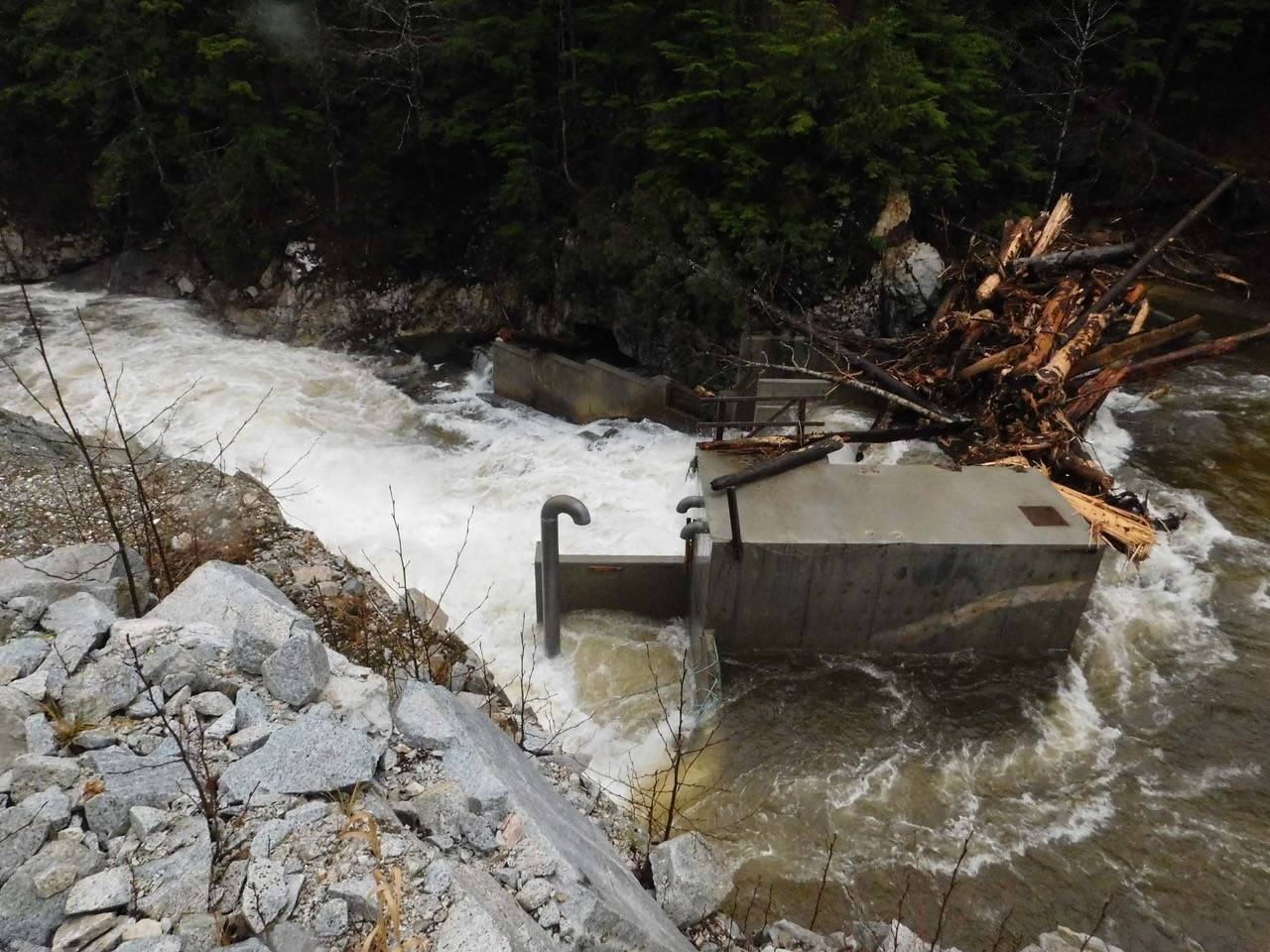
Courtesy photo / Art Bloom Debris blocking the hydropower site on the Indian River in Tenakee Springs is clearly visible. Without removing the debris, the salmon run could be affected.
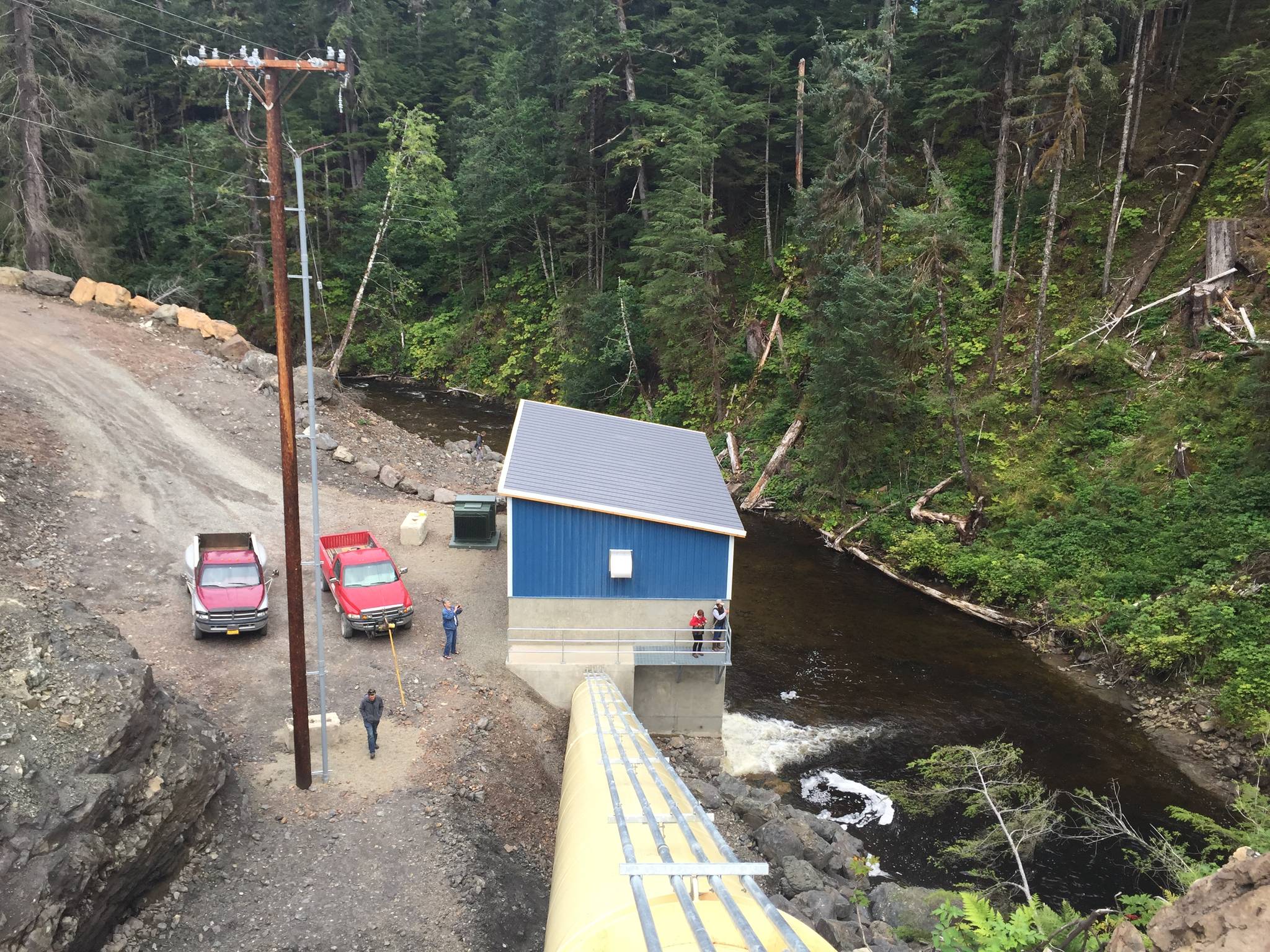
Courtesy photo / IPEC The penstock runs to the generation house at the Gartina Falls hydropower site in Hoonah in this photo.
