
By FELICIA FONSECA
Associated Press
FLAGSTAFF, Ariz. — Internet access, health care and basic necessities like running water and electricity within Indigenous communities have long been at the center of congressional debates. But until recently, Congress didn’t have many Indigenous members who were pushing for solutions and funding for those issues.
Hope is growing after the Native delegation in the U.S. House expanded by two on Election Day: Yvette Herrell, who is Cherokee and prevailed in New Mexico’s 2nd Congressional District, and Kai Kahele, a Native Hawaiian who won that state’s 2nd District.
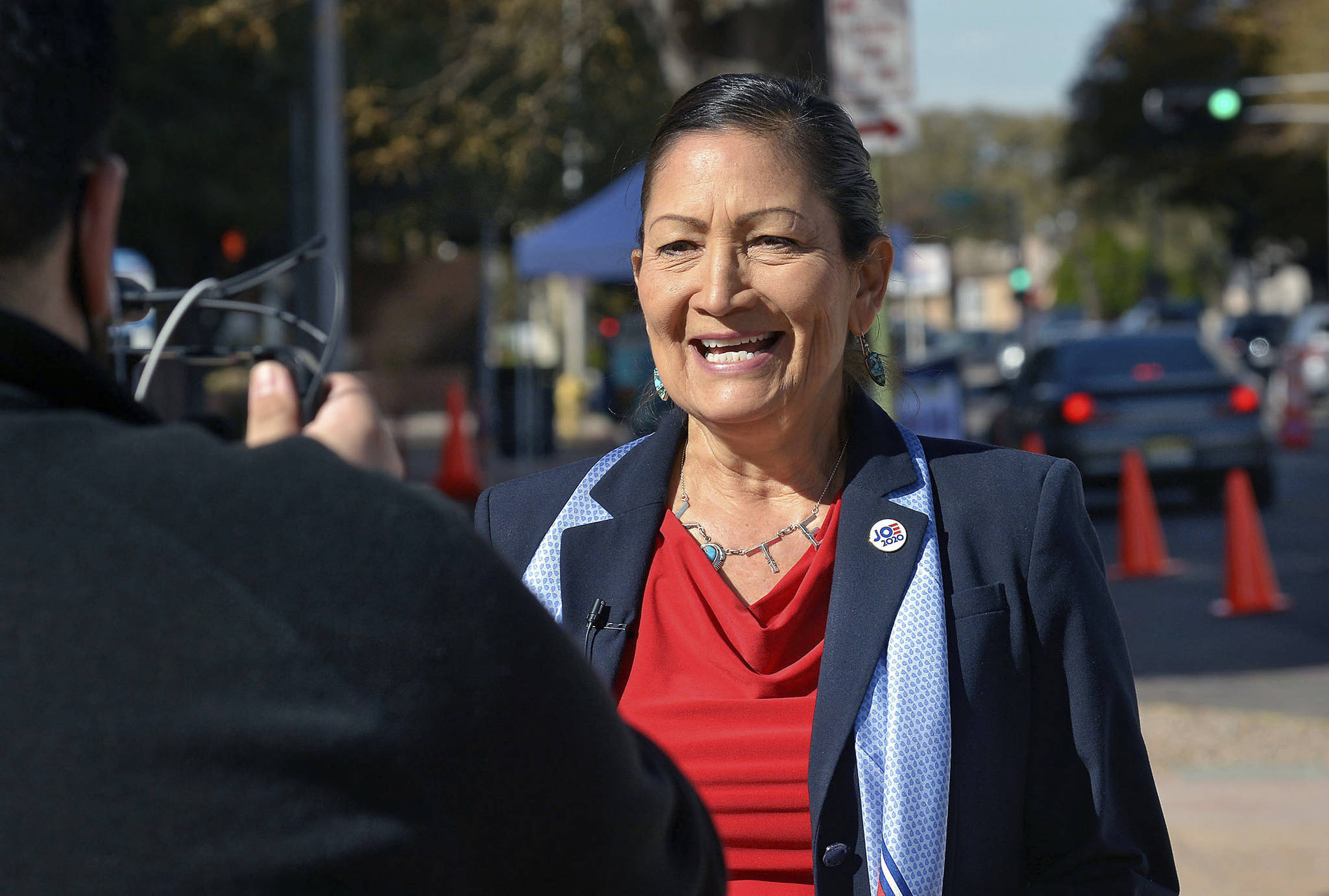
They will join four Native Americans who won reelection: Reps. Deb Haaland of New Mexico, who’s Laguna; Sharice Davids of Kansas, who’s Ho-Chunk; Markwayne Mullin of Oklahoma, who’s Cherokee; and Tom Cole of Oklahoma, who’s Chickasaw.
Of the six who prevailed, half are Democrats and half Republican — a divide Cole said would “absolutely be indispensable in passing anything the next two years.” The winners were among a dozen Indigenous major-party candidates running in top-of-the-ticket races.
“I always consider tribal affairs to be non-partisan,” Cole said Monday. “The tribal sovereignty and trust responsibility are not partisan issues. You either believe in those or you don’t.”
Representation means progress, scholars say, particularly for Indigenous children who will see their language and culture on display in Congress. It’s fueled by efforts to recruit Indigenous candidates and back them financially, get-out-the-vote efforts and Native communities flexing their political muscle. About 100 Indigenous candidates were on general election ballots across the country, most seeking seats in state legislatures.
“It’s seeing people that look like us in Congress that is inspiring women, more than anything, to run,” said Traci Morris, executive director of the American Indian Policy Institute at Arizona State University who’s Chickasaw. “That’s what I see — I see we all think we can do it now. And there was huge involvement.”
Still, Indigenous people remain underrepresented in Congress. The U.S. Senate has not had a Native American member since Ben Nighthorse Campbell of Colorado retired in 2005. He has Northern Cheyenne heritage. Democrat Paulette Jordan, who is Coeur d’Alene, lost to the incumbent for a U.S. Senate seat in Idaho this year.
But the House victories won’t necessarily translate to immediate power in Washington. Kahele said he imagines he’ll spend time learning about Indigenous issues outside of his native Hawaii and educating other Native and non-Natives in Congress.
And while it’s not easy to ignore Indigenous lawmakers if they’re sitting across the table, they often can be pigeonholed, said Richard Monette, who teaches federal Indian law at the University of Wisconsin-Madison.
“I think that, in the end, the scale tips toward being more good than bad,” said Monette, a former chairman of the Turtle Mountain Band of Chippewa. “That’s fair to say, but I will say this is complex.”
Herrell, for example, said she’s proud of her heritage but didn’t tout it in her bid to unseat Democrat Xochitl Torres Small in a complicated district that includes minority communities along the U.S.-Mexico border, tribes, ranchers, farmers, and oil and gas industry workers.
“I really prefer to call myself an American,” she told The Associated Press. “I’m a New Mexican, and it’s not about labels, it’s not about race. It’s about people and representing all of our values, all of our shared likes and even dislikes and coming together.”
The House formed the bipartisan Congressional Native American Caucus in 1997 that has dozens of non-Indigenous members and is now led by Cole and Haaland. Most notably, it worked to pass two bills to help address the epidemic of missing and slain Native American women. But the leadership team, which also includes Davids and Mullin, doesn’t always agree.
“We all make decisions based on two things: our life experiences and the way we were raised,” Mullin said in a statement to the AP. “With more Native Americans in Congress, we can make a bigger impact and better educate our colleagues about Native issues.”
Haaland and Cole said the focus in the upcoming session will be COVID-19’s impact on Native communities, chronic shortfalls in federal funding for tribes, broadband internet access, further addressing missing and slain Indigenous women and land put into trust for tribes.
Kahele, who became the second Native Hawaiian elected to Congress since statehood, has said he will champion Indigenous voices and push for things like housing assistance, the protection of natural resources and for the federal government to right the wrongs committed against Indigenous Hawaiians.
Hawaii was an independent kingdom until 1893, when American businessmen backed by U.S. Marines overthrew Queen Liliuokalani. The U.S. annexed Hawaii five years later, making it a territory. It gained statehood in 1959.
While the U.S. apologized in 1993, Kahele said “that was the first step in what needs to be a process of healing and reparations.”
Native Hawaiians are not among the more than 570 federally recognized Native American tribes, though they’ve sought the designation. They share common struggles in land loss, health care and lack of economic prosperity and have access to some of the same federal funding and preference for bidding on federal contracts as tribes.
Kahele said he’s already reached out to his Native colleagues in the House.
“If we work together, we can achieve so much more,” Kahele said. “And there are a lot out there who want us to fight, to compete against each other for the same federal resources.”
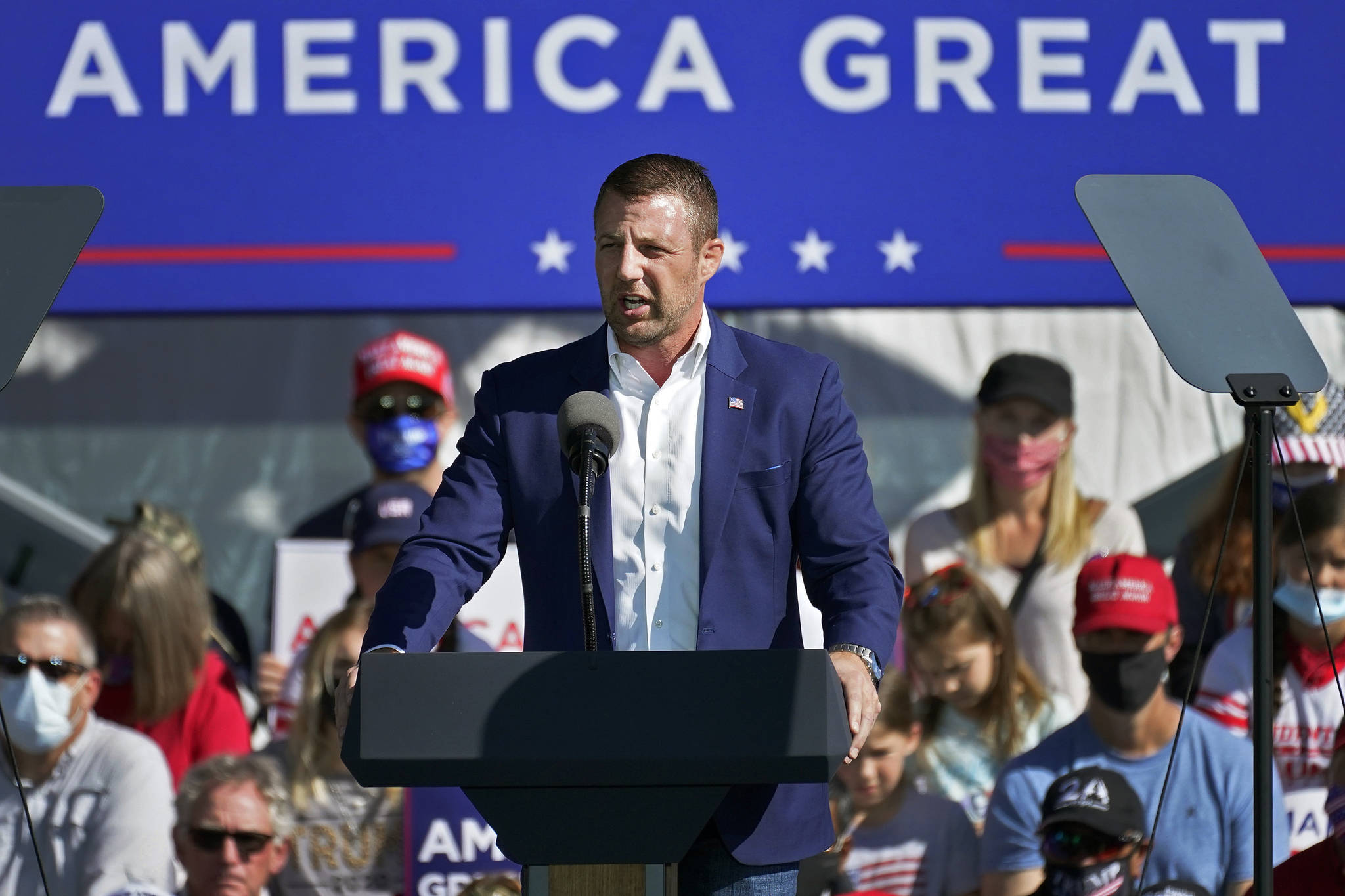
U.S. Rep. Markwayne Mullin, R-Okla., speaks at a campaign rally, Friday, Oct. 30, 2020, in Flagstaff, Ariz. Until recently, Congress hasn’t had many Native American members but hope is growing as the Native delegation in the U.S. House increased by two on Election Day along with four Native Americans who won reelection including Mullin who is Cherokee.(AP Photo / Matt York)
