
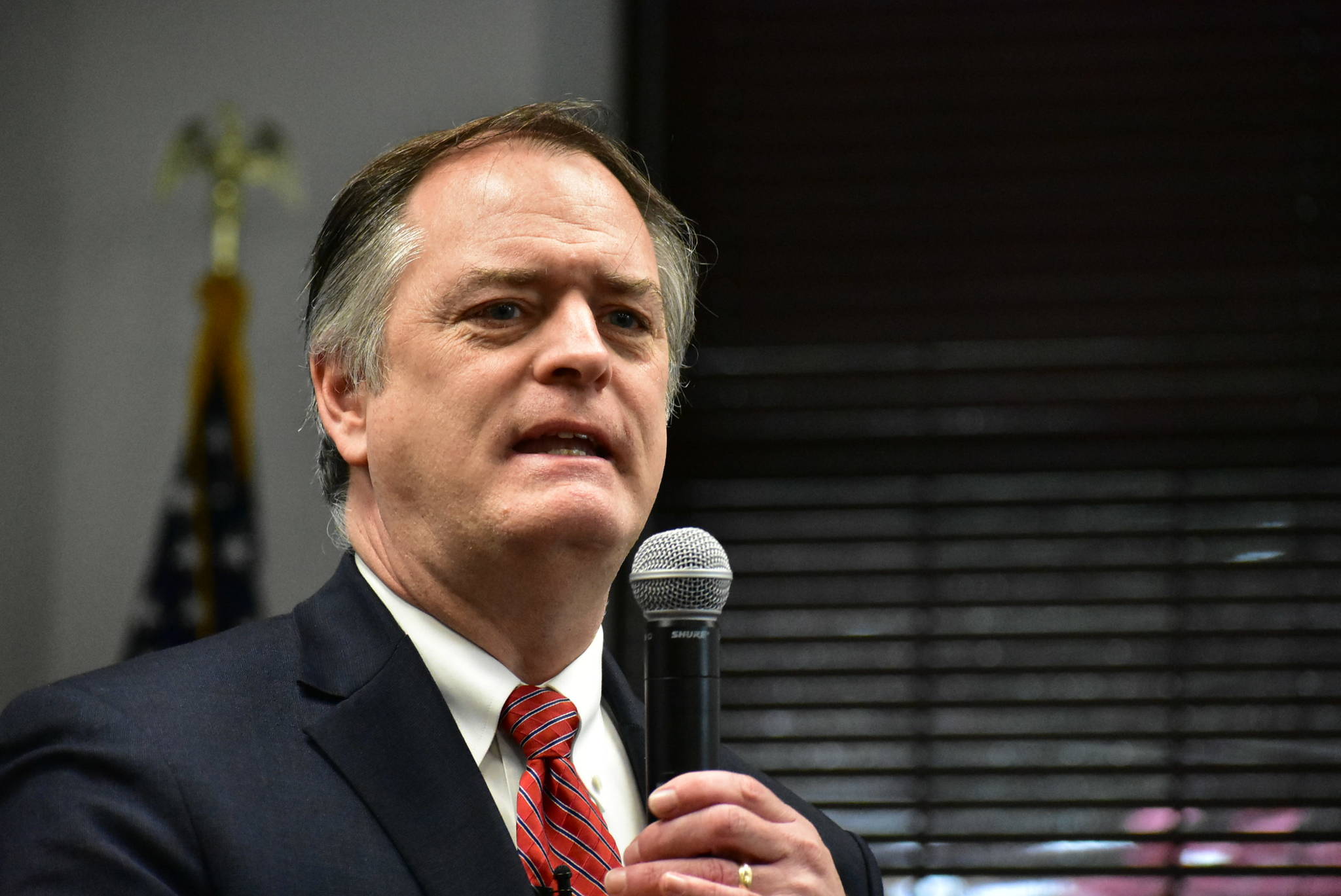
In the 2019 film “Dark Waters,” Mark Ruffalo plays corporate attorney Rob Bilott as he takes on the DuPont company for knowingly contaminating the drinking water of a small West Virginia farm town with chemicals from their nearby plant.
On Monday, the real Rob Bilott was in Juneau urging the support of a House bill that would test for and regulate the use of a family of chemicals called per- and polyfluoroalkyl substances, commonly known as PFAS, which are used in many products and frequently used in firefighting foams found at airports.
PFAS chemicals are known for their flame-retardant properties, which is why they’re used in firefighting materials and Teflon. But they’re also what’s known as “forever chemicals” because they tend not to break down over time. According to the Environmental Protection Agency exposure to PFAS chemicals can cause cancer, low birth weight and adverse effects on the immune system.
[Gustavus residents test blood for PFAS]
It was DuPont’s PFAS chemicals that had contaminated water in West Virginia and caused a massive die-off of cattle and increased cancer rates in the community. But there isn’t much regulation around their use, Bilott said, despite years of advocacy.
“We first asked for a standard in 2001,” Bilott said. “EPA said they’ll set standard in 2009, beginning in 2016 states started moving forward on their own.”
House Bill 240, sponsored by Reps. Sara Hannan, D-Juneau, and Geran Tarr, D-Anchorage, would require yearly testing and public notification of PFAS contamination. It would also require businesses to use an alternative firefighting substance if one is available.
The resource committee heard testimony from Bilott and Kelly McLaughlin , who lives near the Gustavus airport in an area that is shown to have PFAS contamination, Monday and will discuss the bill at a later date according to Tarr.
Local groups have been advocating on behalf of their communities for several years following the discovery of PFAS chemicals in their drinking water, asking the state to do something about the contamination.
“The first priority is getting clean drinking water to people that are drinking contaminated water,” McLaughlin said. She is chair of the Gustavus PFAS Action Coalition. “We’re in a kind of in a unique situation in the smaller towns around Alaska where we garden and weraise animals. That’s a big part of the consumption of the chemicals.”
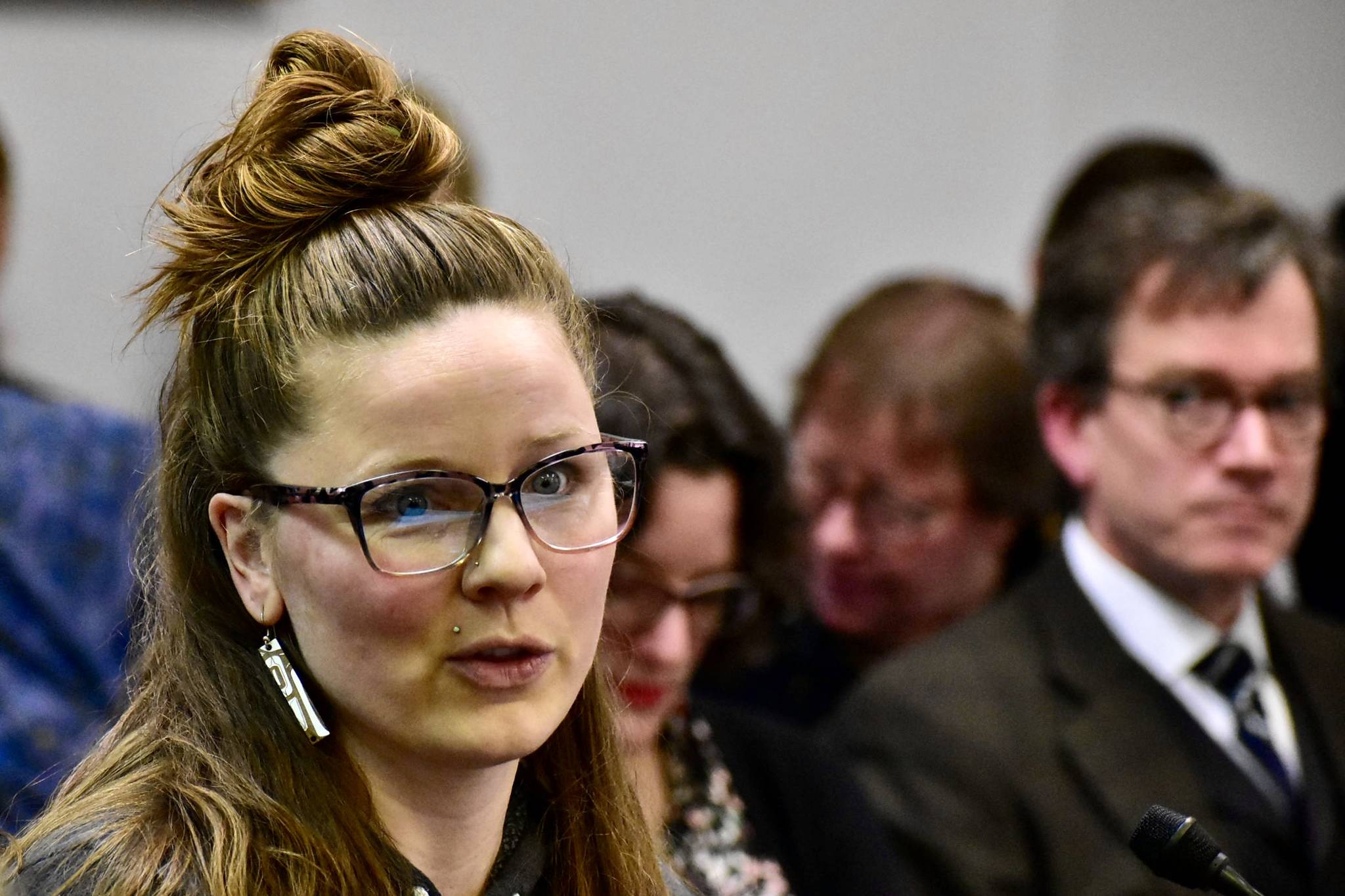
photos by Peter Segall | Juneau Empire Kelly McLaughlin, chair of the Gustavus PFAS Action Coalition, gives testimony to the House Resources Committee on the dangers of PFAS chemicals Monday.
McLaughlin told the House Resources committee Monday she was in Juneau because the state had failed to take action. She told the Empire she had written several letters to both the Department of Transportation and Public Facilities and Gov. Mike Dunleavy urging a change in the use of firefighting chemicals at smaller airports.
According to the Federal Aviation Administration, airports above a certain size are required to have aqueous film-forming foam concentrates for firefighting. But the FAA allows an exemption for smaller airports, known as Index A airports.
“The FAA through (section) 14CFR, part:139.317,” McLaughlin said, recalling the statute number from memory. “All airports that receive jet traffic above a certain (amount) must have AFFF on hand. For index A airports, we have an exemption which says we can have sodium bicarbonate, which is baking soda.”
But DOT has cited public safety as a reason not to make the switch, McLaughlin said.
“Which is this really ironic response,” she said. “They say it’s not as effective but they can’t produce anything that compares the two to show efficacy. So we GPAC, and Gustavus are deferring to the FAA who has already decided that this is a suitable replacement.”
DOT did not immediately respond to request for comment.
If HB 240 were to pass, it could require smaller airports to make the switch.
“Gustavus could have avoided this problem, we could switch today,” McLaughlin told the Resource Committee. “We’ve got experts in this room, we’ve got experts in this state, so let’s do something.”
