House approves tougher route for environmental protections on Alaska rivers, lakes
Published 9:30 pm Monday, April 22, 2024
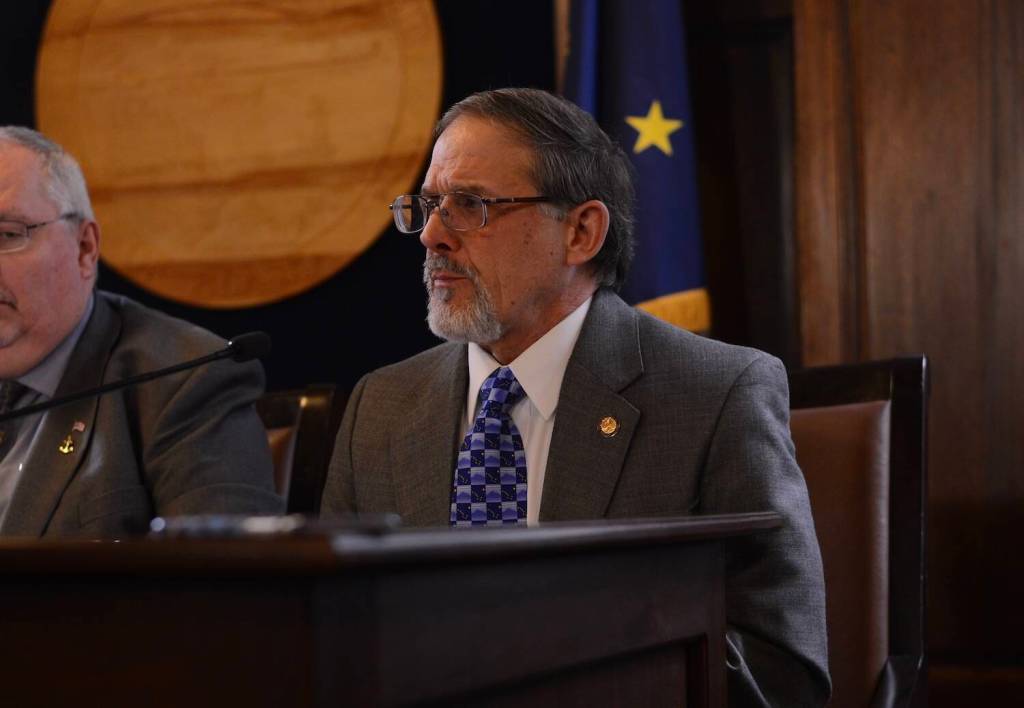
A bill passed last Thursday by the Alaska House of Representatives would affirm a tough hurdle for top-level environmental protections on rivers and lakes in the state.
House Bill 95, passed on a 21-18 vote, would require that labeling a river or lake a “Tier III” waterway requires legislative approval.
Under the federal Clean Water Act, a Tier III designation represents the highest level of protection available, prohibiting most forms of development that affect the water body with the label.
“It’s essentially a lockup of that water and almost everything that pertains, even peripherally, with that water. It’s a very significant decision,” said House Majority Leader Dan Saddler, R-Eagle River, speaking in favor of the bill.
Since 1983, when the federal government required that each state create a process for labeling Tier III waters, the state of Alaska has never labeled something as Tier III.
Five Tier III applications are pending, with the oldest dating from 2009.
Current state policy, finalized by the Department of Environmental Conservation in the last month of former Gov. Bill Walker’s term in office, already says that only the Legislature can label something as Tier III. Putting that rule into state law would prevent the agency from changing that standard unilaterally.
Different versions of HB 95 were proposed in 2019 and 2022 but never advanced. HB 95 was proposed by Rep. George Rauscher, R-Sutton.
Speaking after the bill’s passage, he said the latest bill isn’t significantly different from those prior versions. The difference this time is that the House is controlled by a predominantly Republican majority.
Rep. Mike Prax, R-North Pole, said that if there is no legislative approval, he worries that a handful of people, familiar with the state regulatory process, might be able to gain Tier III approval for a state waterbody.
“This is just too important to enable a few people to tie up a public resource,” he said.
Pro-development groups, including the Resource Development Council, have testified in favor of the idea behind the bill, while environmental groups and some tribes oppose it.
“I don’t feel comfortable in this role here as the Legislature, doing this,” said Rep. Donna Mears, D-Anchorage.
An environmental engineer in private life, Mears said she doesn’t believe the Legislature has the expertise to determine whether a body of water meets the required technical standards.
Rauscher disagreed, pointing to the wide variety of legislation that lawmakers are asked to consider.
“We’re talking about how much gas pressure should be down a hole, we’re talking about a space program. We’re talking about all kinds of things we don’t have expertise in. It’s our job to figure it out,” he said.
Rep. Sara Hannan, D-Juneau, said having the Legislature make the decision would result in a designation process “so truncated that it becomes purely a political process.”
She and other dissenters said they believe DEC has the power to approve Tier III designations under existing state law and that a DEC-led process, based on staff work, would be preferable.
Rauscher responded afterward that if 60 legislators from different areas of the state are making the decision, rather than a single agency from a single governor’s administration, the result will be less politics in the process, not more.
“I don’t think the final decision on any body of water is going to be more political because of this bill. I think it’ll be less, because we have 60 sets of eyes on it,” he said.
In the Senate, the bill has been referred to the resources committee, where Co-chair Cathy Giessel, R-Anchorage, has introduced her own version. Giessel said on Monday she was unsure whether the bill has the support needed to pass the Senate.
• James Brooks is a longtime Alaska reporter, having previously worked at the Anchorage Daily News, Juneau Empire, Kodiak Mirror and Fairbanks Daily News-Miner. This article originally appeared online at alaskabeacon.com. Alaska Beacon, an affiliate of States Newsroom, is an independent, nonpartisan news organization focused on connecting Alaskans to their state government.