
As winter waned and Alaskans looked for durable signs of spring, about 60 elementary and middle school students in Hoonah turned their eyes to the sea on the lookout for herring.
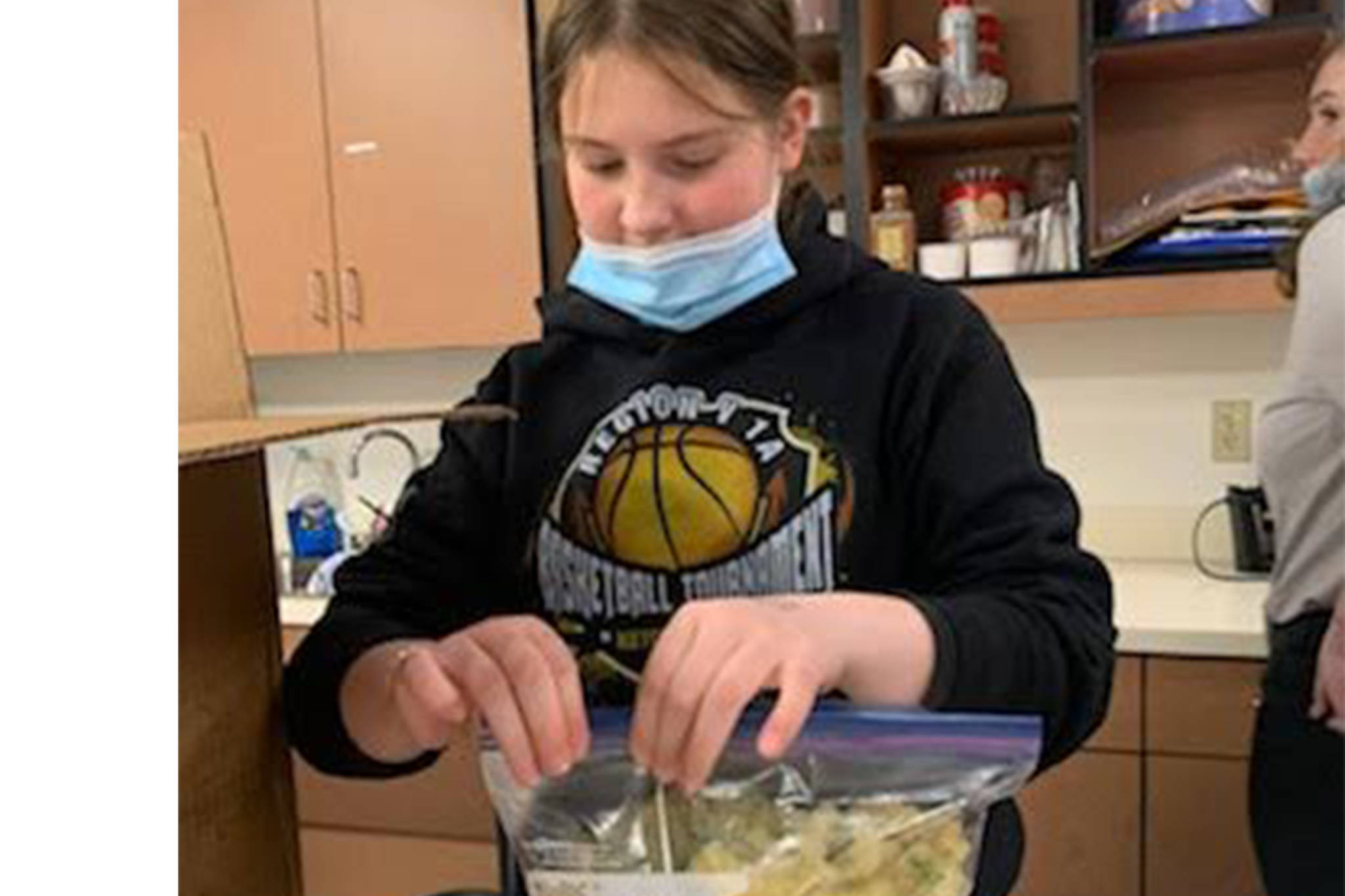
When the fish started to arrive late last month, fourth grade teacher Mark Browning led students and staff in the school district’s first Herring Week to celebrate their arrival, learn more about the cultural significance of the fish and explore the fish’s future.
Bear in mind: What you need to know now that they’re waking up
Historically, herring have been important to Southeast Alaska because they are an essential subsistence fish, and their arrival heralds spring in the region, Browning said.
“Our fish are so important. They are the basis of every food chain in the ocean,” he added.
Browning explained that local herring stocks are down, and he wanted to draw his student’s attention to the fish’s plight.
“Herring exist all over Alaska. Some stocks stay around, and this time of year, they come in by the billions, and they begin to spawn. It’s a spectacular event,” he said. “It’s now at record lows. Where they once caught 240 million tons of herring in the 1940s, now it’s just a fraction of that.”
Browning, who is originally from Colorado, first learned about the herring run from nature documentaries.
“I was excited to be a part of this, so I just ran with it,” he said. “This is the first time we’ve celebrated in Hoonah. They have celebrations in Sitka.”
Planet Alaska: Gathering red seaweed
A weeklong celebration
To mark the arrival of the herring, several schoolwide festivities took place.
Students learned about the herring life cycle, heard from local experts and interacted with guest speakers—such as the Herring Protectors, via Zoom. Students talked with local anglers and took a field trip down to the water.
In the classroom, students wrote letters to the editor of the Juneau Empire, state lawmakers and the fisheries board.
Art projects, including painting rocks with herring-inspired designs, added an artistic touch to the science lessons.
The celebration ended with a fishing derby.
“As long as the fish keep making it, we plan to celebrate their journey and how far they come to return,” Browning said.
More about herring
According to the Alaska Department of Fish and Game’s website, “The spring harvest of herring eggs on hemlock boughs or kelp has always been an important subsistence resource in coastal communities throughout Alaska. Traditional dried herring remains a major staple of the diet in Bering Sea villages near Nelson Island. Pacific herring are also harvested by subsistence users for consumption as fresh fish and bait.”
The site describes herring as having a blue-green upper body with silvery sides devoid of markings, a laterally compressed body with and the large and easily removed scales along the fish’s underside that project in a slightly serrated arrangement. The fish have deeply forked tails and may grow to 18 inches. However, a 9-inch fish is considered large.
•Contact reporter Dana Zigmund at dana.zigmund@juneaumpire.com or 907-308-4891.
