
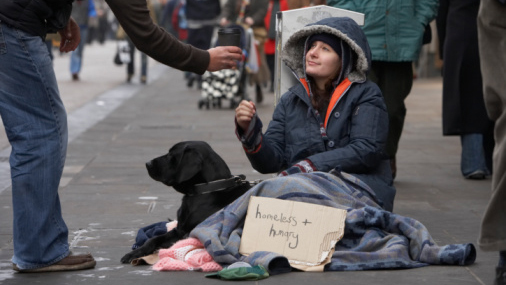
HONOLULU — As an emergency room doctor, Hawaii Sen. Josh Green sees homeless patients suffering from diabetes, mental health problems and an array of medical issues that are more difficult to manage when they are homeless or do not have permanent housing.
That’s why Green says he wants to homelessness classified under Hawaii state law as a medical condition.
If homelessness is a disease, he reasons, then doctors should be able to write prescriptions for the cure: Housing.
“It is paradigm shift for sure, but the single best thing we can do today is to allow physicians and health care providers in general to write prescriptions for housing,” Green said.
Green last week introduced a bill in the Hawaii Legislature to classify chronic homelessness as a medical condition and require insurance companies to cover treatment of the condition.
[Juneau Assembly delays decision on downtown camping ordinance]
But if a doctor wrote a prescription for six months of housing, where would the patient fill the prescription?
That’s where Green wants Medicaid to step in.
He wants to redirect some of Hawaii’s $2 billion annual Medicaid budget to pay for housing.
He says the state could spend less Medicaid money by dedicating some of it to housing instead of paying for frequent visits by homeless people to emergency rooms. A recent University of Hawaii survey found health care costs for chronically homeless people dropped 43 percent when they had decent housing for an uninterrupted six-month period.
“Housing is health care, because it does afford a person a much greater chance of sustaining their health,” said Connie Mitchell, executive director for the Institute for Human Services, Hawaii’s largest homeless services provider.
But she cautioned that choosing who qualifies would be a challenge.
“You need to really look at when that’s appropriate, because there’s a lot of people that become homeless,” Mitchell said. “Just because they become homeless doesn’t mean it entitles them to write a prescription for a unit.”
Hawaii had the highest rate of homelessness of all U.S. states in 2015, with 53 homeless people for every 10,000 residents, according to The National Alliance to End Homelessness.
The isolated state’s high food and housing costs have prompted thousands of locally-born residents and transplants to erect tents and makeshift structures for homes in parks and sidewalks on Oahu, the state’s most populated island.
Concerned about impacts on tourism, city officials have banned sitting and lying down in public spaces in the beachfront neighborhood of Waikiki and other parts of Honolulu.
The prospect of Green’s proposal passing is unclear, but Hawaii officials appear receptive to offbeat solutions. State officials last year directed more money than ever to homeless support services.
And this week, 20 state senators proposed issuing $2 billion in state-backed bonds to build affordable housing, public housing renovations and homeless shelters.
Representatives from the state’s two largest insurers — Kaiser Permanente and Hawaii Medical Services Association — and the chairwoman of the legislative committee that will first consider the bill declined comment, saying they have not had time to review it.
National homelessness experts said they are unaware of any other U.S. state attempt to classify homelessness as a medical condition.
But more than a dozen states — including California, Louisiana, New York and Texas — have found alternative ways to use Medicaid money for social services to help people stay in housing, like employment services or counseling, according to the Corporation for Supportive Housing, a New York-based group.
And New York is searching for ways to redirect the state-funded portion of its Medicaid budget toward housing payments.
“To date, no one is able to pay for rent using Medicaid. That’s the line in the sand,” said Barbara DiPietro, senior director of policy at the National Health Care for the Homeless Council, referring to federal Medicaid money.
Green’s idea is in line with an ongoing push in in Hawaii to expand Medicaid coverage so it will pay for services such as social workers who help people secure housing.
“The state realizes there’s a strong intersection between housing and health care, and I think that really is a critical component of our efforts to address homelessness here locally,” said Scott Morishige, the homelessness coordinator for Gov. David Ige, a Democrat.
Illness and injuries can lead to homelessness, through loss of income or inability to pay medical bills. When people become homeless, chronic diseases such as high blood pressure, asthma, diabetes and mental health problems are more difficult to manage, according to the National Health Care for the Homeless Council.
“If you don’t have stable housing, if you don’t have a stable place to live, how are you managing medications and going to doctor appointments?” said Marcella Maguire, a director at Corporation for Supportive Housing.
The Queens’ Health System, a Honolulu hospital, billed $80 million for treating homeless people in 2014 and $89 million in 2015, said Lyndsey Garcia, a hospital legislative analyst. More than $10 million goes uncompensated annually, she said.
Some homeless patients visit emergency rooms dozens of times per year, Green said.
“I’ve heard it described as you go to Queens as a two-day vacation,” he said. “It’s going to cost probably $2,000 to $3,000 per day, so Queens is going to eat that cost, just for basic shelter.”
