Haines raises its first Tlingit street signs — is Juneau next?
Published 9:30 pm Thursday, June 15, 2023
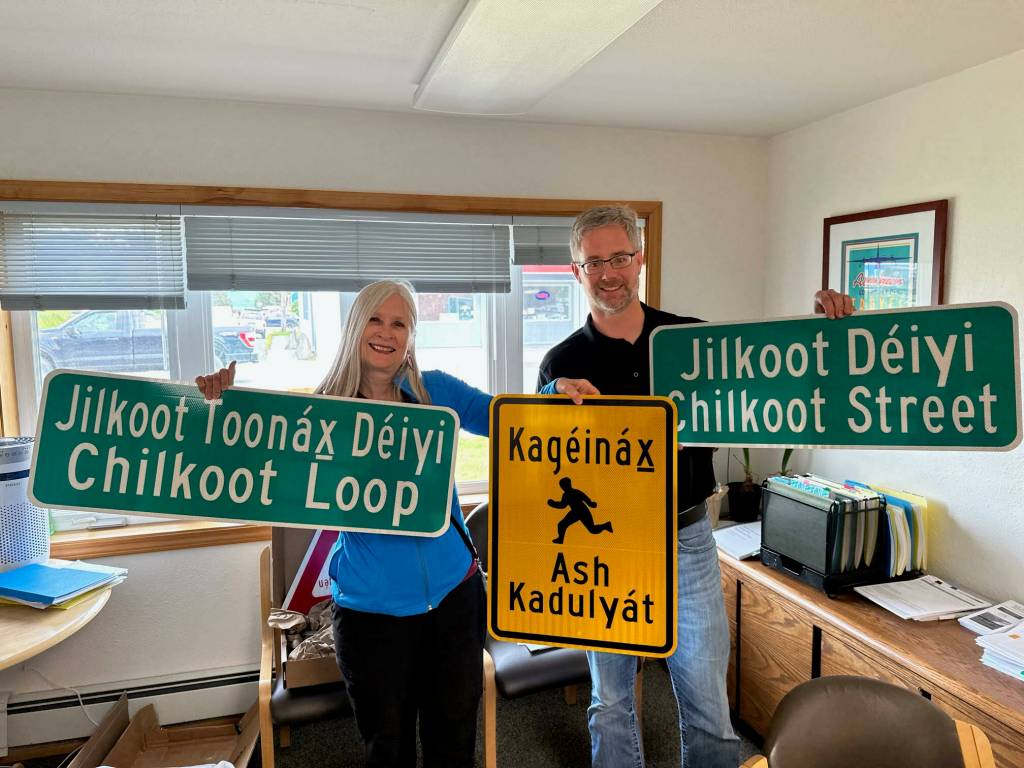
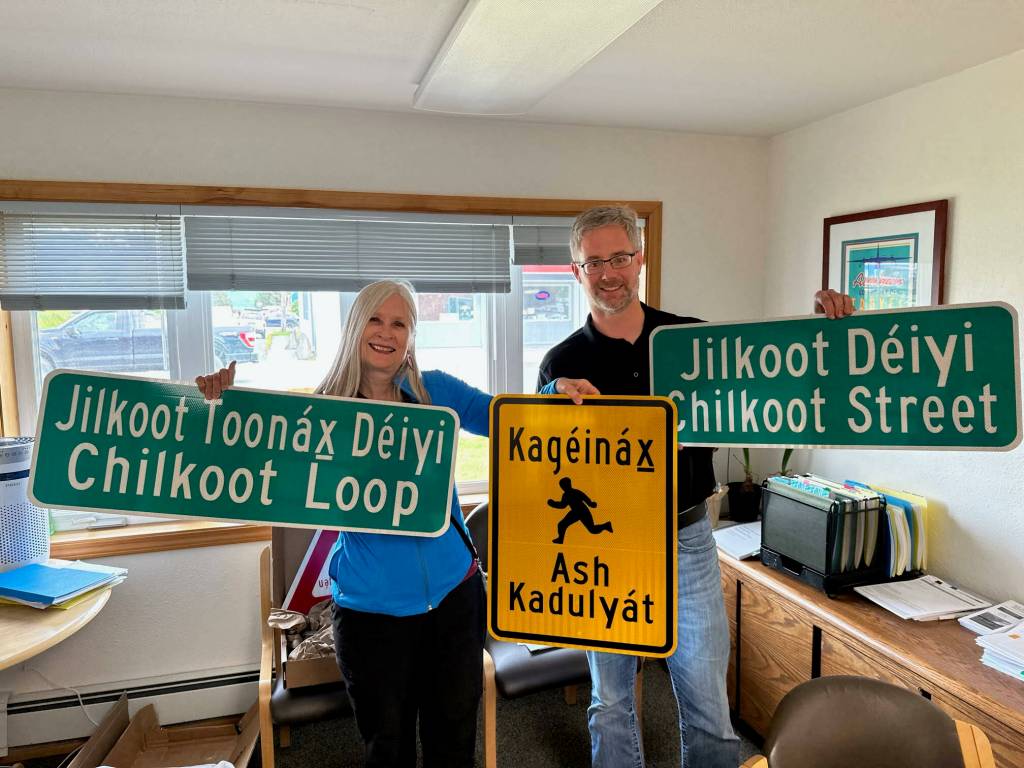
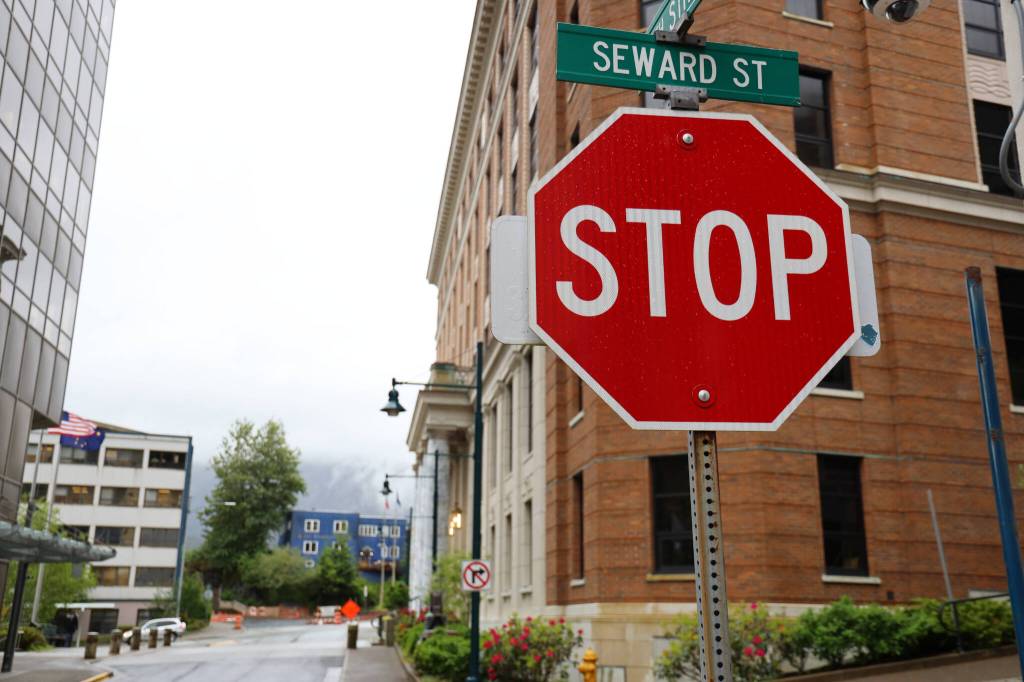


The first batch street signs using the Lingít language — including a stop, yield, children at play and street names — are now lining the roads in Haines after being manufactured in Juneau, and local leaders in the capital city are hoping to see similar signs in Juneau soon.
Last Friday marked the raising of the first five Tlingit signs in Haines and according to Haines Mayor Douglas Olerud, the project was done in partnership with the Chilkoot Indian Association, the City and Borough of Juneau’s street sign shop, and a handful of individuals along the way.
Olerud said seeing the idea come to life after it was pitched earlier this year is “healing” for him and he hopes it is for the community as well.
“I think on the broader picture, it goes back to when I was a kid and hearing a couple of generations older than me talking about how they were sent to boarding schools, how they were told not to use their language,” he said. “This is a great way to honor some of those people that have been working really hard to keep their traditions and keep the language alive, and hopefully they can have some small amount of healing from when they were robbed of the culture.”
Olerud said the signs recently put up are considered “a test batch” for wind and other factors that might require changes to the signs before more are put up in the future.
“We’ll keep testing until we get it right, and then we’ll start spreading around and doing more,” he said.
Olerud said he hopes to see other Southeast Alaska communities do the same.
“I’d love to go to communities in Southeast Alaska in a few years and see street signs in English and the Tlingit, or Haida and Tsimshian language — that would be awesome,” he said. “I look at it as a way of celebrating multiple cultures that we have in this community and the kind of healing aspect this can bring.”
Katie Koester, the CBJ Director of Engineering and Public Works, said implementing the signs in Juneau wouldn’t be too difficult, as the sign shop at CBJ Streets has all of the necessary characters to produce the signs and did so already for Haines.
“I have not been approached by anyone to do this in Juneau as far as I know,” she said. “But certainly if that is something the Assembly wants we would look into it.”
Though Haines beat Juneau to the punch in getting the signs raised, the idea to do it in the capital city goes many years back, according to state Sen. Jesse Kiehl, a Juneau Democrat.
“This was before I was in the Assembly, I believe I was a legislative staffer,” Kiehl said, recalling the moment in the early 2010s when the idea to implement bilingual street signs in Southeast communities was casually pitched by a Sitka legislator at the time.
“I took that and put that thought away,” he said, noting some time went by until the idea came back to the forefront during his time as an Assembly member from 2011-2019. “We were doing a rebuild project at the time, and I went to the person at the city engineering shop and I said, ‘there’s this great idea, could we do this?’”
Through some digging, he said the streets department was able to acquire the characters of the Lingít language that could be used for signage from the Goldbelt Heritage Foundation. However, for a variety of reasons, he said the project halted after that.
“That project went a different way for unrelated reasons — so the city did not end up doing it to my disappointment,” he said.
Now, years later, Kiehl said he hopes to see the current Juneau Assembly finish what was started and get the signs raised in Juneau.
“It’s a wonderful opportunity for our street signs to reflect the roots of a place and I think it’s a great opportunity to put Indigenous names back on the land,” he said. “They would be right alongside the English names and it would just have some of our community infrastructure reflect more of the history of the people who were here, and are still here today.”
Juneau state Rep. Andi Story, who was in Haines and got to see the signs before they were raised, agreed and said “Juneau has some catching up to do.”
“It’s part of revitalizing culture, and highlighting the names and places that have been there since time immemorial,” she said. “We are very much looking forward to more place names around Juneau, and we really welcome the revitalization and I’m excited.”
Juneau City Manager Rorie Watt said he is interested in hearing from the community if this is something residents would like to see in Juneau.
“I like the idea,” he said. “It seems like it’s a community project that a lot of people would enjoy.”
Mayor Beth Weldon agreed and said, “it’s a complicated process, but we’re looking into it.”
• Contact reporter Clarise Larson at clarise.larson@juneauempire.com or (651)-528-1807.