Google and Juneau professionals are helping teachers and students solve problems like a computer scientist
Published 3:00 am Sunday, April 7, 2019
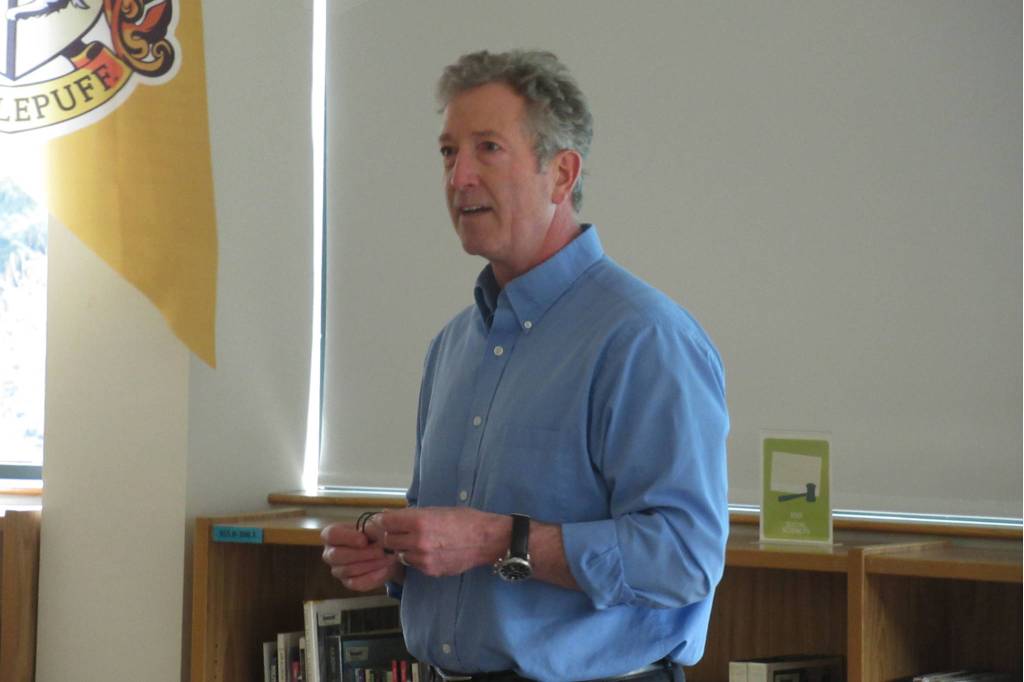
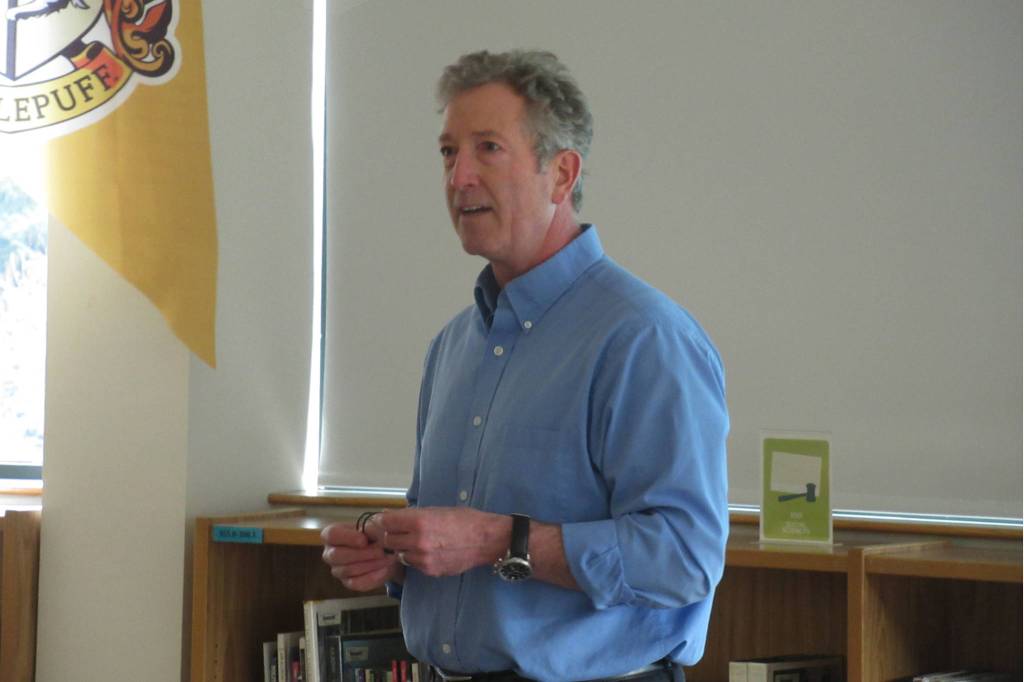


Attempting to solve Juneau’s daycare shortage, analyzing the health of yellow cedar trees, regulating insurance and Planned Parenthood community outreach have at least one thing in common.
They were all part of a Thursday evening community workshop at Dzantik’i Heeni Middle School that was part of a professional development series focused on a problem solving method called computational thinking.
Computational thinking is intended to be a way of solving problems logically by breaking them into smaller parts, looking for similarities and trends, focusing on what’s important and ignoring what’s unnecessary and creating step-by-step instructions to solve a problem.
“It’s kind of new terminology for something teachers already do,” said Tammy Morris, computational thinking instructor.
[How the new JACC feasibility study reached its conclusions]
The series was co-sponsored by City and Borough of Juneau School District and the Juneau STEM Coalition and supported by a $35,000 Google grant.
Ryia Waldern, a Floyd Dryden Middle School teacher, said she’s also gotten a lot out of the computational thinking events.
“This was a wonderful professional development opportunity,” said Ryia Waldern, a Floyd Dryden Middle School teacher. “One thing I’ve really appreciated about this is it’s connecting professionals in our community to teachers.”
Waldern said that’s helped people in different careers share different sets of expertise and experience and brought ideas into her classroom that she hopes will inspire and prepare students for future careers.
The Google grant was used to help pay teachers a stipend for attending the events.
Ted Wilson, director for teaching and learning support, said the stipend was $33 per hour.
Computational thinking and decision making
The most recent workshop was the sixth in the series and featured presentations by and breakout sessions with U.S. Forestry Service research soil scientist Dave D’Amore, Juneau Economic Development Council Executive Director Brian Holst, state Sen. Jesse Kiehl and community outreach coordinator for Planned Parenthood Andria Budbill.
The theme of the workshop was how policy makers make thoughtful decisions.
D’Amore shared the importance of making sure information is communicated in a clear way that places an emphasis on the most important points.
He used the Challenger disaster as an example and said had scientists more clearly communicated the danger posed by cold-damaged O-rings, lives could have been saved.
O-rings are a circular type of gasket. During the 1986 Challenger Space Shuttle Disaster cold weather caused O-ring seals to fail, which resulted in a fatal explosion.
“If it’s not clearly communicated, it’s not maximizing its value,” D’Amore said of information.
Holst, who is also president of the school board, talked about using modeling to come up with a solution for a complex problem.
“We have a problem in Juneau around daycare,” Holst said. “We don’t have nearly enough licensed child care available in our community.”
He shared why that simple statement is a complex problem.
A lack of child care creates business problems: workers are unable to work because they must care for their children.
It partly explains why only 32 percent of kindergartners are ready to learn when coming into the district by state standards, Holst said,and that in turn places a burden on the district that has a spending impact.
So, Holst said a model demonstrating those effects and how spending public dollars on early childhood care was developed to policy makers.
[A landmark musical work about a Juneau site]
Kiehl spoke about the analyzing problems, forward thinking and desired goals through the prism of addressing the correlation between poor credit history and higher car insurance rates in Alaska.
Budbill spoke about a decision-making process she shares with students as part of her outreach efforts.
“I do a lot of social and emotional learning while I’m teaching,” she said.
The steps in the process were defining a problem, identifying choices, identifying outcomes, making a decision and evaluating a decision.
Budbill said the process works particularly well for middle school-aged students, but is useful for other age groups, too.
Taking it back to school
After presentations, educators were then able to spend time with the speakers in breakout groups for more in-depth discussions. In some cases, teachers pitched the possibilities of speakers visiting their classrooms.
Other times, concepts were identified that teachers felt would benefit students or techniques were highlighted that could change educators’ approach.
[Effort to move Legislative session to Anchorage clears hurdle]
“I enjoyed listening to the different community members speak about how they process challenges and thinking about how to apply it to the challenges I face in my library,” said Sheila Degener, librarian for Floyd Dryden Middle School.
For example, after hearing Sealaska Corp President and CEO Anthony Mallott talk about making data-driven decisions, Degener conducted a survey of students to see if she could make their visits to the library more efficient.
She said the results were positive but not necessarily conclusive, and that’s OK.
“One of the biggest things we learned in the class is an emphasis on small change and continuous improvement,” Degener said.
• Contact reporter Ben Hohenstatt at (907)523-2243 or bhohenstatt@juneauempire.com. Follow him on Twitter at @BenHohenstatt.