
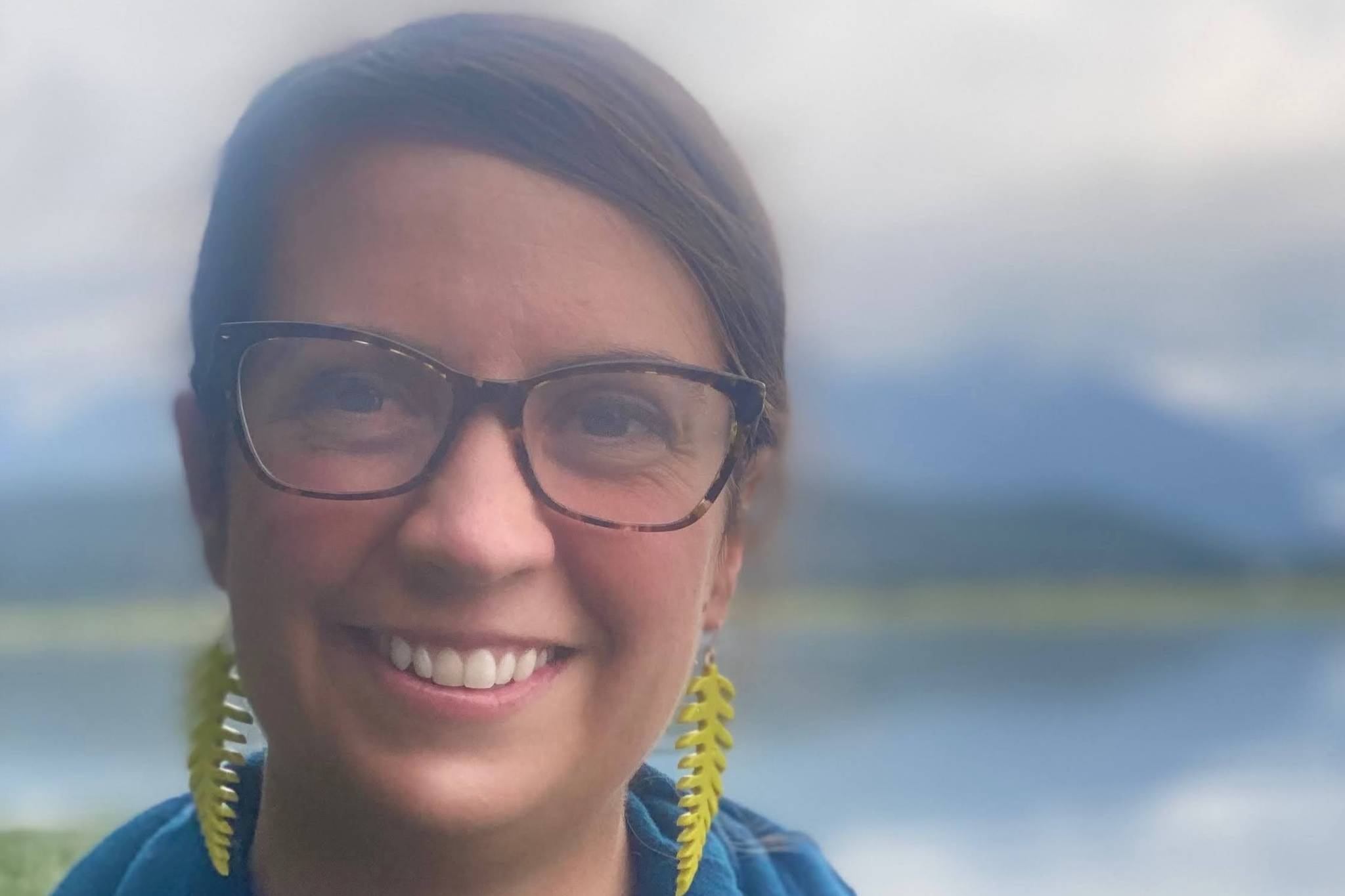
Ahead of the Oct. 6 municipal election, the Empire is publishing articles on how the vote-by-mail election will work, the propositions that will appear on ballots and races for Assembly and Board of Education seats. The Empire is also partnering with the League of Women Voters, a nonpartisan organization that does not endorse parties nor candidates. Candidate bios and answers to six questions that the League developed will appear online as well as in editions of the Empire. In cooperation with the Empire and KTOO, the League will hold a virtual candidate forum at 7 p.m. on Sept. 16
Name: Christine Woll
Date and place of birth: May 11, 1985, Massachusetts
Length of residency in Alaska and Juneau: Alaska (11.5 years), Juneau (8.5 years)
Education: B.S. Biology, Bates College (Maine); M.S. Fisheries, University of Alaska Fairbanks
Occupation: Regional Program Director for The Nature Conservancy
Family: Peter Flynn (Husband)
Community service: Christine chairs the Blueprint Downtown Steering Committee; is the secretary for the Juneau Commission on Sustainability; and serves on steering committees of the Sustainable Southeast Partnership and the Keex’ Kwaan Community Forest Partnership.
Other experience: As a program director, Christine has significant experience in leading staff and teams, setting strategic direction, and managing budgets and operations. Her work focuses on the intersection of community development, natural resource management and science and she has experience in building diverse and collaborative partnerships that bridge divides between groups to solve complex issues.
Assembly Candidates’ Questions
1. How should CBJ respond to the Governor’s budget cuts? Are GO bonds a legitimate tool to stimulate economic activity in this environment?
Juneau should push for a state budget that values our prosperity. The governor’s budget cuts pose a significant challenge, especially the elimination of school bond debt reimbursement. We should expect a reduction of this program from historic levels and plan accordingly. Cuts to UAS, state employment, and the ferry will have indirect impacts on our economy, and these institutions will need champions.
General obligation bonds are a good option right now. Local infrastructure projects are an essential tool for reducing the severity and duration of recession and we currently have capacity to take on debt with interest rates at a historic low. We need this injection into our economy early so that we can weather the impacts of the pandemic.
2. COVID-19 has caused disruption to tourism, including the cruise ship industry. What lessons learned during this time can the Assembly address and work on once we are in the new normal?
This is an opportunity for Juneau to get in the driver’s seat. This summer has shown that people are still enthusiastic to visit. We can work to attract travelers who will stay longer, spend locally, and come back because they had an authentic experience. But this pause gives us a chance to shape what we want our downtown to be. Residents like me said they wanted a “ship-free day” – now that we’ve been ship-free for months, let’s see how the community envisions an industry that benefits visitors and residents.
This disruption showcases how important Juneau’s economic diversity really is. We can’t rely solely on the cruise industry to feed our economy – we need to support all of our unique assets.
3. What can the Assembly do to help lessen the economic impacts of COVID-19 on the Juneau community and move Juneau forward in economic recovery?
This year has been so tough but I see a path ahead for recovery. Protecting our health is the most critical step to getting people back to work. For example, we will not be able to have restaurants or childcare facilities fully open if we have ongoing community transmission of COVID-19. Investment in local infrastructure projects immediately is necessary to kickstart our economy. This will provide local jobs while building things we need – things like school roofs and better roads. This moment also highlights how focused we must be on Juneau’s economic diversity and making it work for everyone. We can build from our strengths – our abundant resources, our culture and history, and our natural beauty – to realize this long-term.
4. What can the Assembly do to help alleviate the critical shortage of child care options for Juneau families?
I hope we can build on the momentum in the community around this issue. Childcare shortages in Juneau have been a serious issue for too long and disproportionately impact women, people of color, and low-income families. Luckily, we know what providers need – financial incentives to make their businesses work and support in retaining quality staff. We should treat child care as an essential social service in our budget priorities. The pandemic has heightened this issue; I see how my friends and staff struggle to weigh options around work, schooling, childcare, and their families’ health. Additional options like coordination of inclusive “learning pods” will help, but ultimately only continued focus on better testing and reducing community transmission will alleviate the situation.
5. What is the most important community need the Assembly must address?
The Assembly must prioritize dealing with the pandemic as a public health crisis because it touches every other community need we have. The longer we see community spread, the longer our businesses and industries will fight to survive. Without rapid testing, we will struggle to bring our students back into the classrooms where they are best suited to learn. If we experience spikes, our lives and those of our healthcare workers will be put at risk, and travelers will hesitate to visit. And with all of these impacts, disparities in our community will grow. Continuing to make decisions based in science, monitor our progress, support our social services, and plan for faster testing and an eventual vaccine will be critical.
6. What is the most significant Assembly accomplishment in the last year?
In the last year the Assembly has tackled a significant amount of extremely challenging issues with grace and diligence, and this in of itself should be treated as an noteworthy accomplishment. Whether it was budget cuts handed down from the state; a public health crisis; an economic crisis; or discussions about police brutality and systemic racism, they saw their job clearly: to listen to the expertise of others, to listen to the public, to deliberate all sides to the issues, and to work across differences to come to decisions under very demanding timelines. I think this is unique in our political times, and I hope to have the privilege of working with this group in this way in the future.
• These questions were developed by the League of Women Voters. Candidates supplied the biographical information.
