
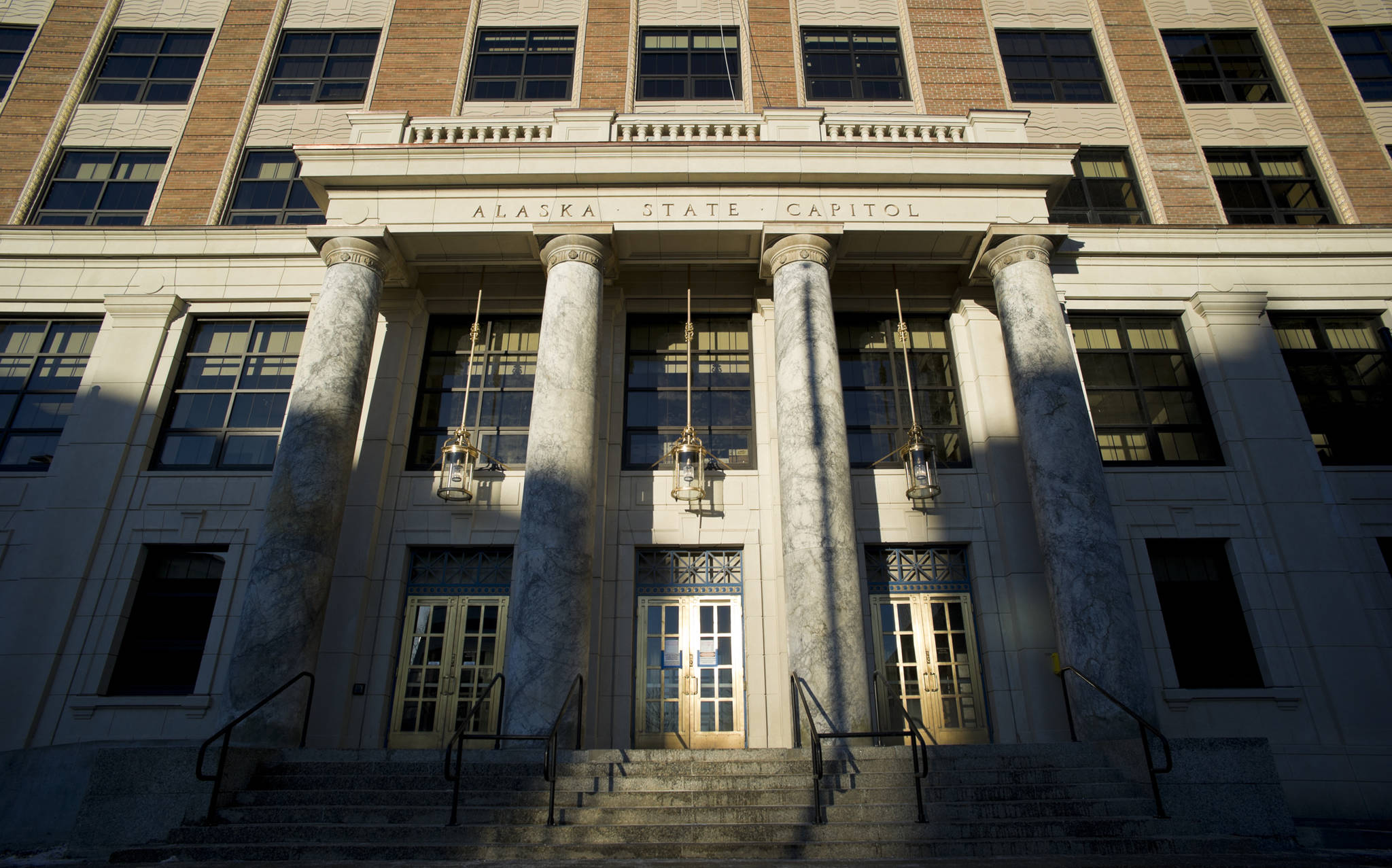
The Alaska Permanent Fund is facing the biggest change to its mission in its 40-year history as it may soon be required not just to preserve and grow the state’s most famous savings account, but also use it to fund operations of the state government.
“Symbolically, what we are witnessing in Alaska’s legislative debates is the long-anticipated transition of the Permanent Fund from a sovereign wealth fund into a sovereign endowment fund,” Russell Read, the fund’s chief investment officer told the Alaska Permanent Fund Corporation’s Board of Trustees at meetings in Juneau last week.
The differences can be profound, the Alaska Permanent Fund Corporation’s Board of Trustees was told last week in Juneau by Read and investment advisors working for the corporation.
And some of those changes can limit how much money the fund can earn, the board was told. That could mean the fund making less money, just when it’s most needed.
Since its inception as a unique state sovereign wealth fund in 1976, the goal has been to preserve the fund’s “principal,” the amount of oil royalties and other money deposited into the fund, while at the same time producing investment profits to allow the popular Permanent Fund Dividends to be paid.
The fund is divided into principal and the “earnings reserve,” a measure of the fund’s profits. To protect the fund’s principal, only the money from the earnings reserve can be spent by the Legislature, on dividends or anything else.
This year, for the first time, legislators are looking to dip into the earnings reserve to pay the state’s bills. PFD Corporation Executive Director Angela Rodell said she’d hoped that by the board’s May meeting the big budget decisions would be made. Instead, they are nearly a billion dollars apart, with the House of Representatives’ budget calling for spending $1.6 billion from the permanent fund, with the Senate looking to rely on the fund for $2.5 billion.
During two days of meetings in Juneau on May 16-17, the trustees repeatedly came back to the issue of “liquidity,” financial talk for how quickly they can access the $57 billion in the fund, hopefully without harming their investments by having to sell at fire-sale prices.
In come cases, that’s quick and easy. Assets such as publicly traded stocks and U.S. Treasury bills and other bonds are easily and readily sold, and make up the bulk of the fund’s investments.
Less liquid are the fund’s private equity investments, money the fund has invested in companies that are not traded on the New York Stock Exchange or other markets. Over the past five years, the fund’s private equity investments have earned 17.7 percent a year, its best performing asset but one of its least liquid.
Other illiquid investments include real estate such as the state’s share of the Tyson’s Corner mall outside Washington, D.C. or infrastructure such as ports or airports the fund owns.
Read assured the trustees that the fund would be able to meet whatever demands were placed on it this year, even though the Legislature itself was still divided on what to do.
“The fund is positioned to meet the liquidity requirements that we see in either the House or the Senate bills,” Read said, even those bills are substantially different.
That’s in large part because strong stock market and other returns in recent years have run the earnings reserve up to a record $11.7 billion, its highest point ever, said Corporation Executive Director Rodell.
Not too many years ago, she said, the earnings reserve was so depleted that it was touch-and-go up until the end of the fiscal year on June 30 whether there would be enough money to even pay dividends.
But Rodell also warned that the Legislature can at any time spend the entire earnings reserve amount, if it decides to do so and the governor agrees.
But if it did, the fund would be dangerously overweight in illiquid investments, and lose the safety of the highly diversified portfolio that it now has.
With the earnings reserve being looked at to not only pay dividends but also to fund state government, the corporation is going to have to find ways to keep its investments liquid, as well as profitable.
Rodell said that by scheduling the Board of Trustees meeting for mid-May she’d hoped to know what the Legislature would do. Now, she said, she’ll be asking the trustees to look at the issue again at its next scheduled meeting in September.
But if the Legislature again makes only a one-year solution, the board may not be able to make a long-term plan then either.
“Do we want to amend our investment policy to change to reflect a new reality that may change again in a year?” she asked.
In recent years, stock markets have been strong, but if demands of the state budget force the fund to sell its most liquid investments, such as stocks, during a market decline, the fund may never make up those losses, warned Greg Allen, president of Callan Associates, the corporation’s investment consultant.
“It forces you to lock in losses when markets are down,” he said.
But Read and Allen also cautioned that keeping substantially more assets in the most liquid and safe investments could prevent the fund from reaching its stated goal of earning 5 percent above the rate of inflation.
But if the assets in the earnings reserve change in value dramatically, there could be serious consequences for the state.
“I’ve monitored the earnings reserve for 20 years now, and it’s actually a pretty volatile thing,” Allen said.
The way the earning reserve, the Permanent Fund’s principal was protected, even if the dividends might not be paid.
But Rodell warned that the state might have to be more cautious with its investments if the state budget is depending on the Permanent Fund.
“We can’t tell state troopers, ‘I’m sorry, we lost the money in the stock market and you are not going to get paid,’” she said.
• Pat Forgey is a freelance reporter based in Juneau.
