
By Mary F. Willson
For the Juneau Empire
The autumn equinox is past, and the days are rapidly getting shorter. It was an exceptionally rainy summer and we can’t expect fall to be much different. Sigh. But there have been some bright spots along the trails in forest and meadow.
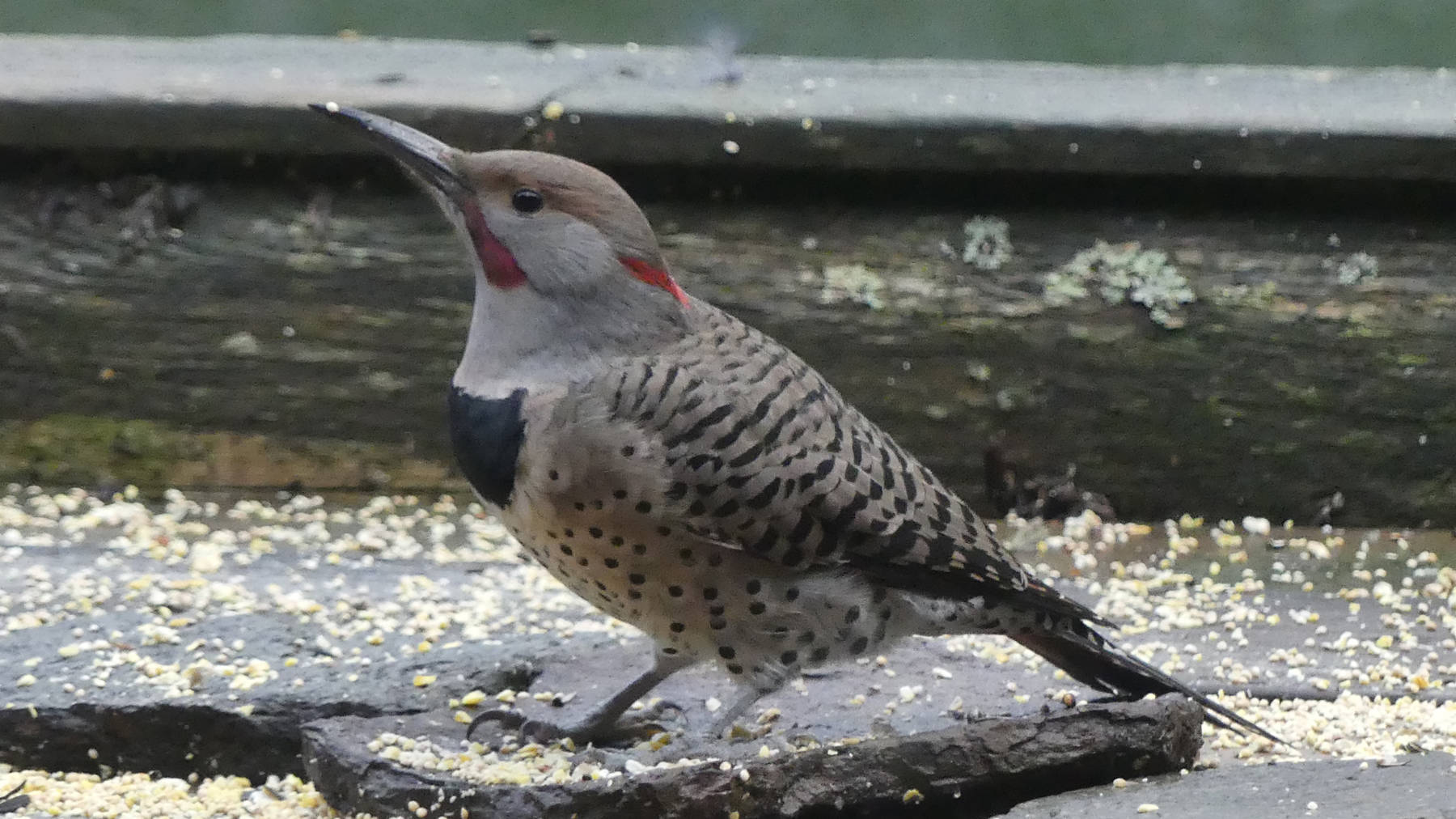
One happy sighting in a meadow on the Peterson Lake trail was a bird busily foraging in the mosses, but it was partly obscured by clumps of taller vegetation. All I could see was a brown back and bits of moss flying every which way. I watched for a few minutes, but the flurry of flying moss continued without revealing the forager. So I slowly crept in a circular path to get a different perspective and eventually won a quick side view of the bird’s head. Ah…a red mark on the face and maybe a dark spot on the chest. Then the bird took off, exposing a big white rump patch (but not the colored underwings). OK, of course! A northern flicker, a woodpecker known to forage often on the ground. They nest here occasionally, but I’ve only seen them in Southeast once before this.
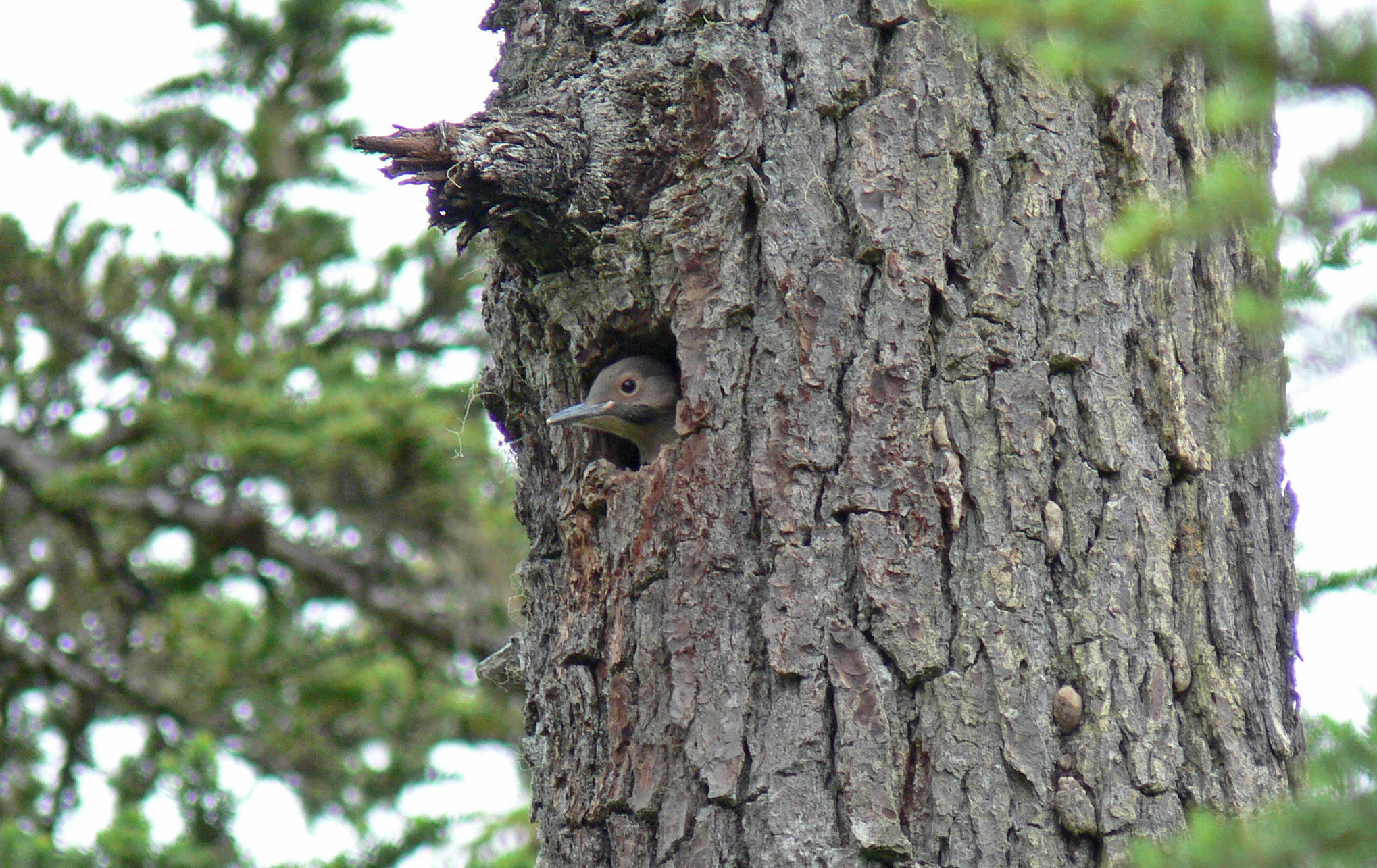
A female northern flicker peers from her cavity nest on Douglas Island in 2010. (Courtesy Photo / Bob Armstrong)
Another enjoyable sighting occurred near the Spaulding Meadows trailhead. A brown creeper zipped across the trail, landed on a tree trunk, and hopped its way up, using its tail as a brace in proper creeper fashion. It was soon followed by another one, which also landed on a tree trunk. But this one quickly moved onto the underside of a branch and hitched its way along, upside down, using just its sharp little claws. It seemed to be quite comfortable in that position and put on a nice little show of its expertise.
[See photos of Mother Nature in Alaska]
We don’t have to go to Vermont or Wisconsin to see good fall colors, even though we don’t have the great stands of oaks and maples. Our colors tend to come in smaller patches, but they offer their own visual treats. A band of cottonwoods on the far shore of Herbert River somehow managed to glow in yellow and gold above a swirl of river mist, despite a steady rain. Willows often turn yellow, but some bear vivid displays of orange and red (why?). The multi-colored leaves of highbush cranberry can be yellow, pink, bright red, crimson or combinations of those. On the forest floor, bunchberry leaves make carpets in shades of yellow, orange, and red. I also enjoy the pale yellow tapestries of enchanter’s nightshade leaves that call attention to this tiny plant. Still smaller but eye-pleasing are the several kinds of red berries—devil’s club, bunchberry, red huckleberry, bog cranberry, and best of all, the translucent, almost-glowing highbush cranberry.
These little points of brightness matter.
Not to be ignored are the woolly-bear caterpillars, the larvae of the spotted tussock moth. As they grew, they passed through several molts and changes of appearance, and the last instar has the familiar black bands on front and rear with a yellow or orange band in the middle, with some long white tufts. They eat leaves of deciduous trees, but in fall we see them crawling around, looking for a place to build a cocoon and spend the winter.
Fall rains also liven up the lichens and mosses, which are looking quite happy. Fall-fruiting fungi appear — including some showy white ones with a vase-like cap (since I’m a ‘fungignoramus’, I won’t attempt to provide a name).
The Herbert River trail has always seemed rather dull (until you get close to the glacier area) — lots of the same thing for a long way. But that is unfair.
There are actually zones of changing vegetation as one goes up the trail, quite noticeable when I pay attention. And recently I found several colonies of what turns out to be a common species called the stiff clubmoss, bearing its cones on the tips of the twigs — and thus easily distinguishable from the running clubmoss, with cones on long stalks. How I managed miss the stiff clubmoss all these years, I don’t know, but now that I’ve learned it, I have discovered it in other places too.
For a curious naturalist, sometimes a bright spot (of a sort) comes in the form of a mystery. Along the lower part of Eagle River, a little above its junction with the Herbert, I noticed an odd collection of animal scat.
There were maybe 15 deposits, all within about two meters of each other. They had a variety of sizes and shapes, from cylindrical to lumpy, and all were black. Bears would seem to be the most likely perpetrators. But why so many scats in one place? Bears just defecate where’re they happen to be and don’t — as far as is known to several wildlife biologists — make communal latrines. One suggestion is that a family of bears had a secure resting place somewhere nearby and used the area for an extended time. But even if they all slept nearby, why deposit all the scats together?
The mystery remains.
• Mary F. Willson is a retired professor of ecology. “On The Trails” is a weekly column that appears in the Juneau Empire every Wednesday.
