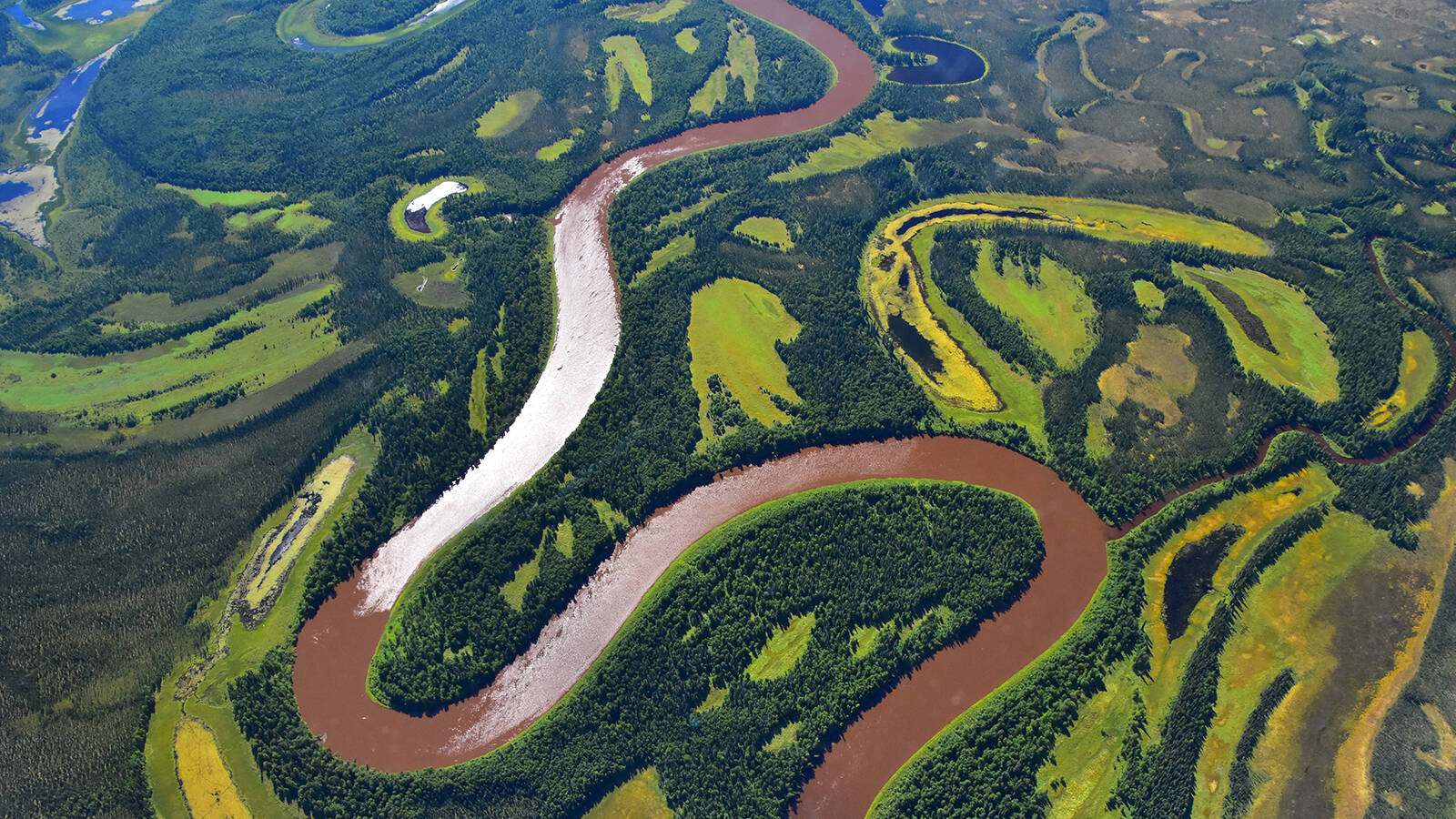
The Kuskokwim River is pictured. (Photo by Peter Griffith/NASA)

The Kuskokwim River is pictured. (Photo by Peter Griffith/NASA)

Federal judge sides with Biden administration, rejects Alaska bids to expand Kuskokwim fishing

Rejects Dunleavy effort to expand salmon fishing opportunities beyond federal government limits.

The Biden administration has won a closely watched lawsuit against the state of Alaska that validates the federal government’s authority to limit fishing for the dwindling populations of salmon on Southwest Alaska’s Kuskokwim River.

In a 29-page decision Friday, U.S. District Court Judge Sharon Gleason settled a three-year dispute that began in 2021, when the Alaska Department of Fish and Game issued orders that periodically opened the Kuskokwim for fishing by all state residents.

Those orders conflicted with closures imposed by the federal government that had opened fishing only to “federally qualified” subsistence fishermen — those who live in rural Alaska, and not those from urban areas.

The Biden administration, after similar conflicts the following year, then filed its lawsuit in 2022, saying that the Alaska National Interest Lands Conservation Act of 1980 requires rural residents’ harvests of fish and game to be prioritized during times of scarcity.

That priority, as applied to fishing on navigable rivers like the Kuskokwim, was affirmed by a series of landmark court rulings in the 1990s and 2000s, in what are now known as the Katie John cases.

The Dunleavy administration argued that those cases were undercut by another U.S. Supreme Court ruling in 2019 — when the justices sided with John Sturgeon, an Alaska hunter who was operating his hovercraft on a river within a national wildlife preserve, where the National Park Service had banned them.

But Gleason, in her decision Friday, rejected that argument, saying that the court, when it ruled in Sturgeon’s favor, “expressly stated” that it wasn’t disturbing the Katie John precedents.

Alaska Attorney General Treg Taylor said in a statement that the ruling was still under review. But he added that the state was disappointed Gleason “did not recognize the clear conflict between the U.S. Supreme Court decision in the Sturgeon case and the federal actions here.”

“We were always expecting this case to go up to the highest court in order to get a final decision,” Taylor said. “The state plans to appeal.”

Alaska’s fish and game commissioner, Doug Vincent-Lang, added in his own statement that it’s “a sad day for state sovereignty, self-determination, and terms like ‘justice.’”

A spokeswoman for the U.S. Department of the Interior, which initiated the lawsuit, said Friday’s decision speaks for itself.

The case ties in to a decades-long fight between the federal and state governments over the authority to manage subsistence hunting and fishing — an issue that’s recently surfaced again at the Alaska Capitol.

Among the groups intervening in the Biden administration’s lawsuit was the Alaska Federation of Natives, which took the federal government’s side. So did several other tribal groups, including the Association of Village Council Presidents and the Kuskokwim River Inter-Tribal Fish Commission.

• Nathaniel Herz welcomes tips at natherz@gmail.com or (907) 793-0312. This article was originally published in Northern Journal, a newsletter from Herz. Subscribe at this link.

More in News

Gustavus author Kim Heacox talked about the role of storytelling in communicating climate change to a group of about 100 people at <strong>Ḵ</strong>unéix<strong>̱</strong> Hídi Northern Light United Church on Wednesday, Dec. 3, 2025. (Mari Kanagy / Juneau Empire)
Author calls for climate storytelling in Juneau talk

Kim Heacox reflects on what we’ve long known and how we speak of it.

The Juneau road system ends at Cascade Point in Berners Bay, as shown in a May 2006 photo. (Michael Penn / Juneau Empire file)
State starts engineering for power at proposed Cascade Point ferry terminal

DOT says the contract for electrical planning is not a commitment to construct the terminal.

Members of the Alaska Air and Army National Guard, Alaska Naval Militia, and Alaska State Defense Force work together to load plywood onto a CH-47 Chinook helicopter, in Bethel, Alaska, Nov. 2, 2025, bound for the villages of Napaskiak, Tuntutuliak, and Napakiak. The materials will help residents rebuild homes and restore community spaces damaged by past storms. (U.S. Army National Guard photo by Spc. Ericka Gillespie)
Gov. Dunleavy approves Alaska National Guard assisting ICE in Anchorage

The National Guard said five service members will assist with administrative support; lawmakers and civil rights advocates worry that the move signals a ramping up of immigration enforcement operations in Alaska

A cruise ship, with several orange lifeboats visible, is docked in downtown Juneau. (Laurie Craig / Juneau Empire file photo)
CBJ seeks input on uses for marine passenger fees

Public comment period is open for the month of December.

Browsers crowd into Annie Kaill’s gallery and gift shop during the 2024 Gallery Walk. (Juneau Empire file photo)
Gallery Walk guide for Friday, Dec. 5

The Juneau Arts & Humanities Council announced community events taking place during… Continue reading

The Alaska State Capitol is seen on Tuesday, Nov. 25, 2025. (Photo by James Brooks/Alaska Beacon)
Alaska Senate Republicans confirm Rauscher, Tilton and open two vacancies in state House

The Alaska Republican Party is moving quickly after Republicans in the Alaska… Continue reading

Downtown Skagway, with snow dusting its streets, is seen in this undated photo. (Photo by C. Anderson/National Park Service)
Skagway’s lone paramedic is suing the city, alleging retaliation by fire department officials

This article was reported and published in collaboration between the Chilkat Valley… Continue reading

A spruce tree grows along Rainforest Trail on Douglas Island. (Mari Kanagy / Juneau Empire)
Where to cut your Christmas tree in Juneau

CBJ and Tongass National Forest outline where and how residents can harvest.

Winter dining has always carried more weight than the menu might suggest. In the off-season, eating out isn’t just about comfort food or convenience; it’s a way of supporting local businesses as they hold steady through the slower months. Photo credit: Canva.
Savoring local in Juneau: How a simple meal helps the whole community

Independent cafés and neighborhood restaurants keep Juneau strong through the slow season

Most Read